
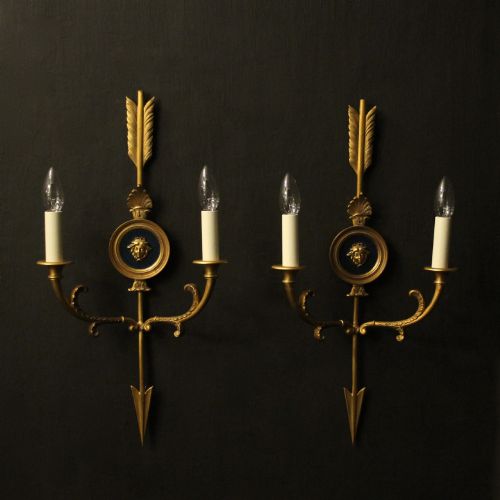
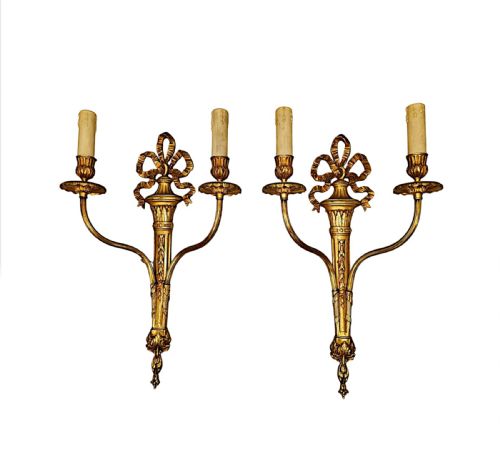
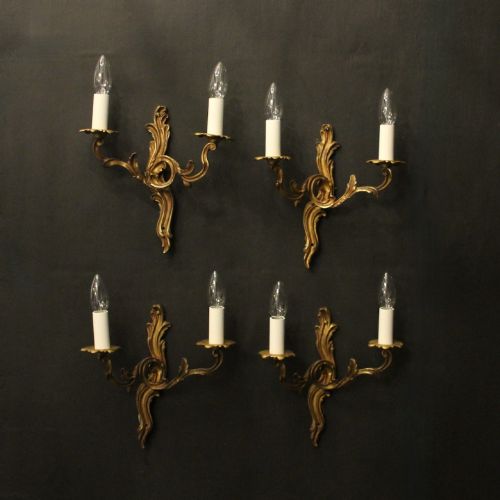
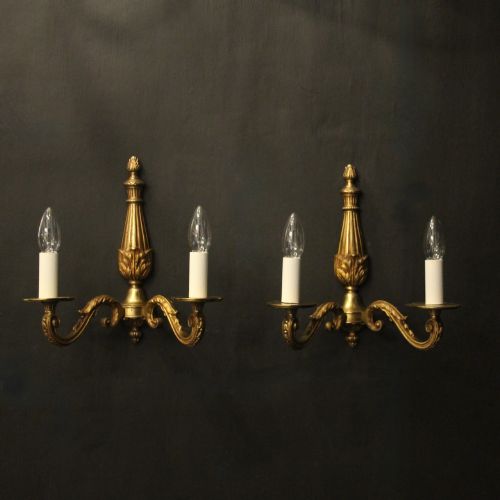
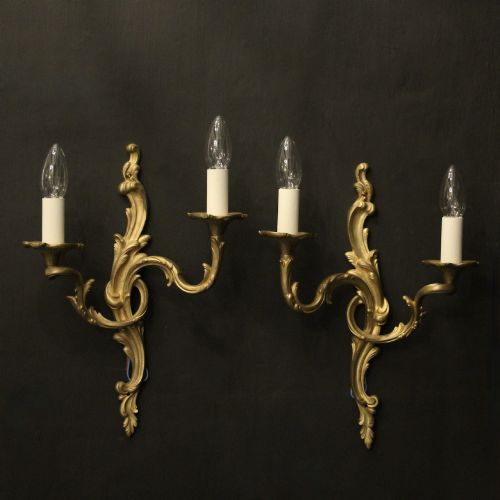
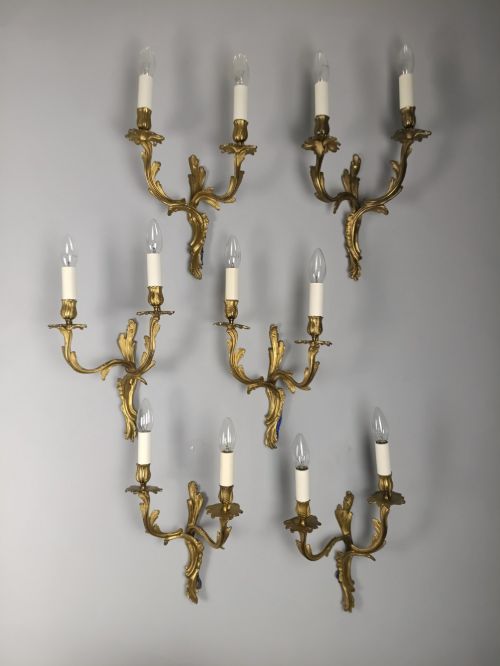
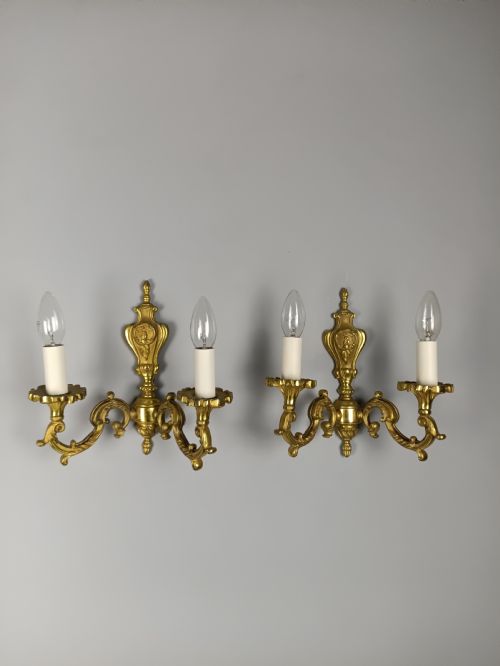
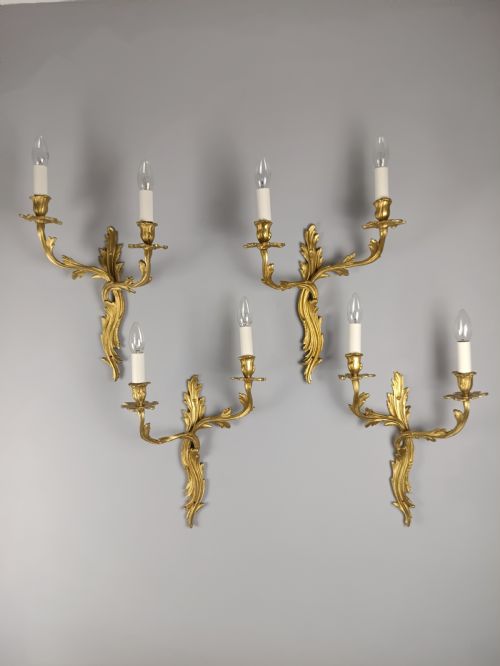
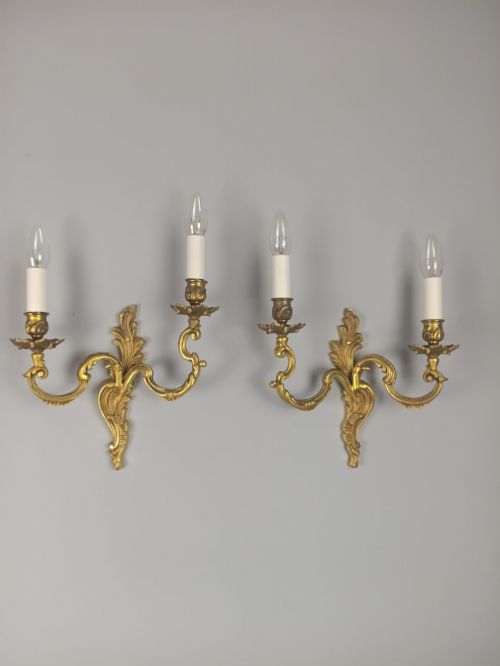
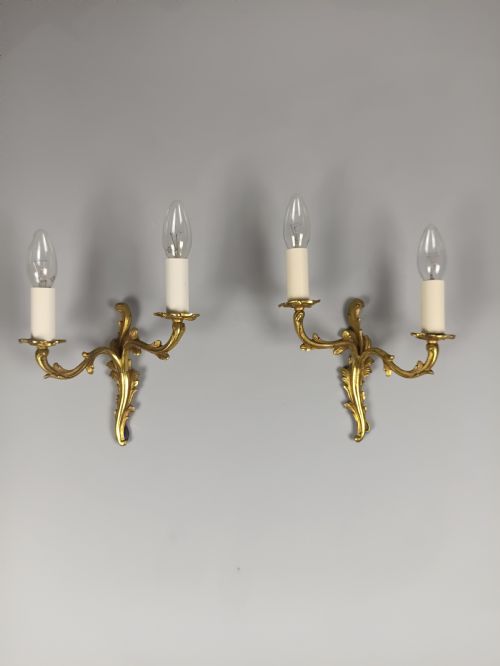
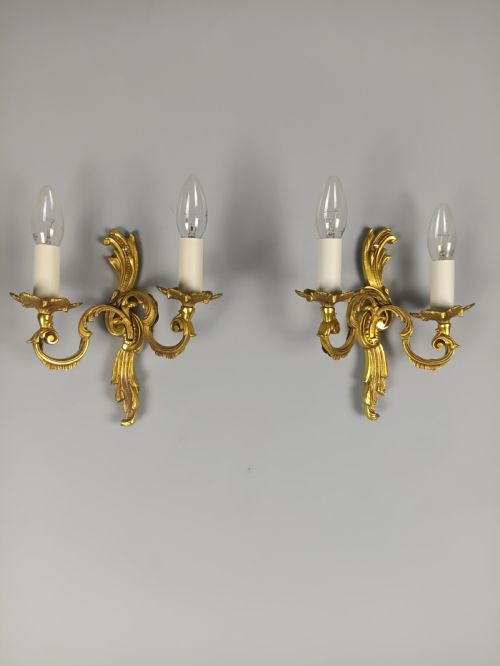
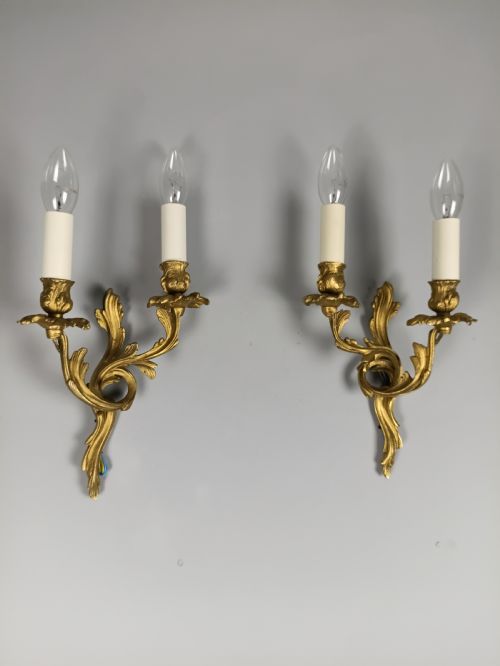
Ormolu Twin Candle Sconces
These ormolu twin candle sconces bring warmth and period character to a room, casting gentle light from gilded metal mounts.
Ormolu Twin Candle Sconces
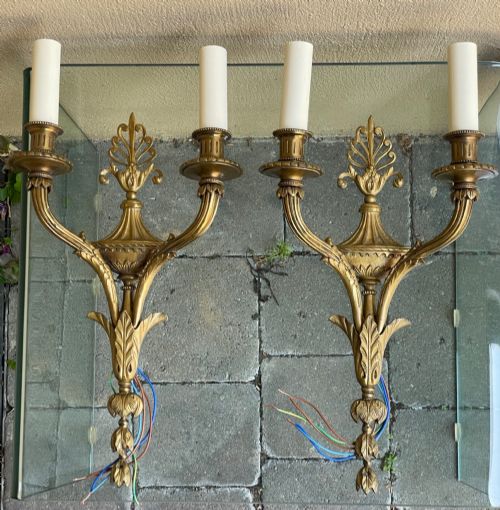
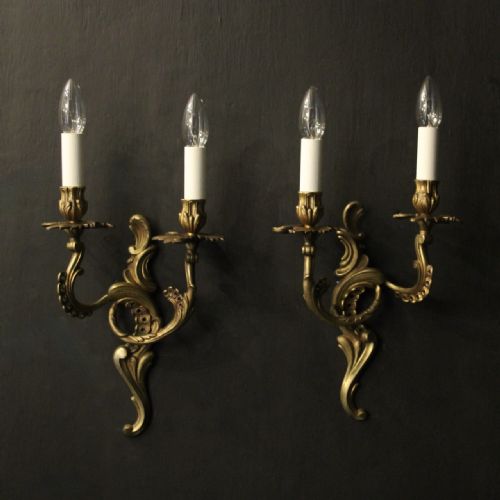
When you search for ormolu twin candle sconces, you encounter wall-mounted light fittings designed to hold two candles, primarily taking the form of wall lights and appliques. These decorative objects originate predominantly from France, with occasional English and Italian examples appearing across the selection.
The pieces you meet most frequently on this page date from the nineteenth century and the early decades of the twentieth century. They span Victorian, Edwardian, and earlier revival aesthetics, reflecting longstanding craftsmanship traditions in interior illumination.
How they were made
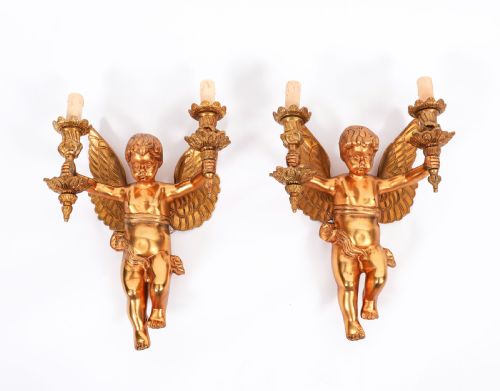
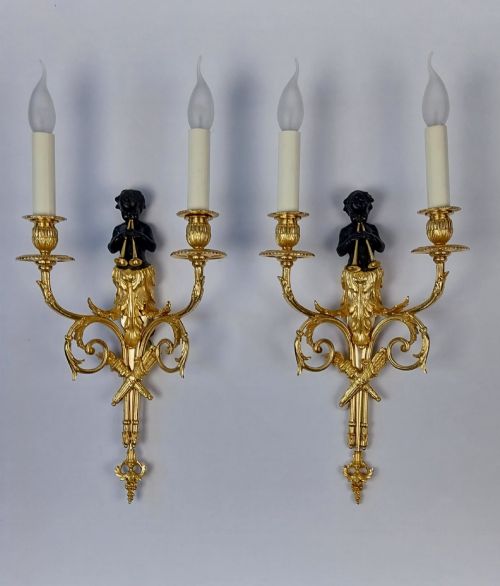
The construction of these light fittings relies primarily upon cast metals such as bronze, brass, and gilt metal. Artisans shaped these base materials into elaborate scrollwork, architectural motifs, and figural designs.
Surface finish is achieved through gilding, including traditional ormolu techniques where a fine layer of gold is applied to a bronze base. This imparts a durable, rich metallic sheen that catches the surrounding candlelight.
What varies in quality
The calibre of casting and chasing separates standard production from superior examples. Finer pieces display crisp, deep detailing in the foliage, cherubs, and classical motifs without losing definition.
The integrity and depth of the original gilding also dictate distinction. Deeper, richer metallic surfaces command attention, whereas worn or poorly applied finishes flatten the sculptural impact of the design.
The Ormolu Twin Candle Sconces Glossary
- Ormolu
- A technique involving the application of finely ground, high-carat gold to a bronze base. It creates a rich, golden surface finish characteristic of fine decorative hardware.
- Applique
- A wall-mounted light fitting or sconce designed to hold candles or electric bulbs. These fixtures fix directly to vertical surfaces.
- Rococo
- An ornate artistic style characterised by asymmetry, scrollwork, and naturalistic plant motifs. It heavily influences many nineteenth-century French lighting designs.
- Neoclassical
- A style drawing inspiration from classical antiquity, featuring symmetry, urns, swags, and geometric precision. It appears frequently in Louis XVI and Empire period pieces.
Ormolu Twin Candle Sconces: Frequently Asked Questions
How do I install ormolu twin candle sconces?
These wall lights mount directly onto wall studs or appropriate fixings using the original screw holes or mounting plates provided on the backplate. Many period examples arrive rewired for modern electrical use while retaining their historic aesthetic.
Ensure a qualified electrician handles any electrical connections to meet current safety standards. Position them securely at eye level to balance room illumination.
How should I clean gilded bronze sconces?
Dust the metal gently with a soft, dry microfibre cloth to remove surface particles. Avoid chemical polishes or abrasive pads, which strip away the thin layer of historic gilding.
Professional restoration is recommended if deep cleaning becomes necessary. Preserving the original surface patina maintains the historical integrity of the piece.
Are these sconces meant for real candles?
While originally created for wax candles, surviving examples often show conversions to electricity undertaken during the twentieth century. Check individual listings to determine whether a particular pair retains candle holders or holds electrical fittings.
Using LED replica candles provides ambient lighting without risking heat damage to the historic metalwork. Traditional wax use requires careful monitoring of drips and smoke.
How do I identify a French Empire style sconce?
Empire style pieces incorporate motifs inspired by classical Roman, Greek, and Egyptian campaigns. Look for symmetrical designs featuring laurel wreaths, sphinxes, eagles, and military trophies.
The metalwork on these pieces typically exhibits a heavier, more disciplined architectural presence compared to flowing Rococo alternatives. Gilt finishes on Empire pieces tend to balance matte and polished areas for dramatic contrast.