

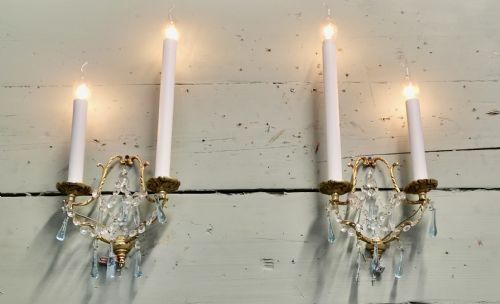


Classic Wall Light Pair
A classic wall light pair brings symmetry and layered illumination to a room, most often arriving from French and English workshops in brass, bronze, and silver plate.
Classic Wall Light Pair
When you search for a classic wall light pair, you encounter matching twin-branch sconces, half-lanterns, and multi-armed brackets designed to flank mirrors, fireplaces, and architectural focal points. These fixtures emerge predominantly from nineteenth-century and early twentieth-century production, spanning Victorian, Edwardian, and various revival epochs.
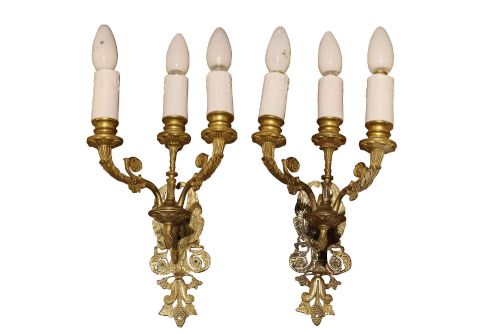
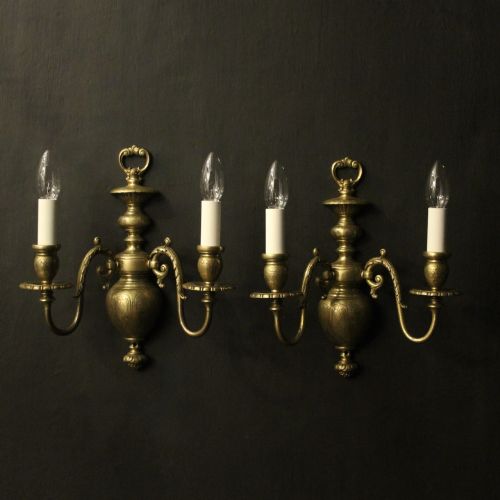
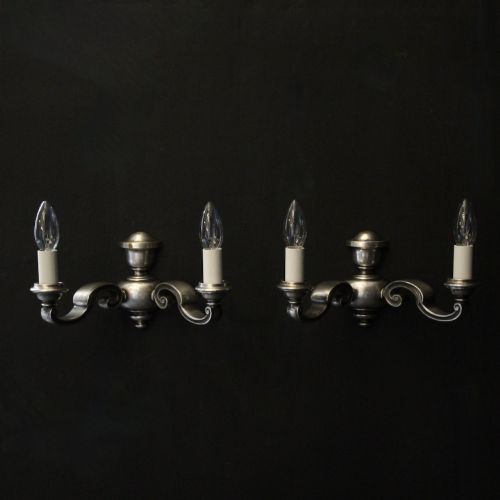
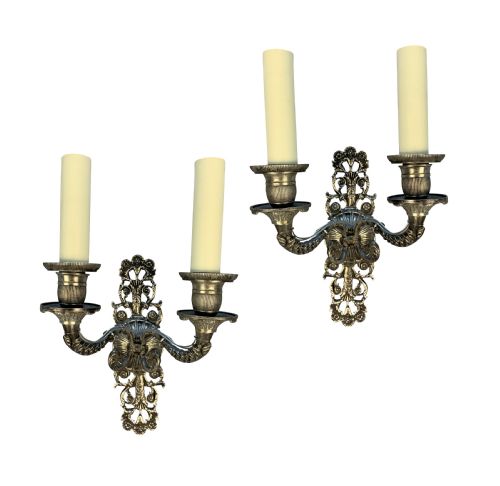
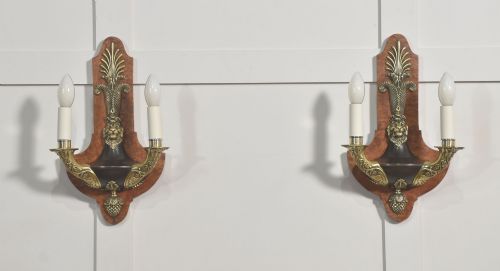
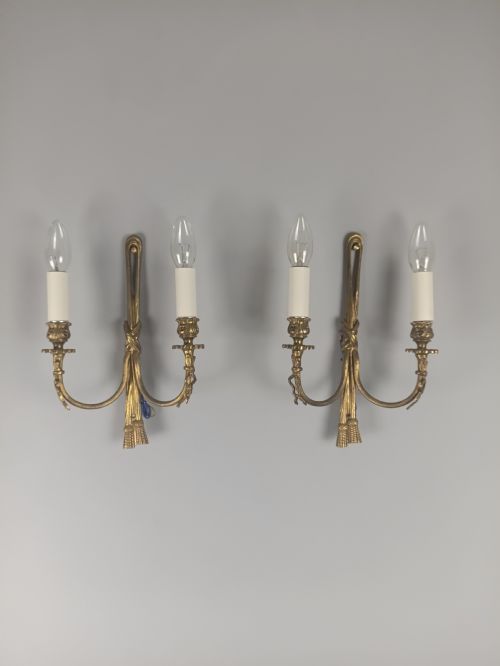
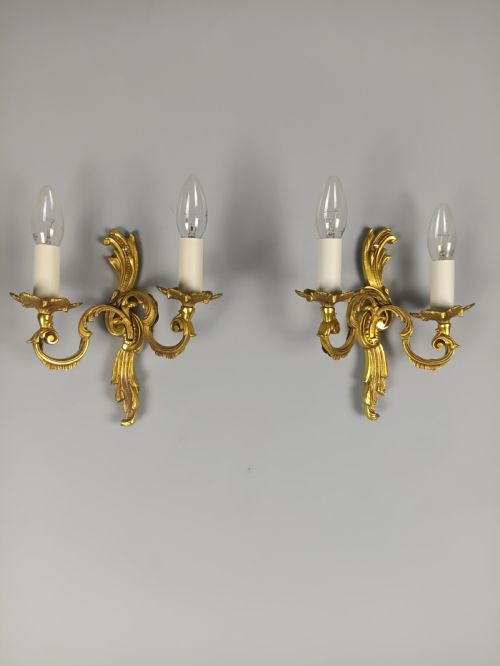
The prevailing examples on this page lean heavily towards French styling, particularly Neoclassical, Empire, Louis XVI, and Rococo designs executed in gilded brass or bronze. English brass and silver-plated alternatives also appear, alongside occasional variances such as carved wooden brackets or burr walnut elements.
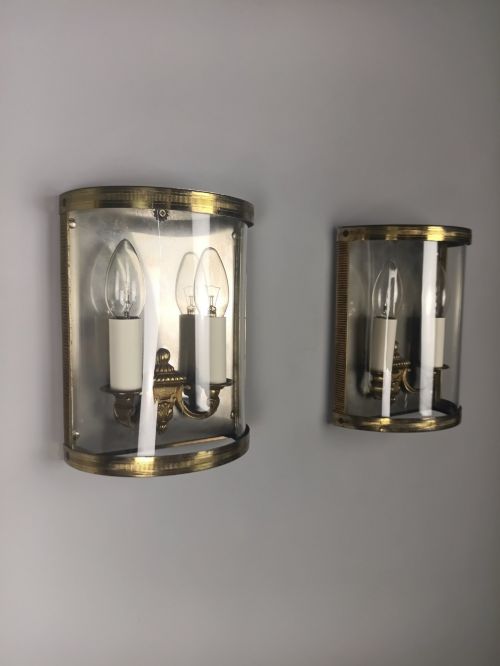
Most selections utilise two or three arms to project candlelight or electrified illumination across a wall surface. They range from restrained classical profiles to elaborate ribbon motifs and convex half-lanterns intended for hallways and reception rooms.
Materials and Construction Methods
The foundational structures rely on cast brass, gilt bronze, and standard metal, often finished with fire-gilding or silver plating. These metallic components are frequently paired with cut glass and crystal pendants to refract the light.
Surface ornamentation incorporates finely chased detailing, polychrome paint, and carved wooden decoration on specific bracket assemblies. Construction typically involves heavy casting for the backplates and arms, secured with threaded bolts and pins.
Classic Wall Light Pair Retail Price Guide 2026
Typical asking prices for classic wall light pair among the pieces listed under this phrase on Sellingantiques today, from the lower quarter to the upper quarter. They describe what is for sale here now, not the wider market.
Materials recorded across these listings include solid brass, gilt bronze, silver plate, cut crystal, and carved wood.
Distinctions in Quality and Execution
Heavier gauge metalwork and substantial backplates separate better workshops from lighter commercial output. The integration of quality crystal drops and genuine fire-gilding further elevates a pair above standard plated alternatives.
The Classic Wall Light Pair Glossary
- Ormolu
- Gilded bronze produced by applying a mercury-gilding amalgam to a bronze base. This technique yields a deep, enduring golden lustre characteristic of fine French pieces.
- Sconce
- A wall-mounted lighting fixture designed to hold candles or electric lamps. The term is frequently used interchangeably with wall light.
- Neoclassical
- A revival style drawing inspiration from classical antiquity, featuring symmetrical lines, urns, and torch motifs. It dominates many nineteenth and early twentieth-century designs.
- Gilt
- Covered with a thin layer of gold leaf or gold paint applied to metal, wood, or plaster surfaces. It provides a bright decorative finish without solid gold construction.
Classic Wall Light Pair: Frequently Asked Questions
How do I install antique wall lights?
Most vintage and antique wall lights require professional mounting to a secure wall junction box. Wiring must be assessed to meet current safety standards.
Ensure the backplate covers your electrical outlet completely and that the wall structure can support the weight of heavy bronze or cast brass fixtures.
How do I clean gilt bronze and brass?
Dust gently with a soft, dry brush to prevent the accumulation of debris in recessed chased details. Avoid harsh chemical polishes that strip historical gilding.
Applying a light microcrystalline wax can protect exposed metal surfaces from tarnishing over time.
How do I date a pair of wall lights?
Examine the casting quality, fixing screws, and backplate construction to identify manufacturing techniques from the nineteenth or early twentieth century. Stylistic indicators like Edwardian classical revival or French Empire motifs offer further clues.
Look for hand-finished details and patination that signal genuine age rather than modern reproduction.