


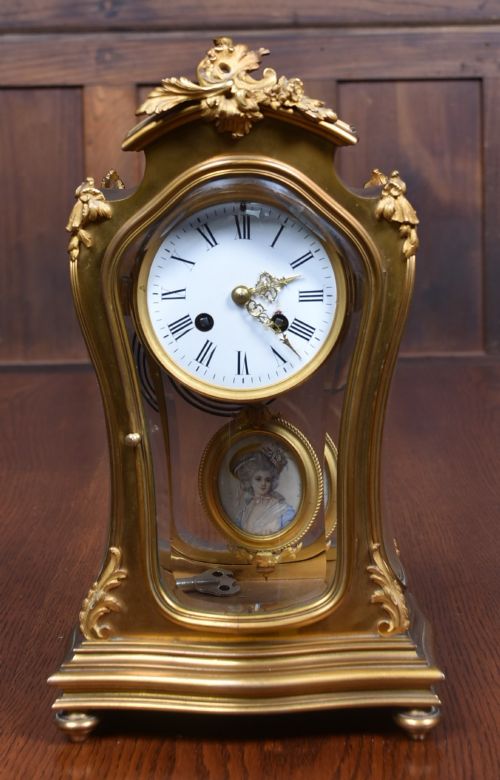
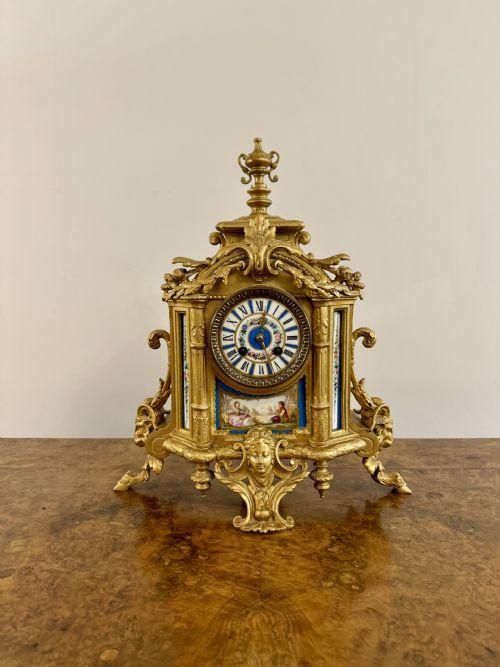
Ormolu Porcelain Mantel Clock
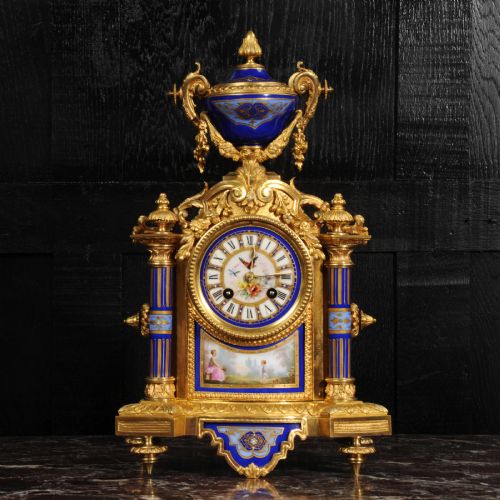
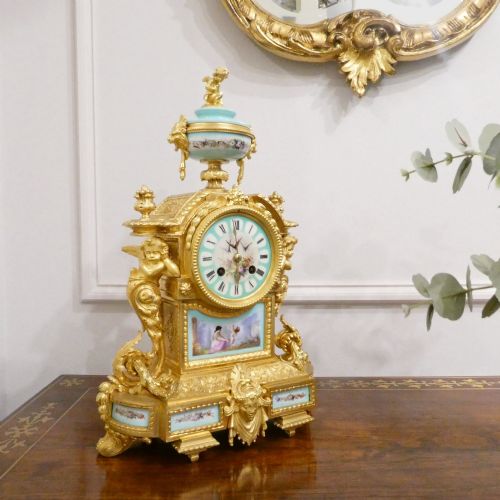
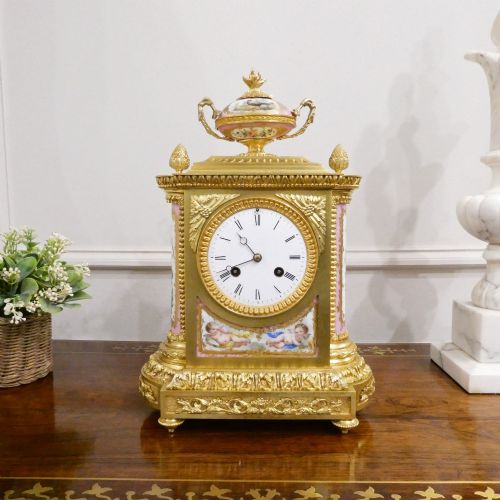
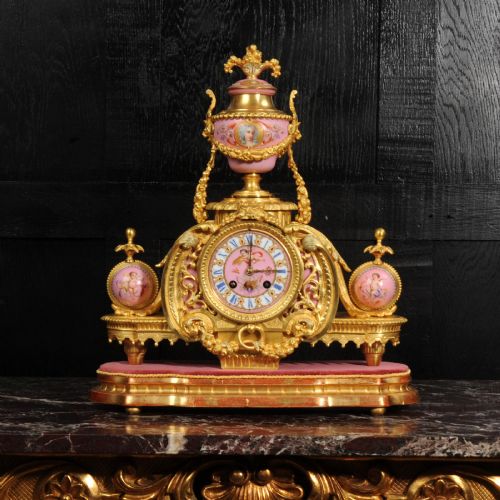
An ormolu porcelain mantel clock brings together nineteenth-century French metalwork and hand-painted ceramic panels to anchor a room with classical elegance.
Ormolu Porcelain Mantel Clock
An ormolu porcelain mantel clock combines cast metal mounts with ceramic body elements designed for domestic display in the nineteenth century. The typical example encountered here dates from the Victorian era and the Second Empire, reflecting French revival aesthetics.
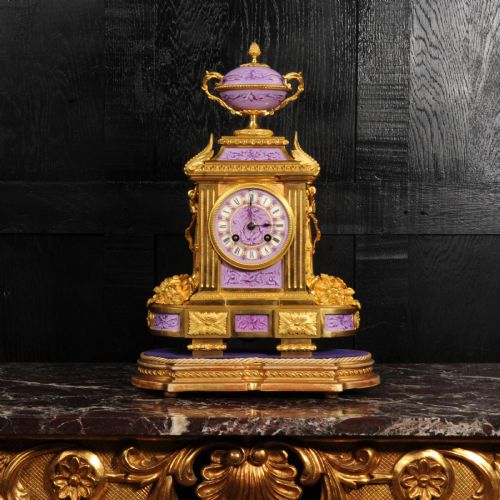
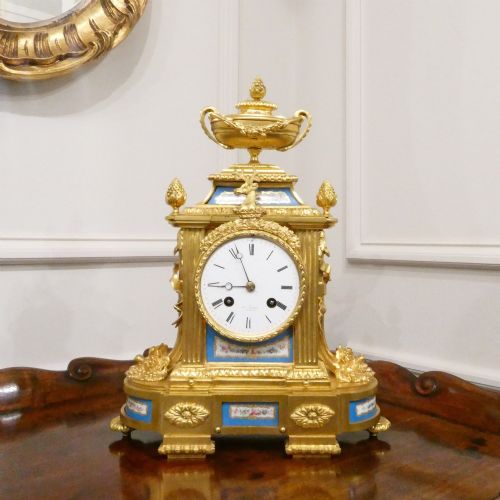
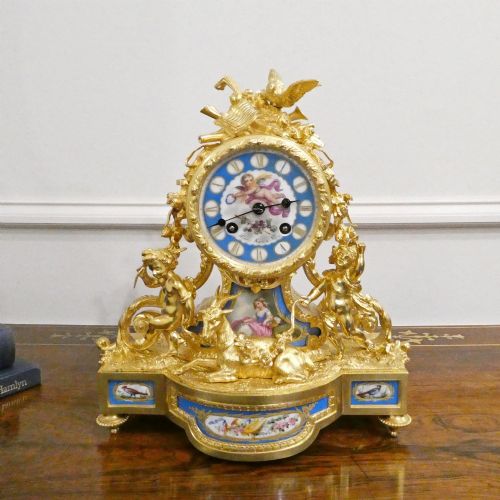
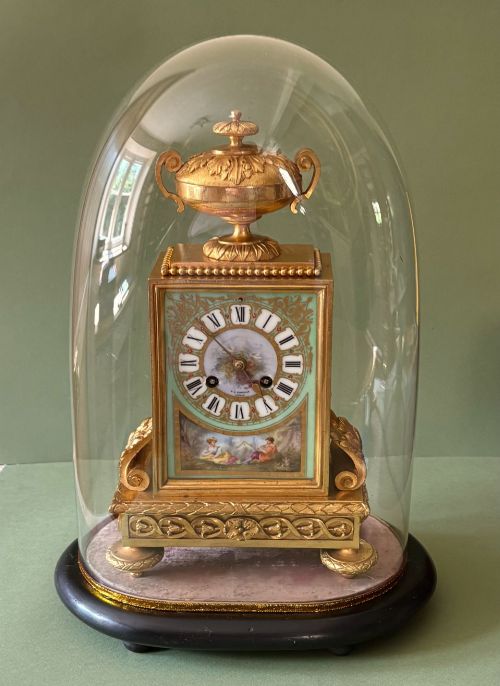
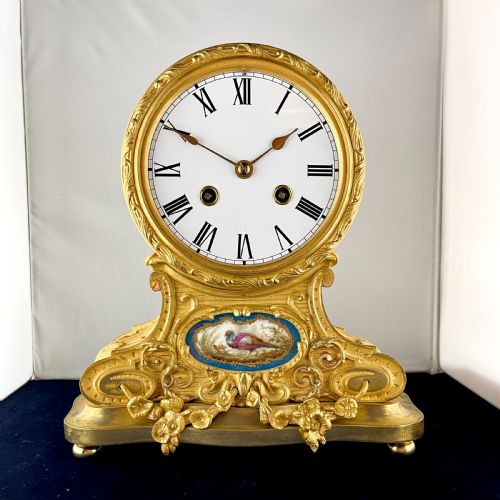
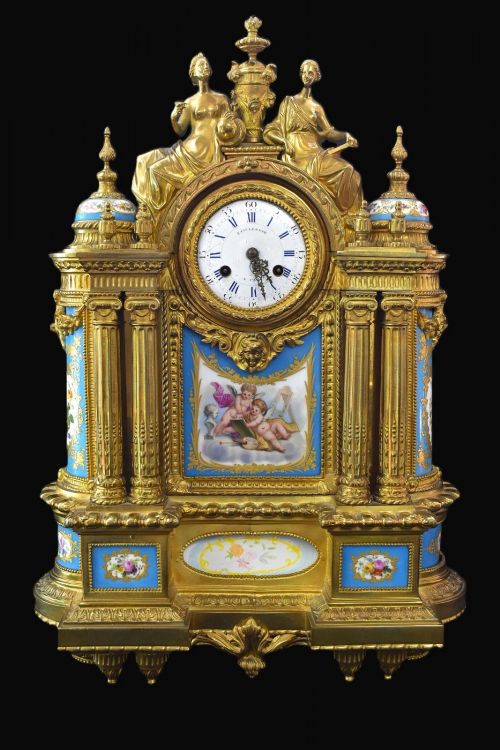
Makers housed precision movements within housings of gilt bronze, marble, and onyx, often pairing the main timekeeper with matching garniture sets. Surviving specimens range from drumhead configurations to elaborate urn-shaped and lyre-shaped housings.
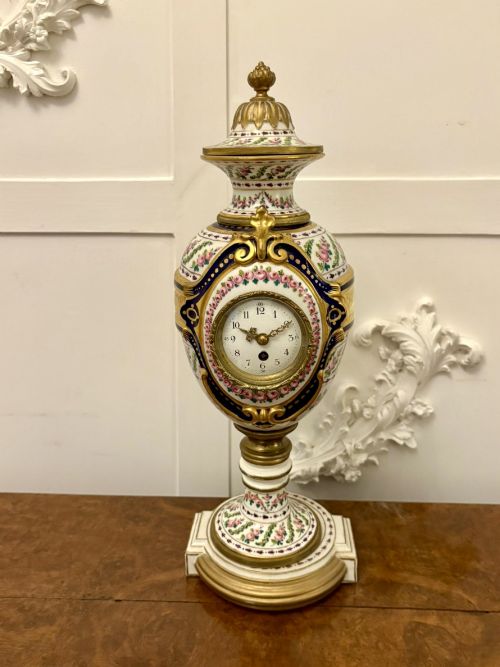
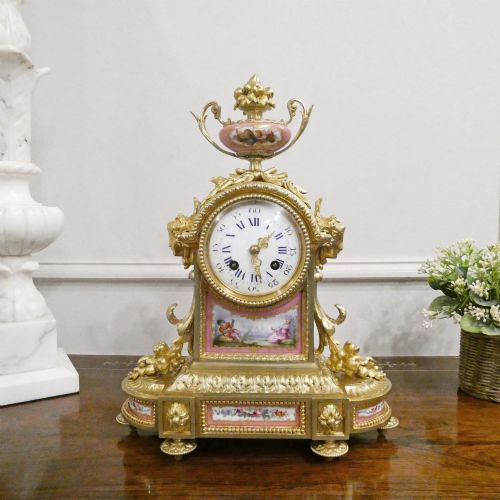
These pieces originated primarily in French workshops and incorporated ceramic plaques painted with floral subjects or pastoral scenes. Buyers encounter objects spanning several decades of the nineteenth century, reflecting Louis XVI and Rococo revival tastes.
Materials and technique
Foundry workers cast metal components in bronze or brass before applying a fine layer of gold amalgamation known as ormolu, creating a durable surface sheen. Skilled artisans chased the cooled metal to sharpen decorative details like acanthus leaves and scrolls.
Potters shaped ceramic components from porcelain, frequently utilising Sèvres-style bodies that painters decorated by hand with enamel pigments. Clockmakers then integrated mechanical movements, enamel dials, and sometimes glass domes to protect the finished assembly.
Several clocks hide their mechanisms behind serene hand-painted porcelain panels depicting birds and blossoms, keeping time behind pastoral beauty.
What separates the finest examples
The precision and depth of the metal chasing separate standard production from superior work, as hand-tooled surfaces catch light differently than cast-only edges. Master horologists signed their movements, adding authority to pieces paired with finely detailed porcelain panels.
The harmony between the gilt bronze mounts and the hand-painted ceramic determines the aesthetic success of the piece. Heavier gauge metalwork and intact mercury gilding indicate higher workshop standards during production.
Japy Freres·Jean-Baptiste Delettrez·Achille Brocot·Henry Marc·Etienne Lenoir·Rodier·PH Mourey·Le Roy & Fils·Tiffany & Co
The Ormolu Porcelain Mantel Clock Glossary
- Ormolu
- A technique of applying finely ground gold mercury to a bronze base, producing a rich metallic golden surface finish. This finish requires careful cleaning to preserve the historic layer.
- Garniture
- A set of decorative matching objects, such as urns or vases, displayed alongside the central clock. These sets complete a symmetrical arrangement on a mantelpiece.
- Drumhead clock
- A timepiece featuring a circular clock case mounted atop a pedestal or base, resembling the shape of a drum. This specific silhouette is common in nineteenth-century French designs.
- Sevres
- A term referencing the famed French porcelain factory style, characterised by rich blue grounds and hand-painted pastoral or floral panels. Authentic panels display distinct enamel artistry.
- Chasing
- The manual method of refining cast metal using small punches and hammers to create crisp surface textures. This detailed hand work distinguishes superior metal mounts.
Ormolu Porcelain Mantel Clock: Frequently Asked Questions
Where were these clocks made?
Most pieces originated in French workshops during the nineteenth century, drawing on Parisian clockmaking traditions and ceramic artistry. Makers combined local metal casting with specialised porcelain decoration.
Firms in Paris assembled these complicated decorative objects for domestic and international markets, incorporating regional styles from the Rococo and Louis XVI periods.
How do I wind the movement?
Winding requires inserting a specific key into the winding arbours on the enamel dial and turning gently until resistance is felt. Care must be taken not to overwind the mainspring.
Many nineteenth-century mechanical movements require professional setup to ensure accurate timekeeping after transport.
How should I clean the ormolu?
Ormolu surfaces require only dusting with a soft brush or dry cloth to remove accumulated particles. Moisture and chemical cleaners damage the historic gold surface.
Preserving the original mercury gilding depends on avoiding abrasive substances and handling the metal mounts minimally.