






Ormolu Pedestal Urns
These ormolu pedestal urns bring striking neoclassical dignity to a room, combining cast metalwork with fine stone and porcelain.
Ormolu Pedestal Urns
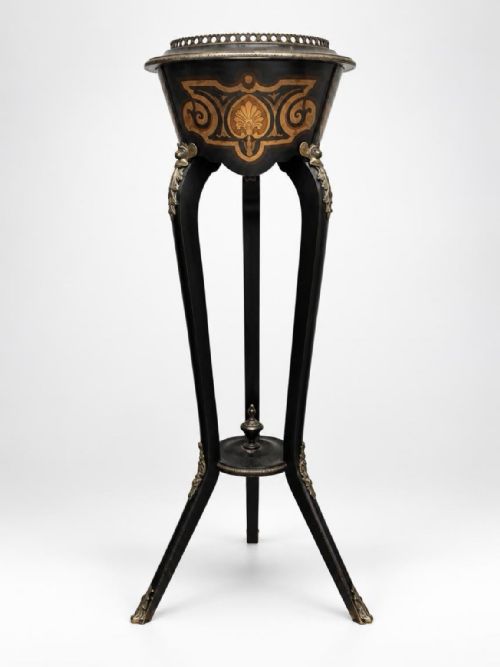
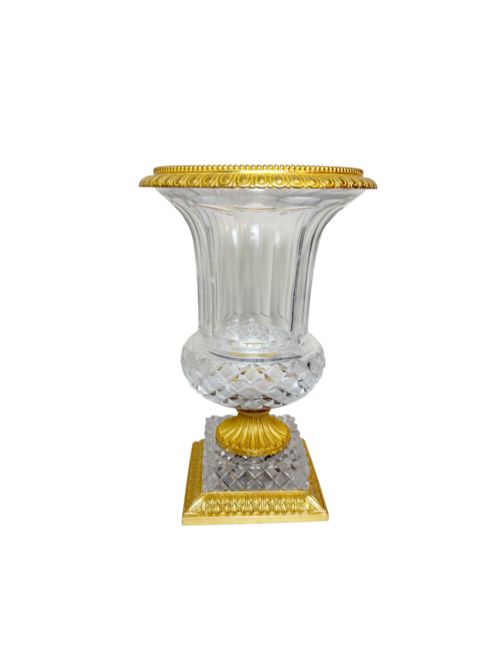
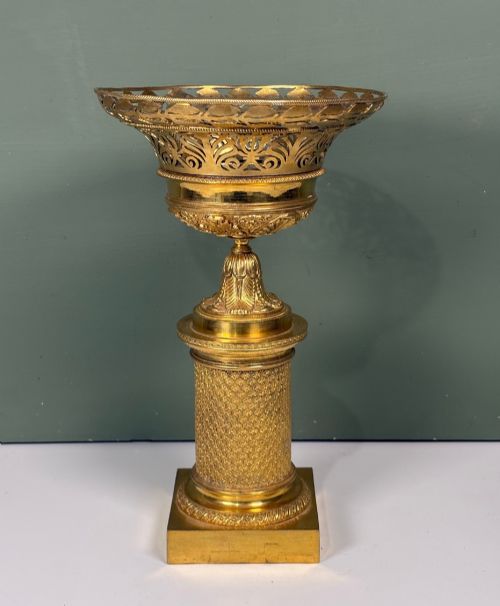
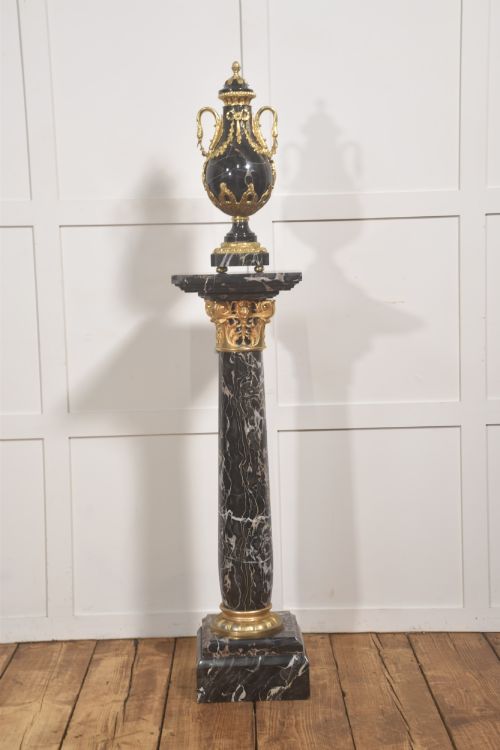
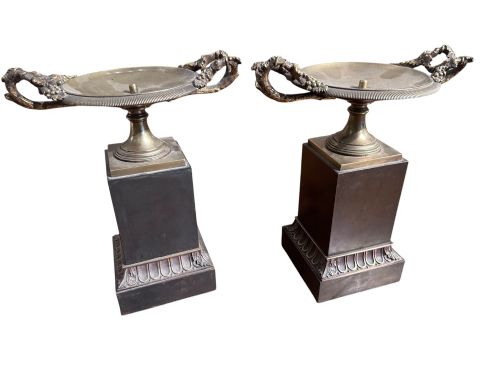
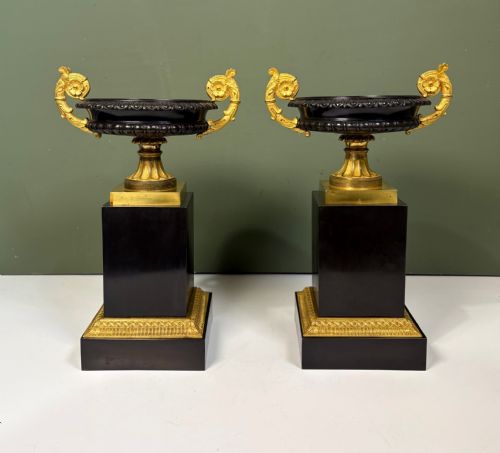
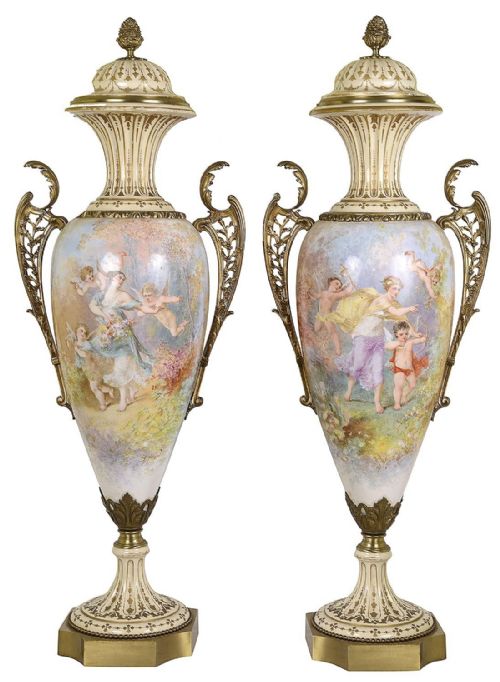
When you search for ormolu pedestal urns, you encounter ornamental vessels and stands rooted in French Empire, Regency, and Louis XVI styles. The selection ranges from monumental lidded vases and cassolettes to mounted tazzas and stands.
Most examples date across the nineteenth century, including Grand Tour pieces and later revival works from around 1890 to 1910. Forms draw heavily on classical antiquity, frequently pairing classical shapes with matching pedestals or plinths.
How ormolu pedestal urns were made
Maker's workshops combined cast bronze finished with mercury gilding, known as ormolu, alongside natural materials like black and white marble. Cut crystal, Paris porcelain, and ceramics provide body and colour to the metal mounts.
Joinery and mounting required precise metalwork to secure gilt bronze handles, collars, and bases onto fragile stone or ceramic bodies. Stands often incorporated fine parquetry woodwork or mahogany alongside metal trim.
Ormolu Pedestal Urns Retail Price Guide 2026
Typical asking prices for ormolu pedestal urns among the pieces listed under this phrase on Sellingantiques today, from the lower quarter to the upper quarter. They describe what is for sale here now, not the wider market.
Design styles represented include French Empire, Regency, Rococo Revival, and Neoclassical.
What varies in quality
The crispness of the bronze chasing dictates the visual success of the piece, separating sharp, hand-finished mount work from softer, later castings. Heavy, dense marble and unblemished crystal or porcelain elevate the presence of the whole object.
Proportion between the urn vessel and its pedestal or base determines the overall balance, as does the completeness of matching garniture sets and original mercury gilding.
The Ormolu Pedestal Urns Glossary
- Ormolu
- Gilt bronze produced by applying an amalgam of gold and mercury to a bronze base, then heating to drive off the mercury. This technique yields a deep, matte golden surface characteristic of nineteenth-century French metalwork.
- Cassolette
- A decorative lidded vase designed to function either as an urn or, when turned, as a perfume burner. These vessels often feature pierced covers and rich gilt-metal mounts.
- Tazza
- A shallow bowl or cup raised on a stem and foot, frequently utilised in classical designs. They appear in bronze, marble, and ormolu on this page.
- Garniture
- A set of three or more matching ornamental objects, typically comprising a central vase flanked by two smaller vessels. They are often mounted with ormolu trim and porcelain bodies.
- Grand Tour
- The nineteenth-century practice where wealthy travellers collected classical antiquities and decorative objects across Europe. Pieces from this tradition often combine bronze, marble, and ormolu.
Ormolu Pedestal Urns: Frequently Asked Questions
What rooms suit ormolu pedestal urns best?
These decorative objects work well on large sideboards, mantelpieces, or dedicated pedestals in reception rooms where their height and gilding catch the light.
Because many examples include heavy stone bases or marble columns, they require sturdy furniture or dedicated floor space to support their weight safely.
How do I care for ormolu mounts?
Gilt bronze requires gentle dusting with a soft, dry cloth to prevent the accumulation of grime in the chased recesses. Avoid abrasive metal polishes, which strip away the delicate layer of historical gilding.
Stone and porcelain elements can be cleaned separately with appropriate non-water methods depending on the fragility of the glaze or marble surface.
Are these pieces French in origin?
Many items reflect French Empire and revival styles from workshops operating in Paris and broader France during the nineteenth century. Grand Tour pieces also emerged from this cultural sphere as travellers gathered classical souvenirs.
Design vocabulary draws heavily on Louis XVI and neoclassical motifs, though production dates often extend towards the end of the nineteenth century.