


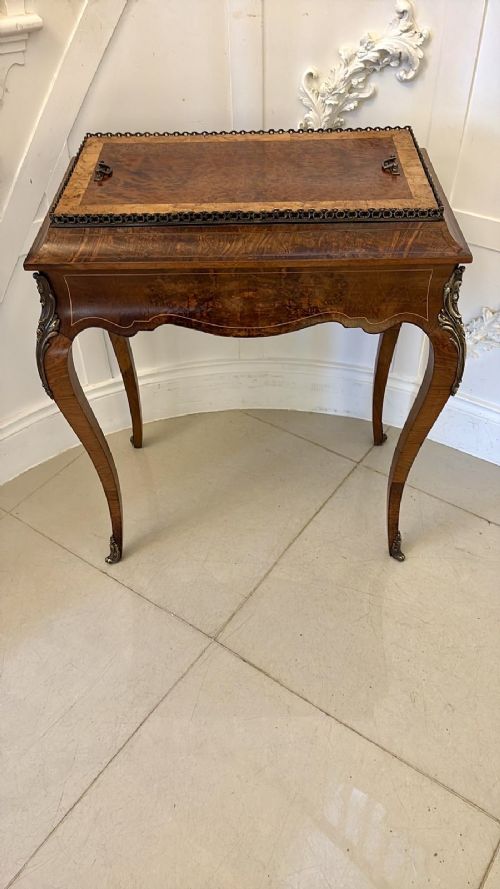


Ormolu Mounted Planter Table
An ormolu mounted planter table combines plant display with table utility, bringing nineteenth-century French elegance and rich cabinet woods into a room.
Ormolu Mounted Planter Table
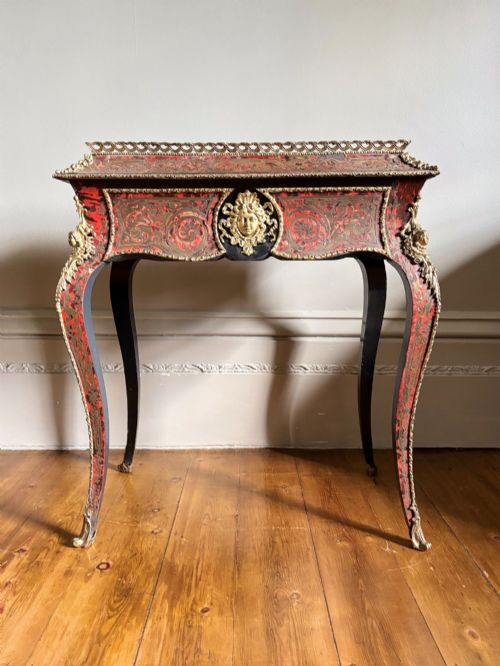
An ormolu mounted planter table serves as a dual-purpose furnishing designed to house indoor plants while functioning as a side table or wine cooler. When searching for an ormolu mounted planter table, buyers encounter nineteenth-century Victorian and Edwardian examples influenced by Louis XV and Louis XVI revivals, alongside Napoleon III designs.
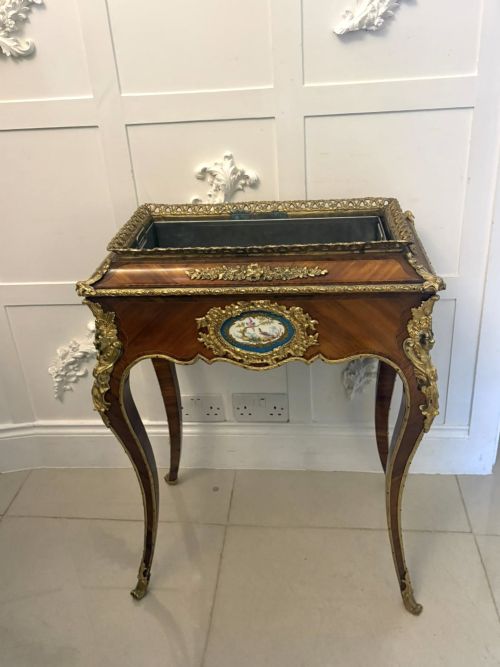
The most common form on this page is the French jardiniere table, often standing on slender cabriole legs and fitted with a removable metal or zinc liner to hold water and soil safely. These pieces merge the craftsmanship of cabinetmakers with decorative metalwork, creating focal points for botanical displays inside domestic interiors.
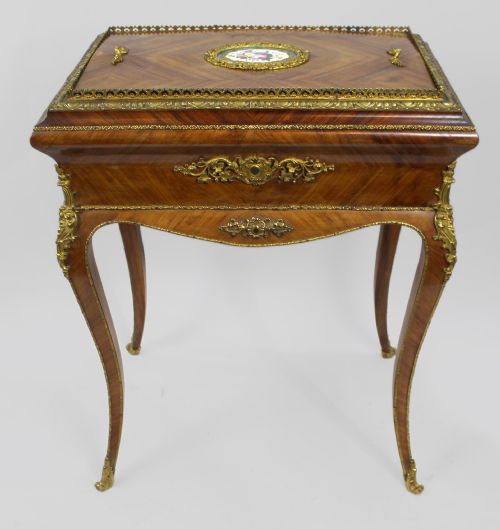
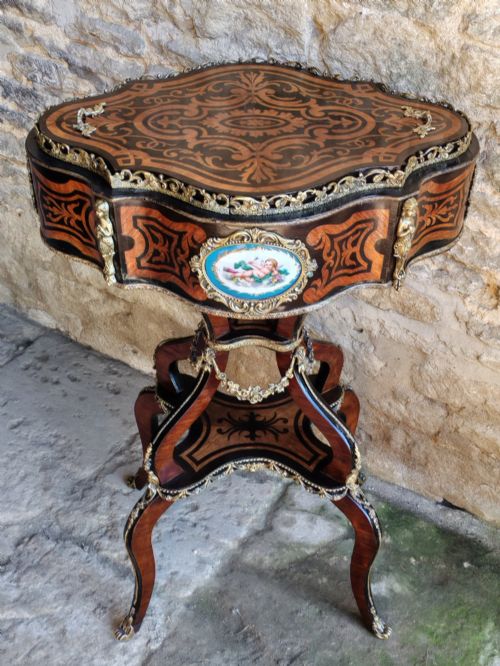
The material palette of an ormolu mounted planter table spans burr walnut, kingwood, satinwood, and ebonised wood, frequently decorated with marquetry inlay or porcelain plaques. They bridge the gap between practical horticulture and decorative art, reflecting the Victorian and nineteenth-century fascination with indoor greenery.
How they were made
Cabinetmakers built the carcass using native and exotic timbers such as walnut, mahogany, and kingwood, often applying marquetry patterns or aboyna inlay across the surfaces. Frames were shaped to accommodate fitted metal interiors, predominantly zinc or brass liners designed to protect the wooden structure from moisture.
Gilt bronze or brass mounts, known as ormolu, were cast and chased before being applied to corners, legs, and aprons to accent the contours of the furniture. Porcelain plaques, sometimes in the Sèvres style, were set into the woodwork as central decorative panels, secured with bronze bezels.
Ormolu Mounted Planter Table Retail Price Guide 2026
Typical asking prices for ormolu mounted planter table among the pieces listed under this phrase on Sellingantiques today, from the lower quarter to the upper quarter. They describe what is for sale here now, not the wider market.
What varies in quality
The quality of an ormolu mounted planter table rests upon the crispness of the gilt bronze chasing and the complexity of the timber veneers and marquetry. Finer examples display deeply sculpted ormolu mounts that fit the wooden carcass precisely, alongside masterfully matched burr walnut or kingwood grains.
Interior liners and original fittings heavily influence the desirability of the piece, with intact zinc or brass inserts showing better preservation of the surrounding wood. The harmony between the porcelain plaques, the floral marquetry, and the gilt metal mounts separates standard production from exceptional cabinetwork.
The Ormolu Mounted Planter Table Glossary
- Ormolu
- Gilded bronze mounts applied to the angles, feet, and friezes of nineteenth-century furniture. This decorative technique added rich metallic contrast to dark cabinet woods.
- Jardiniere
- A decorative stand or container intended for holding plants and flowers. In table forms, it combines a plant receptacle with a functional side table or wine cooler surface.
- Kingwood
- A dense, heavy timber with rich dark violet and brown tones used extensively in French cabinetmaking. It provided a luxurious contrasting grain for inlaid tabletop borders.
Ormolu Mounted Planter Table: Frequently Asked Questions
What is an ormolu mounted planter table used for?
These tables were originally manufactured to display live plants indoors while protecting surrounding floors and furniture through fitted metal liners. Their dual functionality also allowed them to serve as occasional side tables or wine coolers during entertaining.
Today, they fulfill a similar decorative role in living spaces and hallways. Collectors place potted greenery or dried arrangements within them to recreate nineteenth-century interior aesthetics.
How do you care for the wood and ormolu mounts?
Maintenance requires keeping wooden surfaces away from direct moisture by ensuring the internal liner remains watertight and free of leaks. Gentle dusting of the timber and gilt bronze preserves the finish without wearing down the gilding.
Avoid commercial abrasive cleaners on the ormolu mounts, as harsh chemicals can strip the gold finish from the bronze. Periodic application of appropriate furniture wax keeps the kingwood or walnut nourished.
How do I identify a Victorian ormolu mounted planter table?
Identification relies on examining the combination of revival styles, such as Louis XV curves, alongside nineteenth-century construction methods and timber choices. The presence of specific woods like burr walnut, ebonised finishes, and distinct gilt metal mounts points directly to this era.
Cabinetry details, including the cut of the veneer and the weight of the bronze mounts, help distinguish nineteenth-century examples from later reproductions. Examining the interior construction reveals the age of the carcass and liners.
Were these tables made in pairs or individually?
The majority of these planter tables were constructed as individual statement pieces for prominent placement in nineteenth-century drawing rooms and reception areas. Their elaborate marquetry and gilt mounts meant each piece required significant artisan labour.
Finding matching pairs is uncommon due to their bespoke nature and the specific function they served within a room. Most survive as standalone examples of Victorian and French cabinetmaking.