


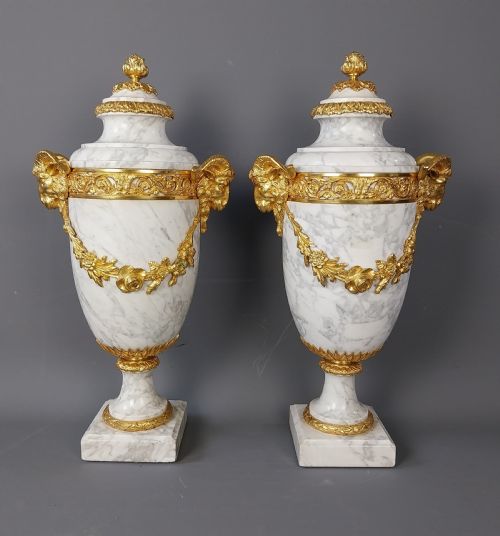


Ormolu Mounted Marble Urns
Ormolu mounted marble urns are decorative vessels combining stone bodies with gilt metal mounts, prized for bringing classical French elegance to interiors.
Ormolu Mounted Marble Urns
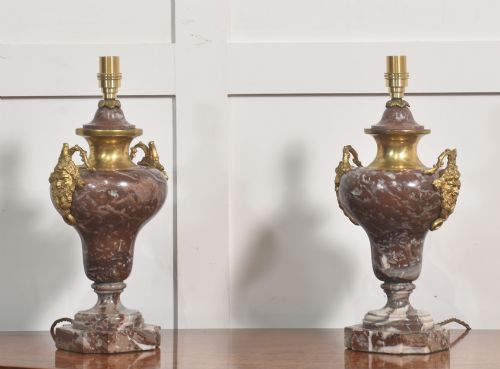
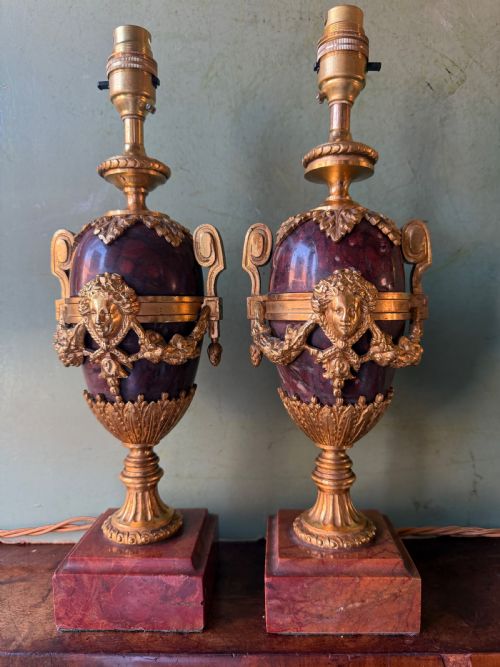
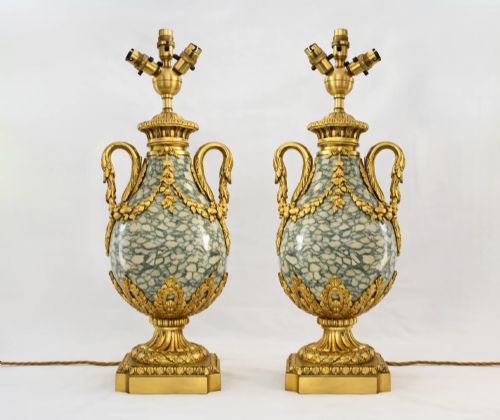
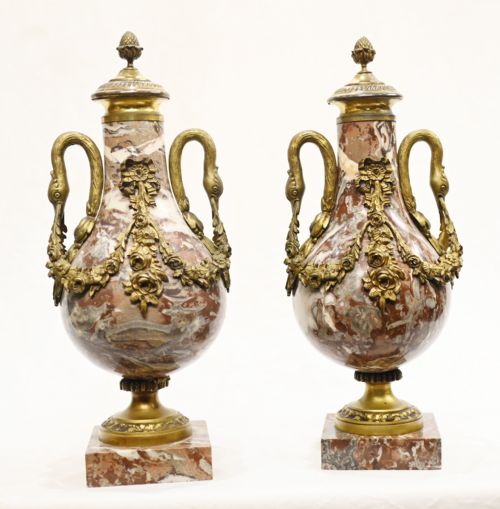
When you search for ormolu mounted marble urns, you encounter decorative vessels, cassolettes, and table lamps originating mainly from the nineteenth century. These pieces reflect historical French design periods, notably Louis XVI style, Empire, and Neoclassical tastes.
You are most likely to meet pairs of matching decorative urns or converted lamp forms on this page. The stone bodies frequently appear in varieties such as rouge marble, white marble, green marble, and siena marble.
The inventory also includes related decorative objects such as tazzas, mantel clocks, and pedestals sharing the same material vocabulary. These items demonstrate the enduring popularity of classical antiquity and Grand Tour aesthetics throughout the Victorian era.
How they were made
The makers shaped natural marble on lathes or through hand carving to form the bodies of the urns and cassolettes. This stone component provides a heavy, cool foundation for the metallic enrichment.
Artisans cast ormolu, or gilt bronze, into decorative mounts, handles, and base collars using traditional foundry techniques. Guilders then applied fine gold or brass finishes to the bronze elements to achieve the characteristic bright metallic contrast against the stone.
Grand Tour travellers routinely packed heavy marble urns into their luggage, risking carriage springs just to impress dinner guests back home.
What varies in quality
Quality rests significantly in the crispness and depth of the ormolu chasing. Superior mounts show sharply defined foliage, beads, and drapery that have been hand-finished with chisels after casting, whereas lesser examples appear soft and flat.
The selection and turning of the marble itself determine the visual weight of the piece. Uniform veining, lack of structural repairs, and harmonious pairing across a set distinguish the finer examples from standard decorative items.
Louis Goret·Achille Brocot·James Ritchie and Son
The Ormolu Mounted Marble Urns Glossary
- Ormolu
- Gilt bronze mounts applied to furniture, clocks, and decorative objects. The term derives from the French for ground gold, describing the warm metallic finish.
- Cassolette
- A dual-purpose vessel featuring a reversible lid that functions as a solid cover or turns to reveal a socket for holding incense or a candle.
- Tazza
- A shallow ornamental vase or cup raised on a stem and foot. These pieces frequently draw upon classical Greek and Roman pottery shapes.
- Grand Tour
- The nineteenth-century practice where affluent travellers collected continental antiquities and classical ornaments. Many decorative urns originate from this cultural movement.
- Neoclassical
- A revival style drawing inspiration from the classical art and architecture of ancient Greece and Rome. It dominates the decorative vocabulary of late eighteenth and nineteenth-century French metalwork.
Ormolu Mounted Marble Urns: Frequently Asked Questions
How were cassolettes used?
Cassolettes functioned as versatile decorative items with removable or reversible lids. One side served as a solid urn top, while the reverse held a nozzle for burning scents.
In period interiors, they sat upon mantelpieces, console tables, and pedestals. Their dual nature allowed owners to alter the mantel display according to the occasion.
How do I style these urns at home?
These decorative urns suit prominent placement on heavy timber sideboards, marble mantelpieces, or dedicated pedestals and plinths. Their classical proportions anchor symmetrical arrangements in traditional or eclectic interiors.
When placed as lamps, they provide soft accent lighting while retaining their sculptural silhouette. Pair them with neutral backgrounds to highlight the contrast between the stone and gilt bronze.
How can I tell the period?
Dating relies on examining the casting quality of the ormolu, the style of the marble turning, and assembly methods. Nineteenth-century interpretations often embrace Louis XVI Revival and Empire idioms.
Signatures or stamps on the bronze work or clock movements occasionally provide direct attribution to makers or retailers. Comparing the weight and mineral patterns of the stone also helps contextualise the origin.