


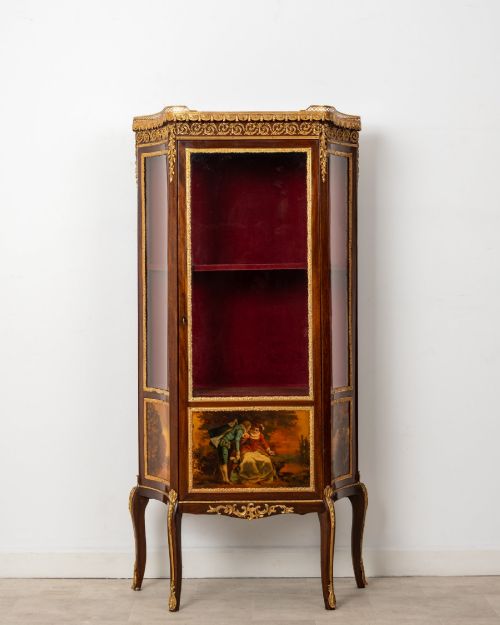
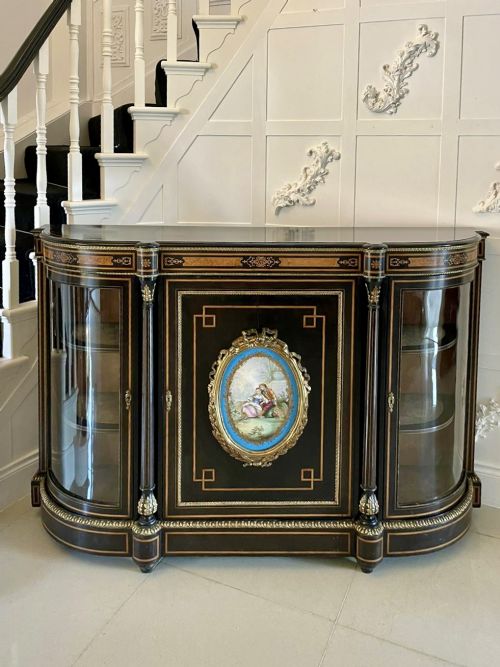
Ormolu Mounted Glass
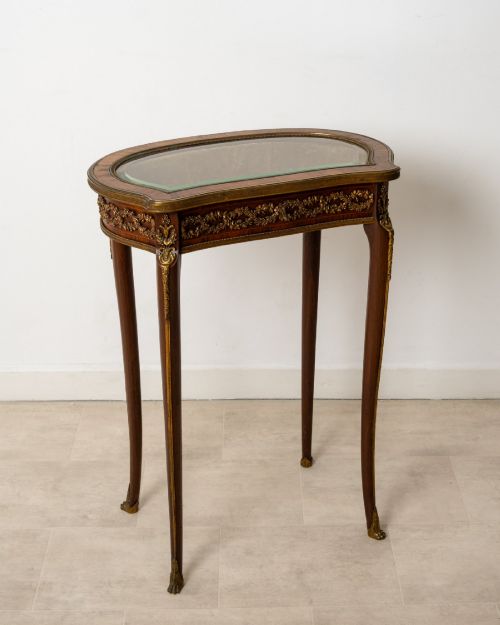
When you encounter ormolu mounted glass, you are looking at nineteenth-century vessels and caskets framed in rich gilded bronze.
Ormolu Mounted Glass
Ormolu mounted glass combines cast and gilded metal fittings with transparent or coloured glass bodies, taking the form of vases, caskets, scent bottles, and centrepieces. These items originate predominantly from nineteenth-century French and Victorian workshops.
Vessels span from large cut-glass lamps and columns to small opaline glass boxes and caskets. The glass elements serve as the primary body, while the ormolu mounts provide structural framing and decorative handles, feet, or rims.
What varies in quality
The precision and depth of the bronze chasing dictate the upper tier of quality, where mounts display sharp relief and fluid integration with the glass body. Lower tiers exhibit softer, cast-as-is metalwork with minimal hand-finishing.
Glass clarity and weight also separate standard production from exceptional pieces, particularly in cut or overlay crystal where depth of colour and heavy facet work demand superior skill.
François Linke·H. J. Hatfield & Sons·Maison Gagneau
The Ormolu Mounted Glass Glossary
- Ormolu
- A gilded bronze technique utilising mercury amalgamation or modern electroplating to impart a bright gold appearance to cast metal mounts.
- Opaline glass
- An opaque or semi-translucent glass, often tinted in delicate shades of blue or white, popular in nineteenth-century decorative boxes.
- Cut glass
- Glassware shaped by grinding facets and patterns into the surface using rotating wheels to refract light through the vessel.
- Casket
- A small decorative box or chest, frequently fitted with hinged lids and lockplates for holding trinkets or jewellery.
Ormolu Mounted Glass: Frequently Asked Questions
How were ormolu mounted glass boxes used?
These decorative caskets and boxes served as vanity table accessories for holding trinkets, jewellery, or writing implements.
Their presence in nineteenth-century interiors reflected a taste for refined European craftsmanship and ornamental display.
How do you clean ormolu mounts safely?
Maintenance requires dry dusting with a soft brush to protect the delicate gold finish from abrasive wear.
Moisture and commercial metal polishes should be avoided entirely to prevent stripping the historic gilding from the bronze.
Are these pieces purely French in origin?
While French makers produced a significant portion of these decorative items, British Victorian workshops also created comparable designs.
Stylistic influences often crossed the Channel, blending French revival tastes with domestic cabinetmaking and glass production.
How do you distinguish nineteenth-century glass?
Period pieces display weight, hand-finished chasing on the bronze mounts, and subtle imperfections in the glass material.
Examining the construction of the mounts and the joining techniques helps clarify the production era.