




Decorative Glass Pitchers
These decorative glass pitchers bring colour and form to a room, combining glass and metal mounts in shapes that range from Victorian ewers to Edwardian claret jugs.
Decorative Glass Pitchers
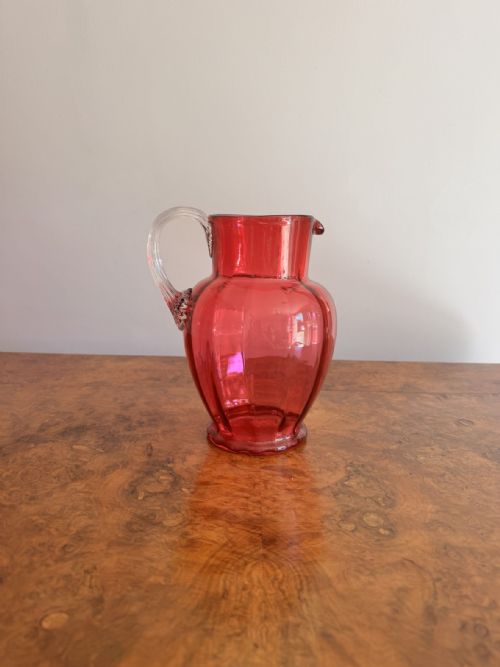
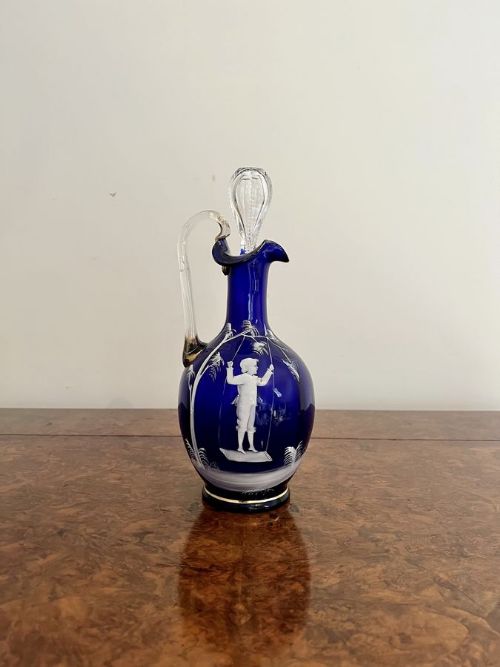
The most common versions met on this page combine blown or cut glass bodies with mounts of silver plate, gilt bronze, or ormolu. Distinctive colour variations such as cranberry glass, blue glass, and clear glass feature prominently across the selection.
Stylistic influences span the Victorian period, Victorian Rococo Revival, French Rococo Revival, and Art Nouveau. Certain examples utilise overshot techniques or enamel detailing like white piping to distinguish their surfaces.
Materials and construction
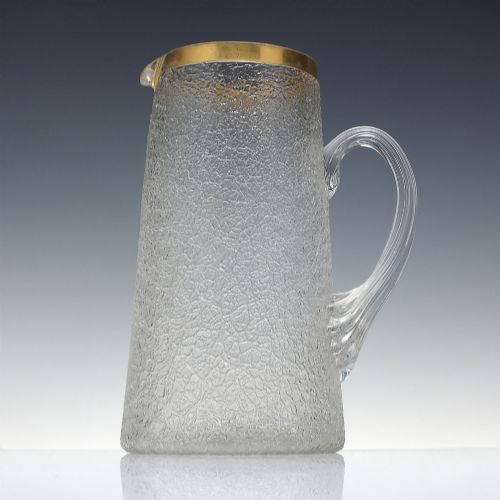
Makers formed the bodies of these pitchers using blown glass, often employing cranberry or blue hues, or shaping clear glass with deep hand-cut facets. Techniques such as the overshot method produced textured exterior surfaces on tall water jugs.
Metal components, including silver plate, gold leaf, and ormolu, were cast and applied to form handles, hinged lids, mounts, and rims. Enamel details like white piping were fused directly onto the glass body to add decorative contrast.
Some nineteenth-century makers evidently decided that ordinary water jugs needed to look like miniature fountains.
Assessing quality in decorative glass pitchers
Quality reveals itself in the weight and clarity of the glass, the depth of the hand-cutting, and the richness of the applied colour. Superior pieces show precision in the execution of decorative motifs like enamel piping or textured overshot finishes.
The integration between the glass body and the metal mounts dictates the standard of manufacture. Finely cast silver plate, gilt bronze, or ormolu mounts that fit the contours of the glass securely separate finer productions from simpler utilitarian wares.
The Decorative Glass Pitchers Glossary
- Ewer
- A large jug with a wide spout and a handle, historically used for pouring water but frequently made as an ornamental object in the nineteenth century.
- Claret jug
- A specialised vessel designed for serving red wine at the table, typically featuring a glass body fitted with a hinged metal lid and handle.
- Overshot glass
- A glass-making technique where fine threads of molten glass are rolled over a blown core to create a textured, icy surface.
- Ormolu
- Finely ground high-carat gold applied to a bronze base, used extensively for decorative mounts on nineteenth-century French and English vessels.
- Cranberry glass
- A type of transparent red glass produced by adding gold chloride to the molten batch, resulting in distinct pink and deep red tones.
Decorative Glass Pitchers: Frequently Asked Questions
What is a decorative glass pitcher used for?
These vessels served various functions on nineteenth-century dining tables and sideboards, from holding water and claret to serving dessert wine or cream.
Many examples were also produced strictly as ornamental ewers or decorative items intended for display rather than functional pouring.
How do I identify Victorian glass pitchers?
Victorian pieces often display specific stylistic traits such as Rococo Revival curves, vibrant cranberry or blue colouring, and heavy cut glass patterns.
They frequently incorporate silver-plated mounts, gilt bronze details, or hand-applied enamel piping on the body.
How should I clean antique glass pitchers?
Cleaning requires warm water and mild soap, avoiding harsh abrasives that could damage delicate enamel work, gold leaf, or overshot glass surfaces.
Silver-plated and ormolu mounts should be treated separately with appropriate metal care products to preserve the finish without touching the glass.