
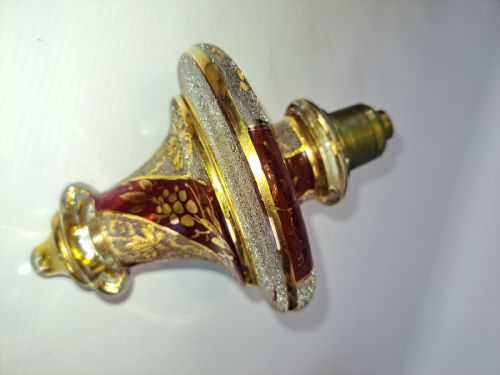


Gold Glass Decanter
These gold glass decanter pieces bring shimmering gilded elegance and rich historical character to any table.
Gold Glass Decanter
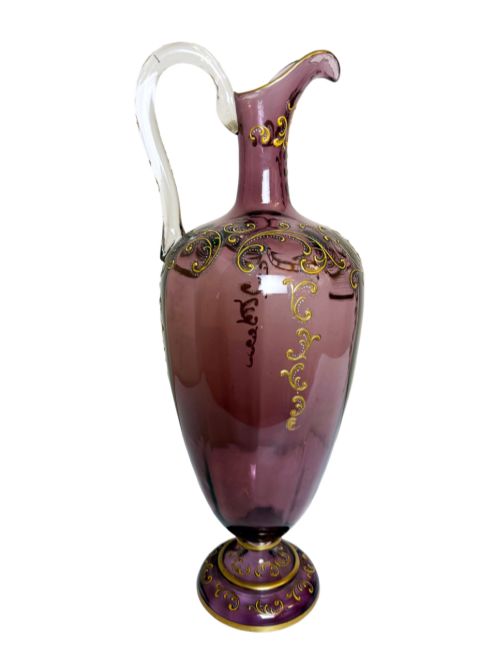
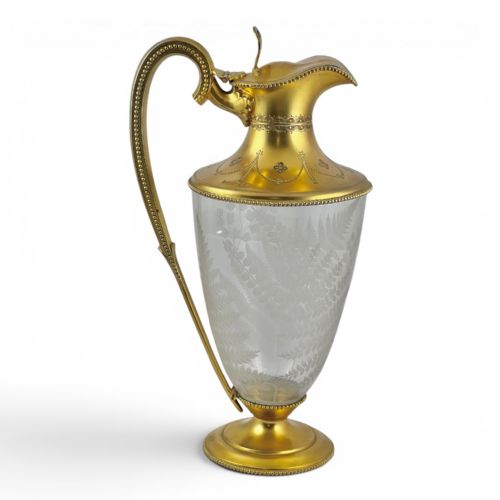
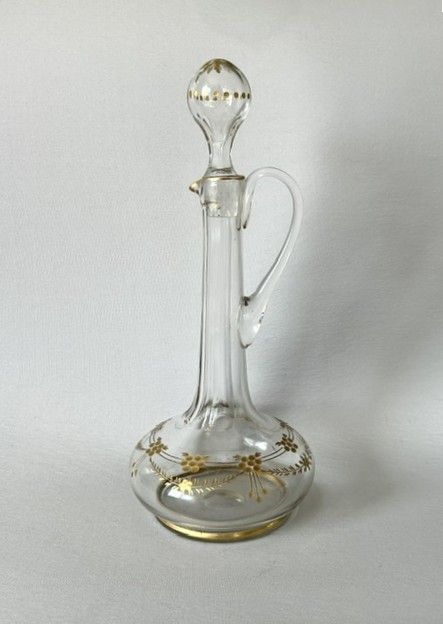
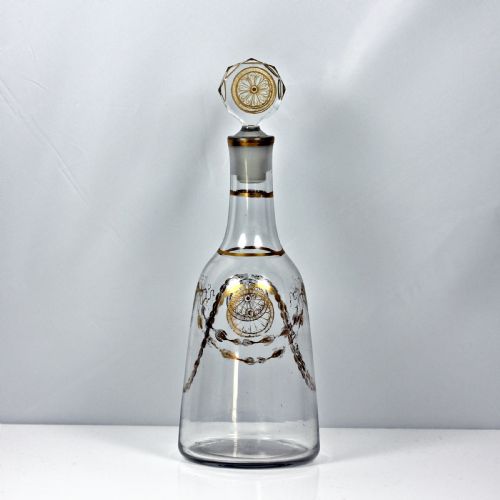
When you search for a gold glass decanter, you encounter a refined drinking vessel that combines translucent crystal or glass with luminous metallic ornamentation. The pieces on this page span the Georgian, Victorian, and mid-twentieth-century periods, showcasing forms from modest half-sized decanters to grand claret jugs and ewers.
You are most likely to meet ornate Victorian and Bohemian examples featuring hand-painted gilt applique, etched motifs, or ruby glass bodies. French carafes and English campaign sets also appear, demonstrating how diverse these vessels were across different European drawing rooms and dining spaces.
How they were made
The foundation of each piece relies on blown glass or cut crystal, shaped by hand before any decoration is applied. Workshops utilised techniques such as etching and surface cutting to create texture across the body of the vessel.
Gilding was then painstakingly added, using gold leaf or gold gilt applied directly to the glass surface, sometimes accompanied by silver gilt mounts or ormolu hardware secured around the neck and handle.
The listings span the eighteenth, nineteenth, and twentieth centuries, uniting materials like ruby glass, crystal, and silver gilt.
What varies in quality
The distinction between ordinary production and superior craftsmanship rests in the weight of the crystal and the precision of the glass cutting. Finer vessels display deep, crisp facets that refract light cleanly, whereas simpler examples rely solely on surface painting.
The execution of the gilding also dictates the level of refinement. Hand-painted gilt applique that retains its density and burnished lustre without rubbing denotes a higher tier of workmanship than worn or flat surface decoration.
James Giles·Freeman And Son Ltd·Baccarat
The Gold Glass Decanter Glossary
- Gilt
- A thin layer of gold applied to the surface of glass or metal. This finish provides the characteristic metallic sheen seen on decorated decanters.
- Claret jug
- A specialised pouring vessel designed specifically for serving red wine. These jugs frequently incorporate metal mounts and hinged lids.
- Ewer
- A large pitcher with a wide spout and a curved handle. Historically utilised for water at the table, they share forms with many decorative decanters.
- Latticinio
- A glassmaking technique involving fine opaque white glass threads embedded within clear blown glass. This creates delicate linear patterns inside the vessel wall.
Gold Glass Decanter: Frequently Asked Questions
Can I still use these for serving wine?
Many of these vessels remain entirely functional for serving wine or spirits at the dining table. Ensure the interior is thoroughly rinsed before any liquid is introduced.
Keep in mind that pieces featuring delicate hand-painted gilt applique require hand washing rather than automated cleaning. Older cork or glass stoppers should be handled with care during removal.
How do I tell Georgian decanters from Victorian ones?
Georgian examples often display restrained proportions, such as half-sized bodies or campaign officer sets designed for travel. Their cutting tends to be simpler and heavier in hand.
Victorian and later nineteenth-century pieces lean towards elaborate ornamentation, incorporating ruby glass, etched Bohemian motifs, or heavy silver gilt mounts. The decorative ambition expanded significantly during the later periods.
What is ormolu on these vessels?
Ormolu refers to gilded bronze mounts fitted to the structural parts of the glass body, such as the rim, handle, or base. French workshops frequently employed this technique to add architectural weight and decorative flourish.
These metal additions provide stability to blown glass forms while enhancing the overall visual richness. They require careful dusting to maintain their historic lustre.