




Ormolu Mantle Clock
These ormolu mantle clock pieces bring French decorative metalwork and precision timekeeping together for a striking mantelpiece display.
Understanding the ormolu mantle clock
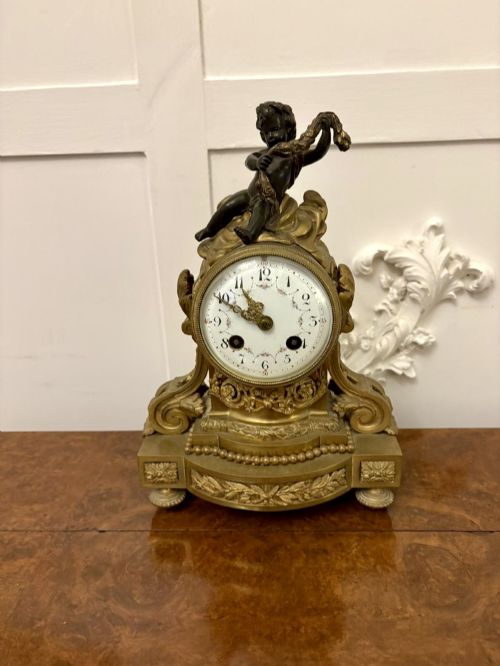
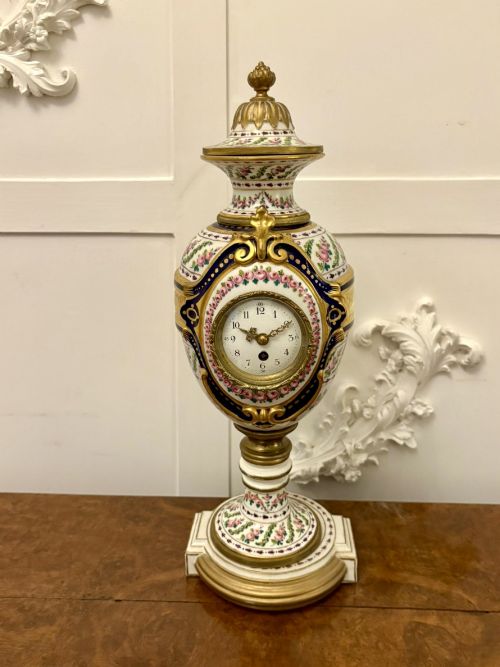
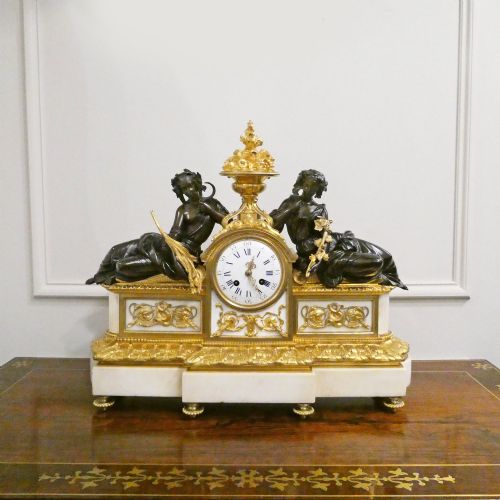
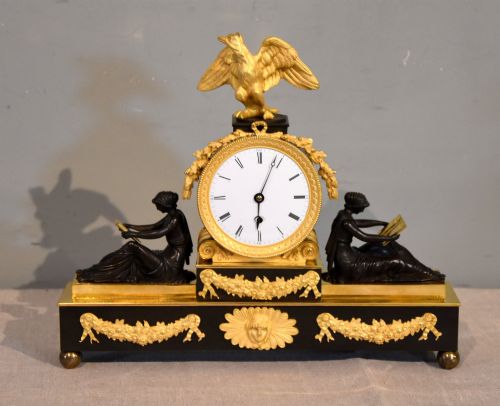
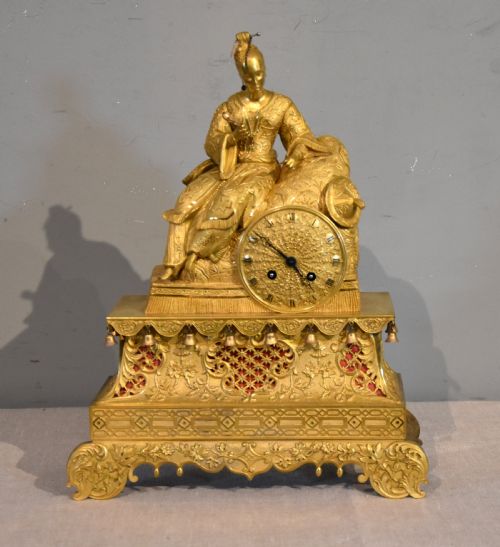
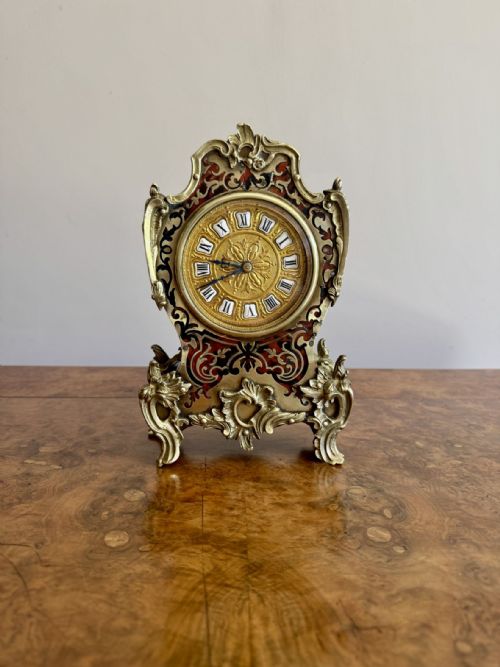
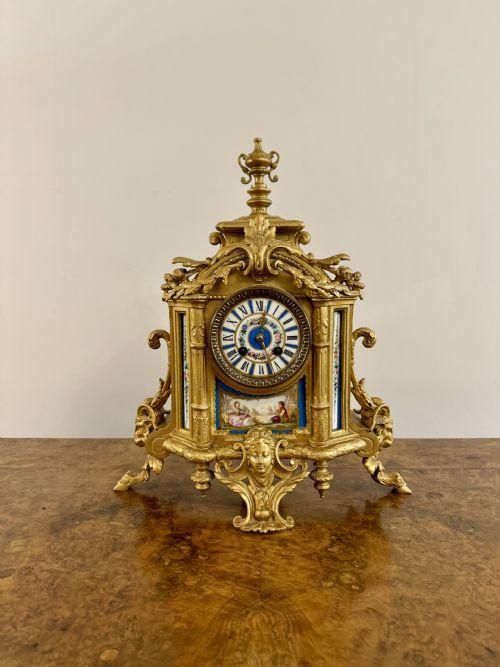
An ormolu mantle clock serves as a decorative timekeeper, most frequently originating from French workshops during the nineteenth century. These pieces combine elaborate metal casting with marble, alabaster, porcelain, or crystal glass elements to create substantial decorative objects.
The selections on this page span Victorian, Edwardian, and specific decades such as the 1890s, alongside historical revivals like the French Empire and Louis XVI styles. Buyers will encounter both standalone mantel clocks and complete clock garniture sets accompanied by matching side ornaments.
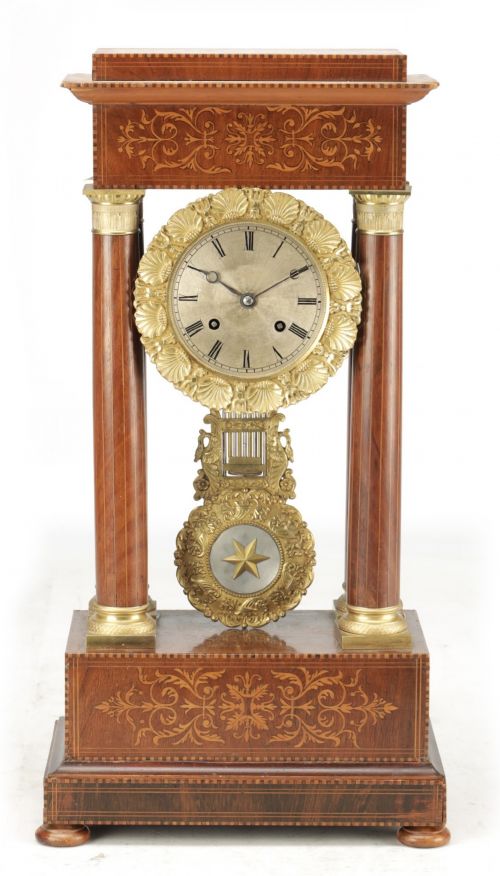
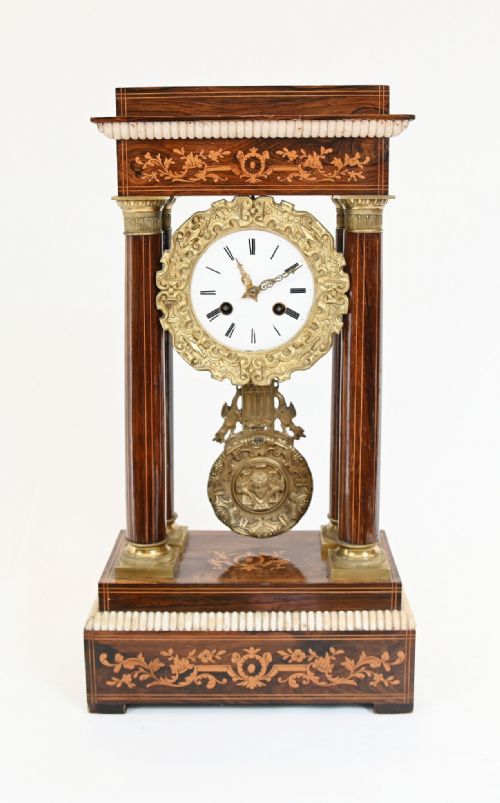
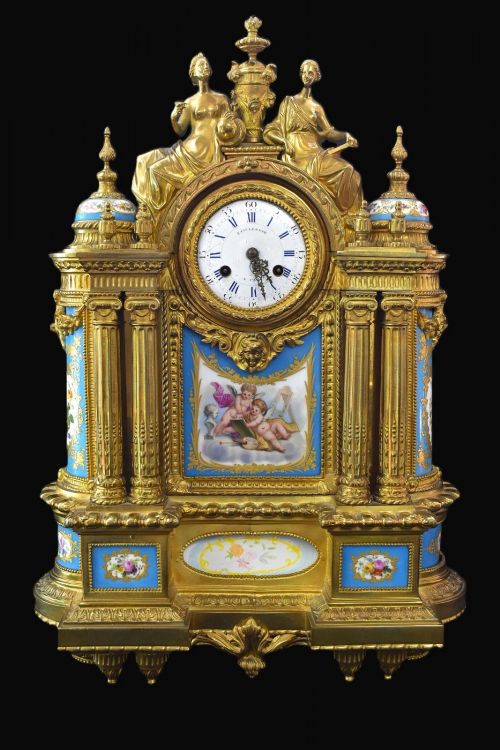
Forms range from petite portico clocks to large, ornate architectural cases featuring champleve enamel dials, bronze figures, and crystal regulator panels. The core purpose remains domestic timekeeping wrapped in elaborate ornamentation.
Materials and construction
Gilt bronze and ormolu form the visual foundation of these timepieces, paired frequently with white marble, green onyx, alabaster, and brass structures. Artisans also incorporated hand-painted porcelain panels and glass crystals into the housings.
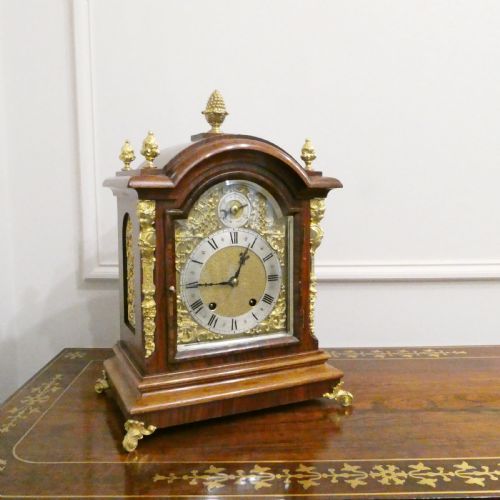
Movements rely on traditional eight-day striking mechanisms, sometimes utilising silk suspensions or fusee and verge escapements. Cases combine cast metal mounts with fitted dial faces featuring enamel numerals.
Retail Price Guide 2026
Typical UK retail prices for ormolu mantle clock, calculated from the Sellingantiques database of over a million retail prices indexed since 2003. This retail price guide relies exclusively on Sellingantiques data; no external sources or auction records are used, so the figures do not describe the wider market.
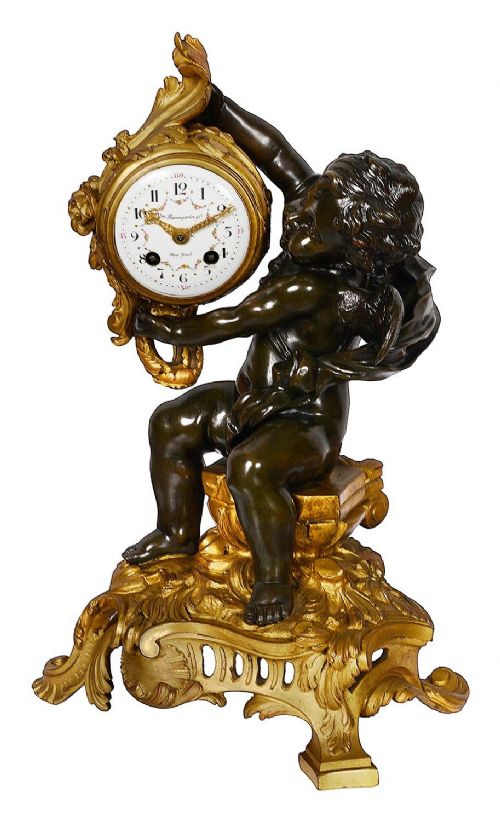
Several clocks feature cast bronze cherubs lingering near the dial, keeping a watchful eye on the passing hours.
Distinctions in craftsmanship
Differentiation across these pieces lies in the crispness of the gilt bronze chasing and the integration of secondary materials like marble or porcelain. Superior examples display deeply detailed casting on figural mounts and carefully hand-painted enamel dials.
The sophistication of the internal movement, from standard striking gear to specialised fusee and verge mechanisms, dictates the technical calibre of the piece. Matching garniture sets and signed maker movements further elevate the standing of an individual clock.
Ravrio·James McCabe·Japy Freres·Raingo Fres Paris
The Ormolu Mantle Clock Glossary
- Ormolu
- Gilded bronze produced through a mercury amalgamation technique, creating a rich golden surface finish on decorative metal mounts.
- Garniture
- A set consisting of a central clock flanked by matching ornamental pieces such as urns or candelabra designed for a mantelpiece.
- Champleve
- An enamelling technique where troughs are carved into the metal surface and filled with vitreous paste before firing.
- Portico clock
- A distinct architectural clock style featuring a flat entablature supported by columns, often housing a suspended pendulum.
- Regulator
- A precision timekeeper featuring a crystal glass housing that reveals the internal mechanical components from multiple angles.
Frequently Asked Questions
How do I wind an ormolu mantle clock?
Most pieces use a dedicated winding key inserted into arbors on the enamel dial face to tension the internal springs.
Care should be taken not to overwind the mechanism to preserve the historical spring steel.
What styles are common in these clocks?
French Empire, Louis XVI Revival, and Rococo Revival dominate the design vocabulary of these decorative timepieces.
These styles draw on classical architectural motifs, floral garlands, and ornate scrolling foliage.
Are these clocks suitable for daily use?
These antique timepieces function as working clocks when properly maintained and serviced by a professional horologist.
Many retain their original eight-day striking capabilities and bell or gong sound components.
How do I identify a clock garniture?
A garniture includes the primary mantel clock alongside matching side pieces designed to sit together as a unified set.
These matching items typically share identical marble bases, ormolu mounts, and decorative themes.