





Ormolu Mahogany Tier Table
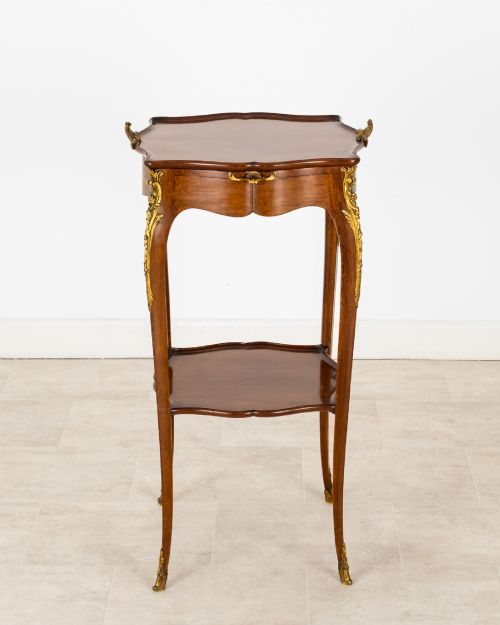
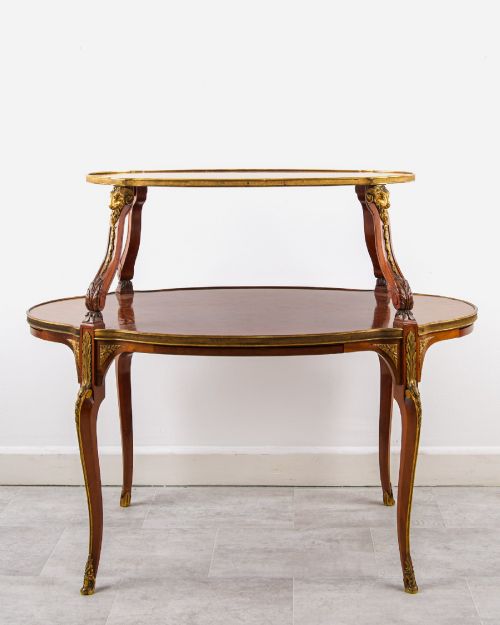
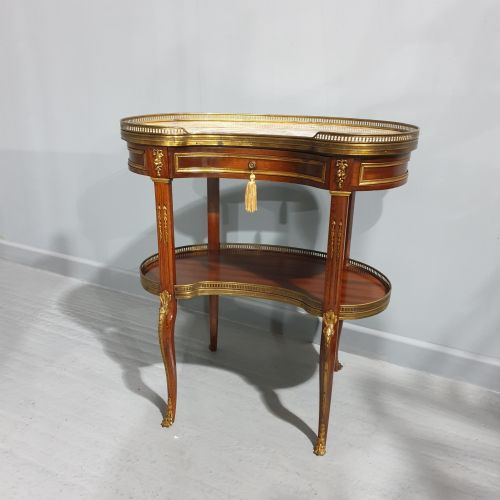
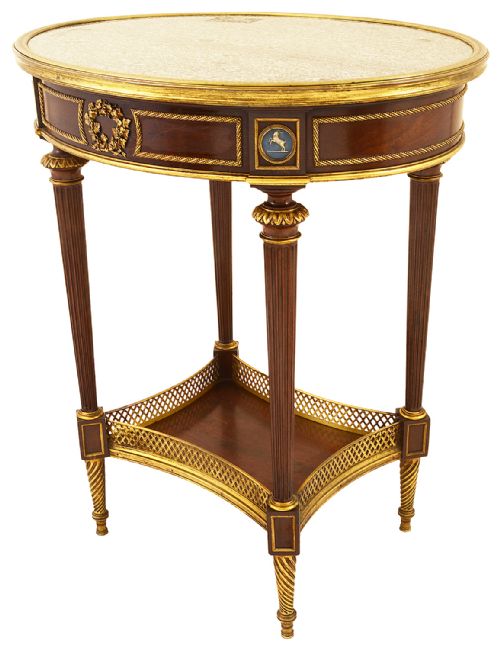
These ormolu mahogany tier table examples bring together rich timber and chased gilt mounts to anchor a room.
Ormolu Mahogany Tier Table
An ormolu mahogany tier table combines timber construction with cast metal highlights, appearing most often in nineteenth-century French designs. Makers built these pieces as étagères, side tables, and occasional tables with multiple surfaces for display.
The form spans revival movements such as Louis XV, Louis XVI, and Napoleon III. Buyers meet pieces featuring stacked tiers, kidney shapes, and marble tops supported by slender legs.
How they were made
Craftsmen built the frames using mahogany and rosewood, frequently incorporating marquetry inlay to decorate the surfaces. Timber sections were shaped into octagonal, rectangular, or curved outlines.
Mounts in ormolu, gilt bronze, and brass were cast and chased separately before attachment to the wooden structures. Marble inserts were fitted into dedicated top frames to provide durable surfaces.
Plum pudding mahogany veneer lends timber surfaces a dotted grain that resembles festive fruit.
What varies in quality
The crispness of the metal chasing dictates the upper tier of quality, where details remain sharp and well-defined. Heavier timber selection and precise marquetry patterns distinguish finer examples from simpler production.
Attribution to documented makers elevates a piece, as seen in works linked to workshops like those of François Linke or Henry Dasson. Integrated design choices, such as matching marble tops and balanced proportions, separate standard items from superior ones.
François Linke·Henry Dasson
The Ormolu Mahogany Tier Table Glossary
- Ormolu
- Gilt bronze mounts applied to furniture. This technique involves gilding a bronze base with gold amalgam.
- Étagère
- A piece of furniture with multiple tiers for display. These stacked shelves provide extra surface area.
- Marquetry
- Inlay work using pieces of wood veneer to form decorative patterns. Craftsmen apply these veneers onto the primary timber body.
- Gueridon
- A small round table supported by one or more columns. These tables often feature marble tops and metal mounts.
- Napoleon III Style
- A nineteenth-century French design movement reviving earlier monarchical aesthetics. It favours ornate mounts and mixed materials.
Ormolu Mahogany Tier Table: Frequently Asked Questions
What is an ormolu mahogany tier table used for?
These tables served as decorative surfaces in nineteenth-century drawing rooms for holding lamps, small objects, or tea sets.
Today, they function as occasional pieces in sitting rooms or hallways to display decorative items across their multiple tiers.
How do I identify a Napoleon III style table?
Napoleon III pieces often feature rich mahogany veneers combined with prominent gilt bronze or brass mounts.
They draw on earlier French court designs, incorporating curved lines, marquetry inlay, and sometimes inset marble tops.
Are all these tables French in origin?
The majority of the pieces recorded in the evidence stem from French workshops and revival movements of the nineteenth century.
English interpretations also appear under revival categories, reflecting cross-channel design influences during the period.