

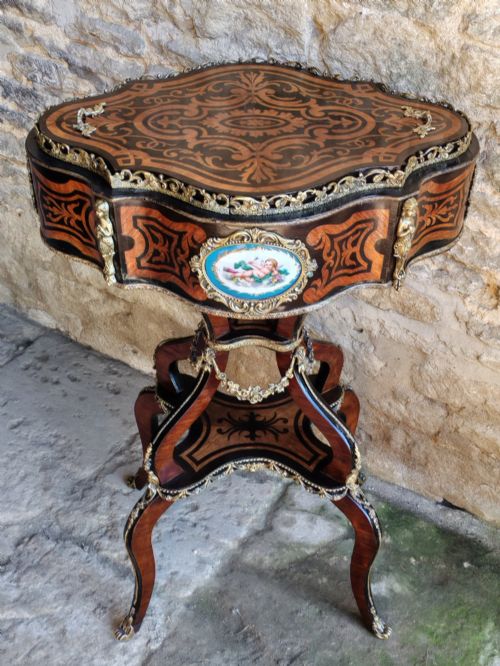

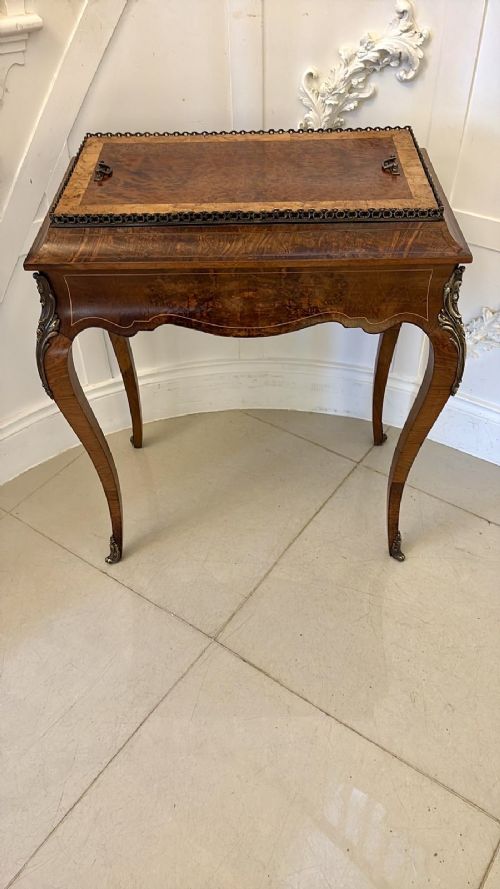


Ormolu Jardiniere Stand
An ormolu jardiniere stand combines gilded bronze mounts with a planted basin, bringing botanical display into formal reception rooms.
Ormolu Jardiniere Stand
An ormolu jardiniere stand serves to display indoor plants and floral arrangements within nineteenth-century domestic interiors. These decorative furnishings function simultaneously as side tables, wine coolers, and plant holders.
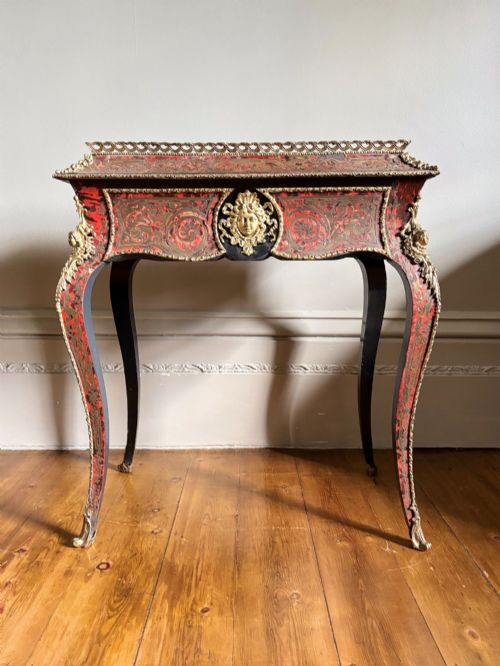
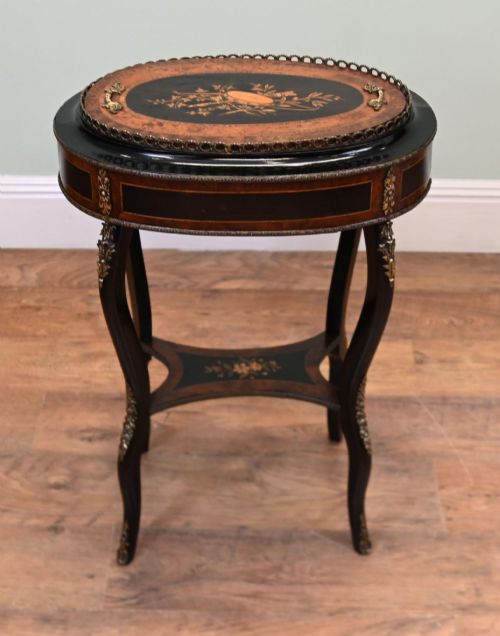
The most common examples encountered on this page stem from Victorian and nineteenth-century periods, often reflecting French Napoleon III and Louis XV revival styles. Makers frequently incorporated marquetry inlays alongside the signature gilt metal mounts.
Forms range from low occasional tables to tall free-standing planters designed to hold ceramic liners or zinc reservoirs. Walnut, burr walnut, and kingwood form the primary wooden carcasses for these ornamental pieces.
Materials and construction methods
Craftsmen utilised exotic timbers such as kingwood, satinwood, and amboyna alongside walnut for the main structural carcase and decorative marquetry veneers. Ebonised wood also appears as a contrasting base for gilt decorative elements.
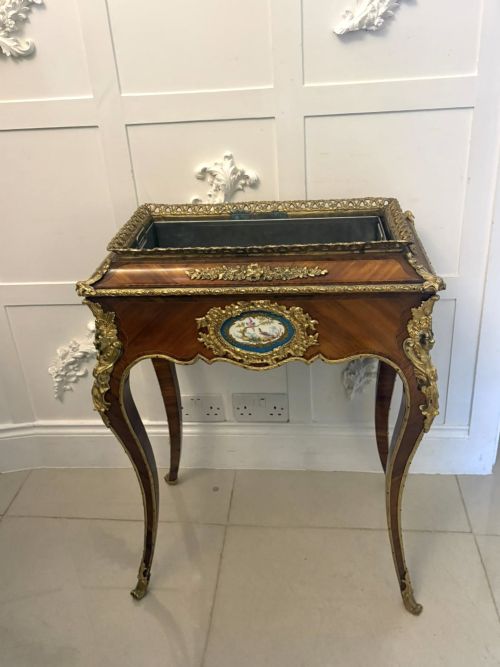
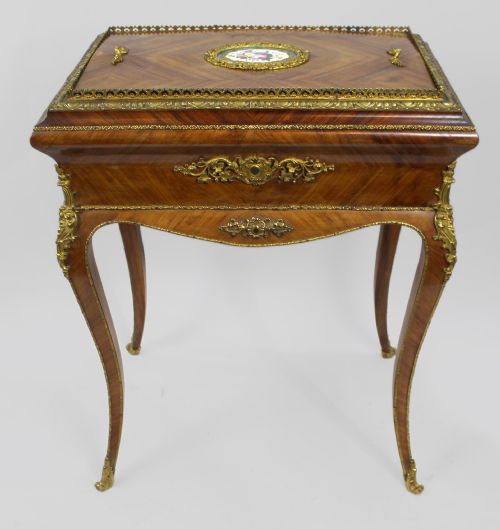
Ormolu mounts, cast in bronze and subsequently gilded, are pinned or screwed to corners, feet, and aprons to accentuate the floral and scrollwork designs. Porcelain plaques and Sevres-type panels are occasionally inset into the timber frame.
Internal liners made of zinc or metal protect the wooden structure from water damage caused by live plants. These removable containers allowed owners to safely water greenery without compromising the surrounding veneer.
Ormolu Jardiniere Stand Retail Price Guide 2026
Typical asking prices for ormolu jardiniere stand among the pieces listed under this phrase on Sellingantiques today, from the lower quarter to the upper quarter. They describe what is for sale here now, not the wider market.
Listings demonstrate a strong prevalence of nineteenth-century French design, with Louis XV Revival and Napoleon III styles dominating the surviving inventory.
Distinctions in craftsmanship and design
The precision and depth of the ormolu casting largely determine the refinement of a piece, with finely chased bronze work marking the upper tier of production. Smoother, less detailed mounts typically indicate a more commercial output.
The complexity and execution of the wood veneers and marquetry inlay separate standard examples from exceptional ones. Elaborate floral patterns and carefully matched burr walnut sections require significantly higher woodworking skill.
The Ormolu Jardiniere Stand Glossary
- Ormolu
- Gilded bronze used for decorative mounts and fittings on furniture. The technique involves applying a gold amalgam to a cast bronze base before heating.
- Jardiniere
- A decorative receptacle or stand for holding growing plants or flowers. They often double as wine coolers or cellarettes within nineteenth-century interiors.
- Marquetry
- The art of applying pieces of veneer to a structure to form decorative patterns and pictures. Cabinet makers used contrasting timbers to create elaborate floral designs.
- Kingwood
- A dense, richly figured timber native to Brazil, prized by nineteenth-century French and English cabinet makers. Its dark violet-brown grain with lighter stripes suits intricate veneer work.
- Boulle
- A type of marquetry inlay using brass and tortoiseshell, named after French cabinet maker André-Charles Boulle. It adds a reflective quality to nineteenth-century revival pieces.
Ormolu Jardiniere Stand: Frequently Asked Questions
What is an ormolu jardiniere stand?
An ormolu jardiniere stand is a decorative nineteenth-century furnishing designed to hold indoor plants or flowers. These pieces feature prominent gilded bronze mounts applied to wooden frames made of walnut, kingwood, or ebonised timber.
Many examples incorporate internal metal or zinc liners to contain moisture from plant pots. Their decorative nature meant they were placed in prominent reception spaces rather than functional garden areas.
How were these stands originally used?
Wealthy Victorian and French households used these stands to introduce exotic plants and floral displays into formal living spaces. The waterproof liners allowed owners to water plants indoors without risking damage to the surrounding wooden table.
Some designs also served secondary functions as wine coolers or cellarettes during social gatherings. Their dual purpose made them versatile additions to nineteenth-century parlours and drawing rooms.
How can I tell the style of a jardiniere?
Identifying the style involves examining the wood veneers, mount designs, and overall silhouette. Pieces exhibiting Louis XV revival characteristics often feature curved cabriole legs, asymmetrical ormolu scrollwork, and floral marquetry.
Napoleon III and Victorian examples frequently utilise ebonised wood, intricate Boulle work, or Sevres-type porcelain plaques. Comparing these decorative motifs helps pinpoint the likely manufacturing period within the nineteenth century.