


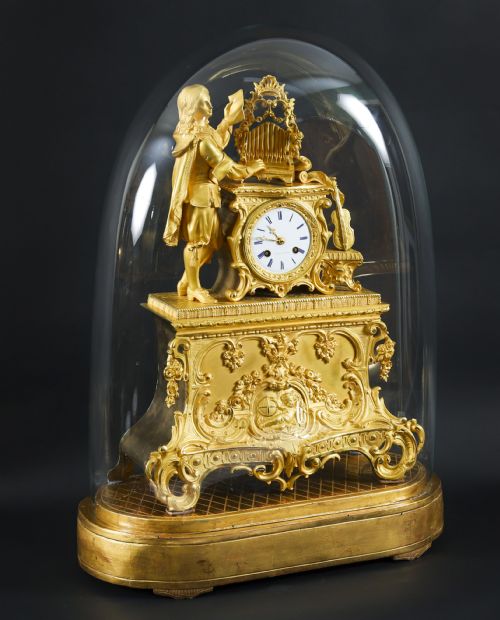


Ormolu Figural Clock
An ormolu figural clock marries precise French horology with sculptural bronze work, bringing tangible 19th-century elegance to a mantelpiece.
What an ormolu figural clock is
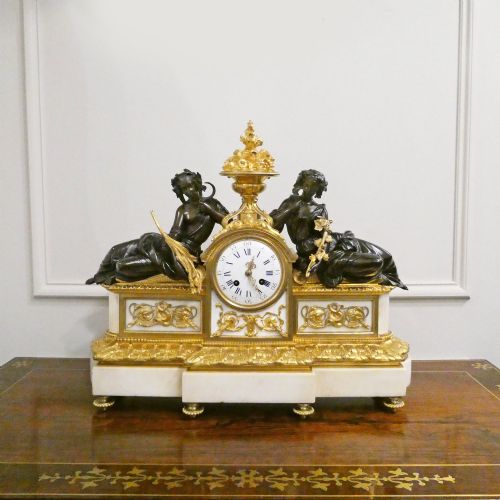
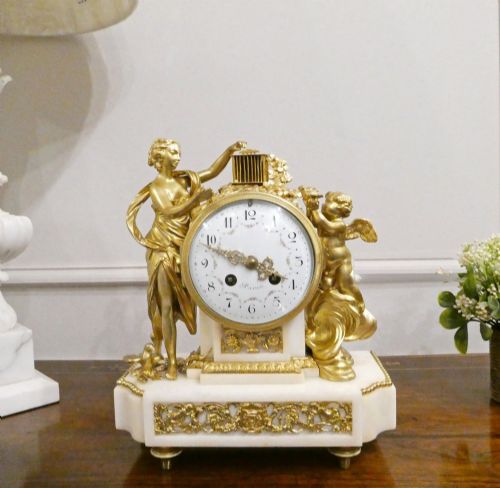
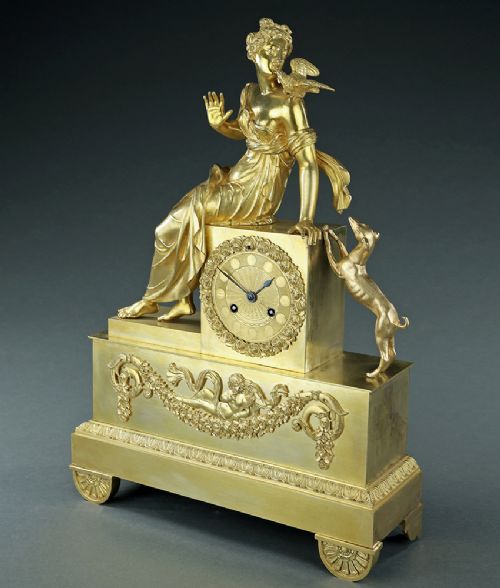
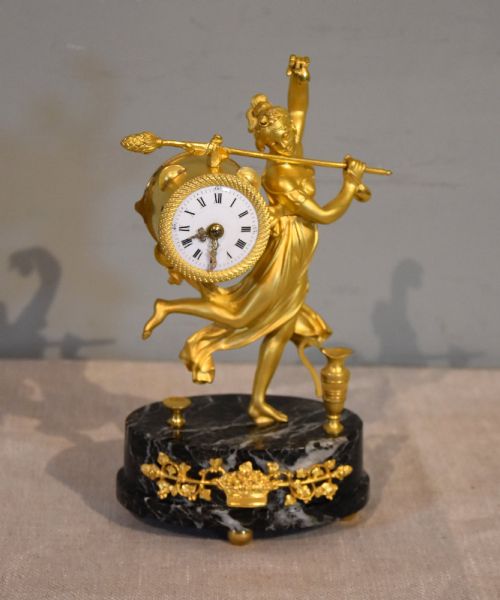
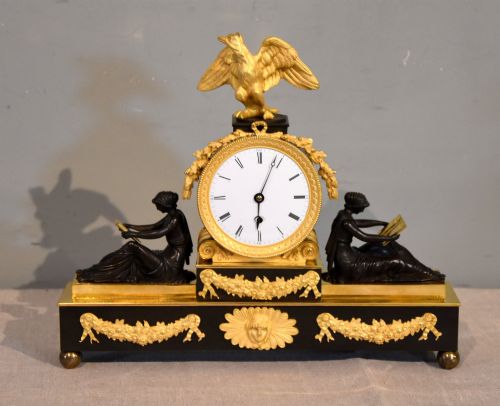
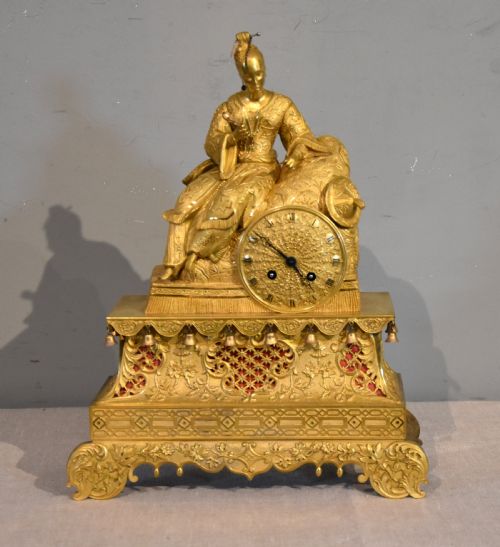
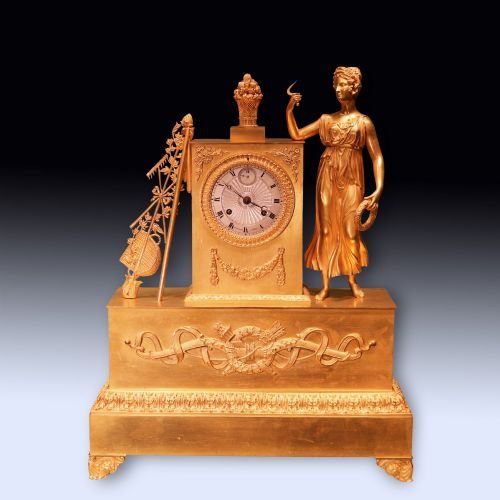
An ormolu figural clock is a decorative timepiece that integrates human or animal figures into its sculptural design, emerging predominantly from nineteenth-century French workshops. These pieces frequently adopt French Empire or French Restauration styles, anchoring their visual appeal in classical or romantic motifs. Most examples encountered here date to the nineteenth century, including Victorian interpretations.
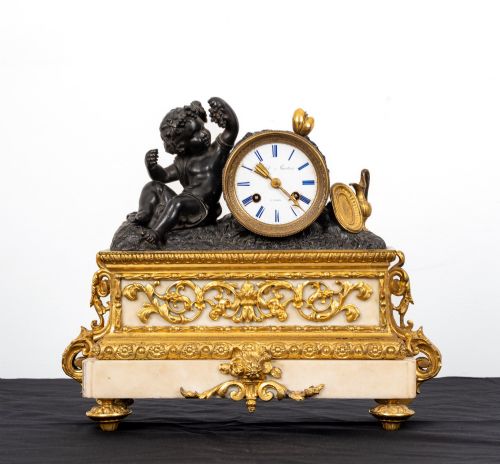
The primary form is the mantel clock, designed to sit prominently on a fireplace surround or shelf. These objects combine timekeeping mechanisms with sculptural casts, often featuring patinated bronze figures contrasted against bright gilt surfaces.
How they were made
Maker's workshops cast these pieces in bronze and brass, utilising mercury gilding or electroplating to achieve the characteristic ormolu finish. Metal components are frequently paired with bases of marble or rouge marble, providing a heavy, stable foundation for the figural superstructure.
Dial faces incorporate enamel for legibility, while secondary metallic elements utilise patinated bronze to create tonal contrast against the bright gilt surfaces. The physical construction relies on securely mounting the heavy stone and metal elements together to house the internal movement.
Retail Price Guide 2026
Typical UK retail prices for ormolu figural clock, calculated from the Sellingantiques database of over a million retail prices indexed since 2003. This retail price guide relies exclusively on Sellingantiques data; no external sources or auction records are used, so the figures do not describe the wider market.
Listings feature nineteenth-century French pieces constructed from gilt bronze, ormolu, patinated bronze, and rouge marble.
What varies in quality
The integration of the marble or rouge marble base also dictates the tier of the piece, with finely finished stone and robust brass mounts elevating the overall execution above simpler metal-only constructions.
Japy Freres
The Ormolu Figural Clock Glossary
- Ormolu
- Gilt bronze, produced by applying a finely ground high-carat gold-mercury amalgam to a bronze object and heating it to vaporise the mercury. This technique leaves a durable, rich golden coating characteristic of fine nineteenth-century French metalwork.
- Patinated bronze
- Bronze that has been chemically treated or allowed to oxidise to a dark, matte surface finish. In figural clocks, this dark tone highlights the brighter ormolu elements.
- Rouge marble
- A deep red, variegated limestone often quarried in France and used for architectural and decorative clock bases. It provides a dense, colourful plinth that complements gilt metal mounts.
- Enamel
- A glassy substance fused to a metal dial face through firing, used to create crisp white surfaces for painted numerals. It offers a smooth, durable finish that resists tarnishing over decades.
Frequently Asked Questions
What is an ormolu figural clock?
An ormolu figural clock is a nineteenth-century timepiece featuring cast bronze figures finished with gilt metal. These objects combine mechanical clockwork with sculptural art.
Originating largely in France, they utilise materials like marble and patinated bronze to create decorative mantelpieces.
Where do these clocks come from?
These pieces originate primarily from nineteenth-century France, reflecting Empire and Restauration design aesthetics.
French workshops produced them using specialised metalcasting and gilding techniques, often incorporating imported marble bases.
How do I care for marble and ormolu?
Maintenance requires gentle dusting with a soft, dry cloth to protect the delicate gilt surface and the polished stone base. Avoid chemical cleaners that can strip the gold amalgam or stain the marble.
Keep the clock away from direct sunlight and damp environments to preserve the enamel dial and metal patination.
Are these clocks heavy?
Yes, these objects are exceptionally heavy due to the combination of cast bronze, metal movements, and dense marble bases.
When moving or placing one on a mantelpiece, support the entire stone base rather than lifting by the decorative figural elements.