

Ormolu Display Case
An ormolu display case brings together glass, polished timber, and gilt bronze mounts to show off fine objects.
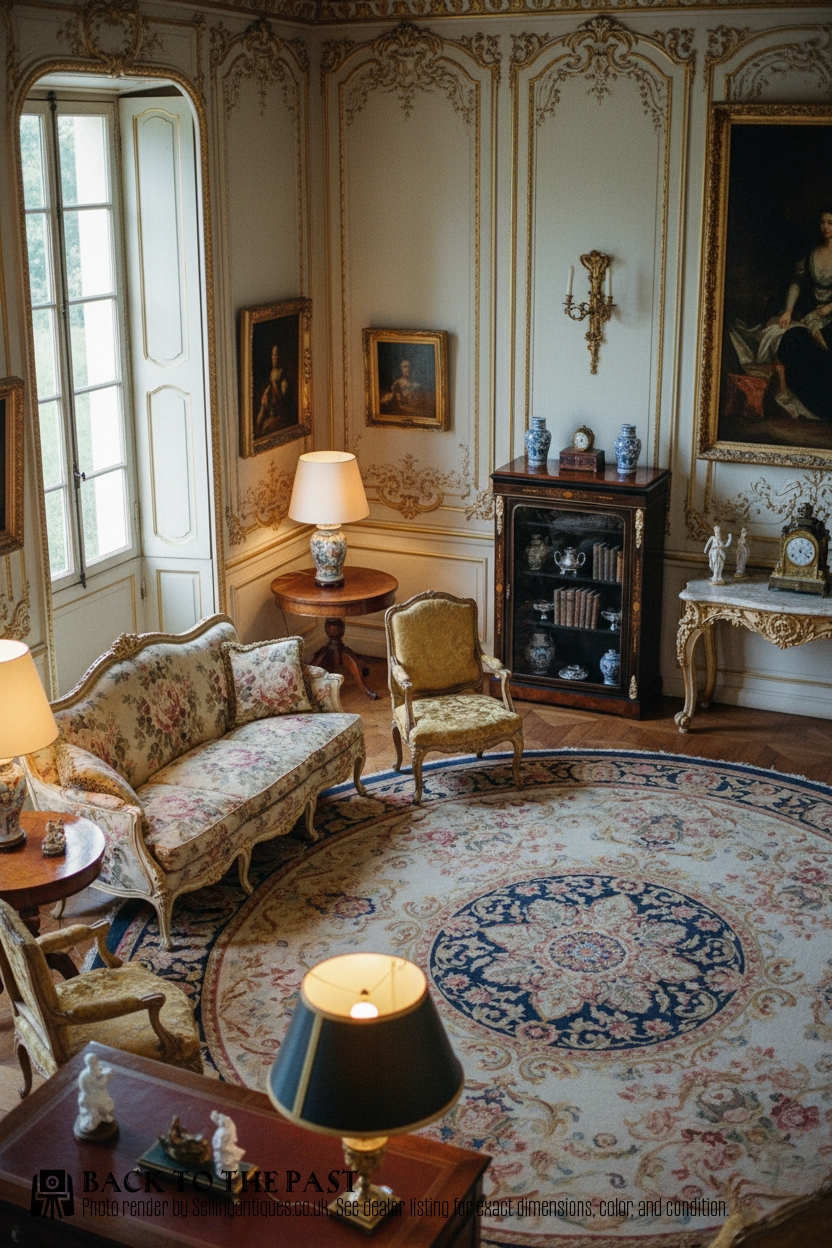
Ormolu Display Case
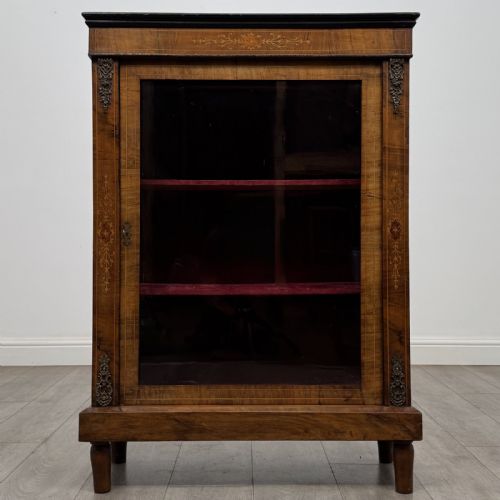
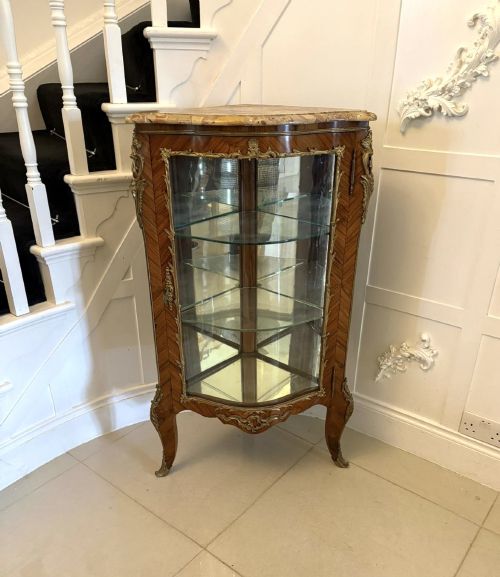
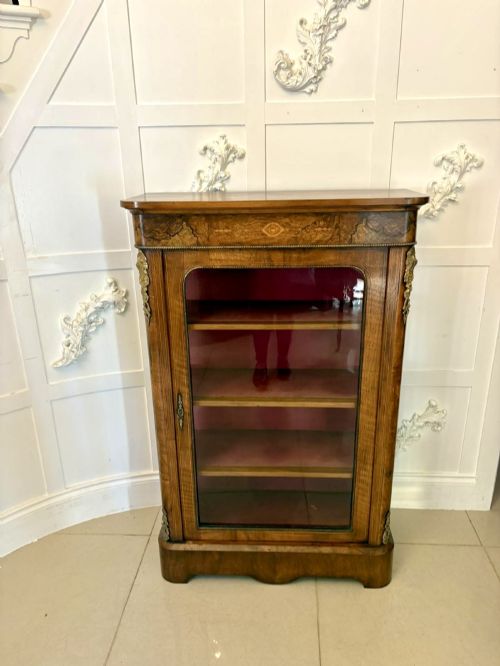
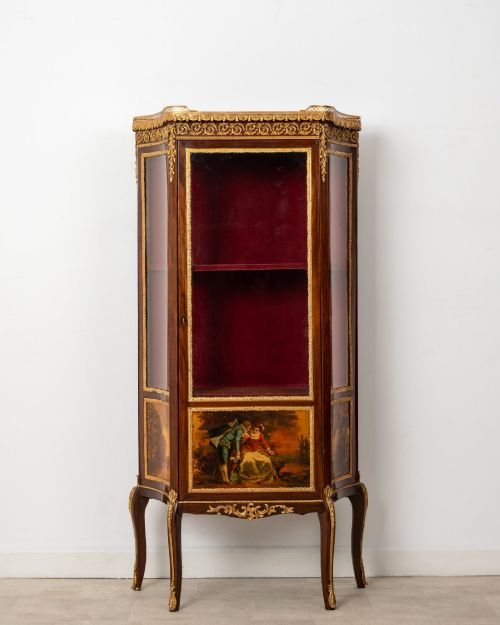
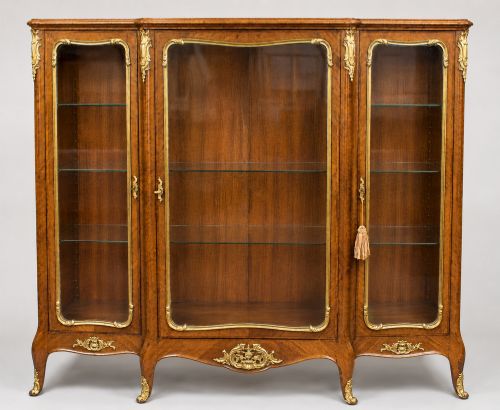
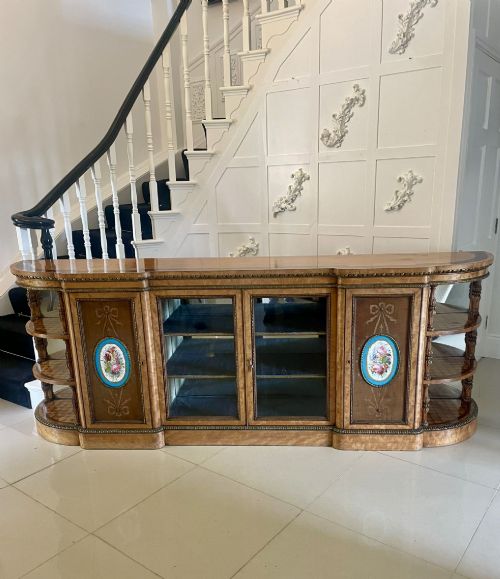
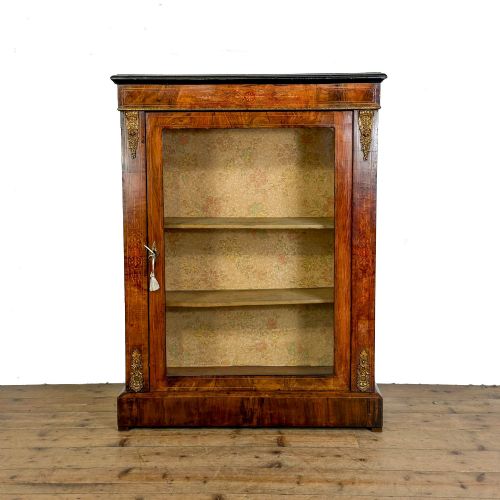
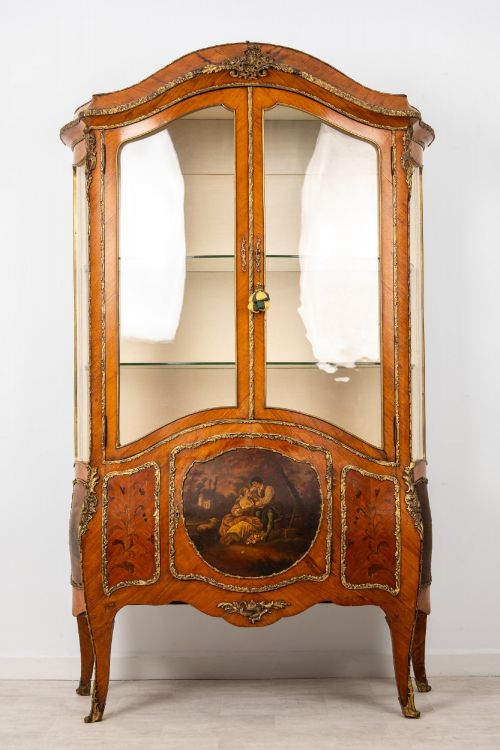
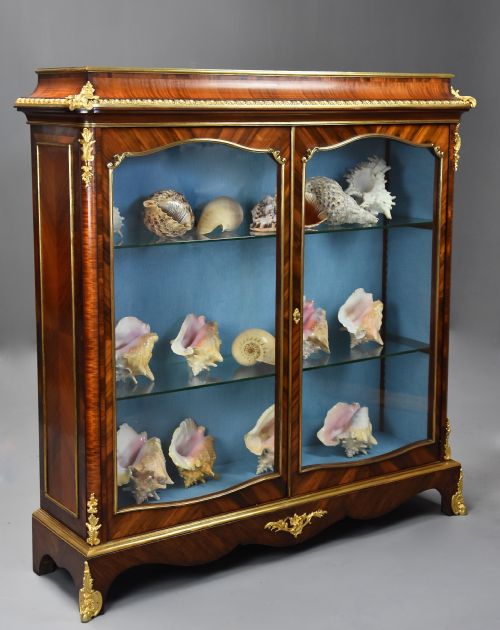
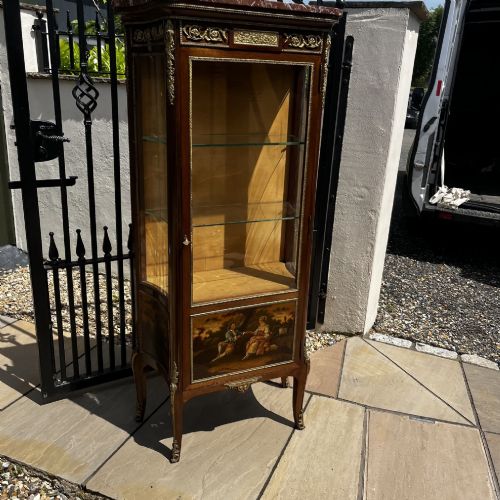
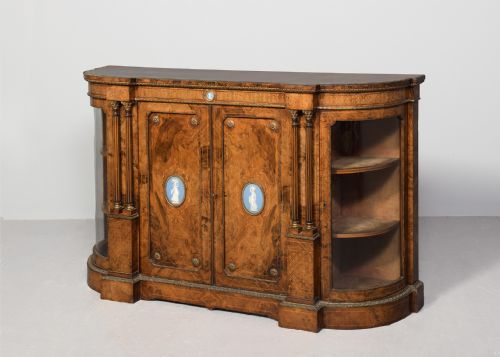
When you search for an ormolu display case, you encounter pieces designed to exhibit precious items behind glass panels. The selection spans French vitrines, serpentine corner cabinets, and English Victorian pier cabinets alongside credenzas.
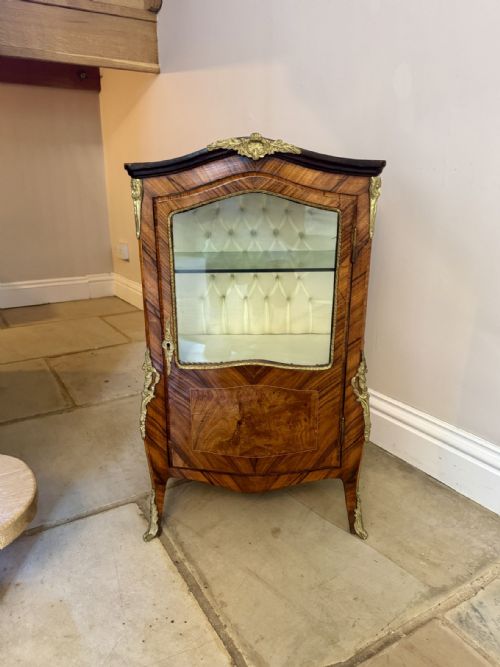
Most examples originate from the nineteenth century, drawing on Louis XV, Louis XVI, and Napoleon III revival styles. Cabinets range from petite corner units and table-top sedan vitrines to monumental proportions.
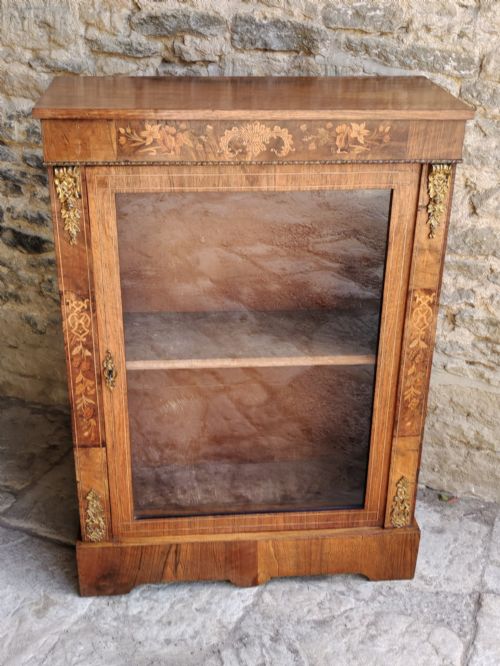
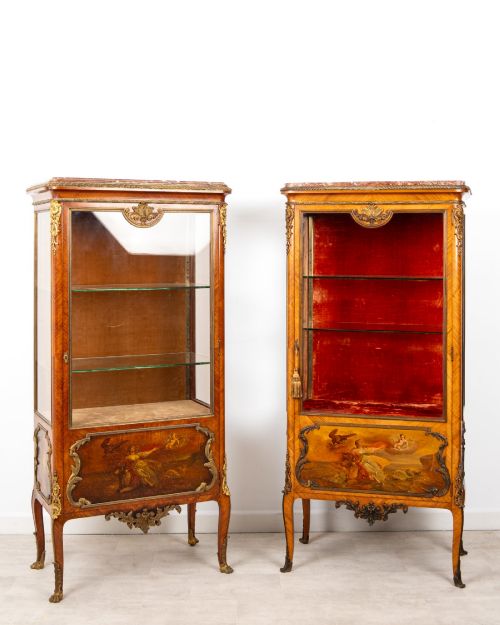
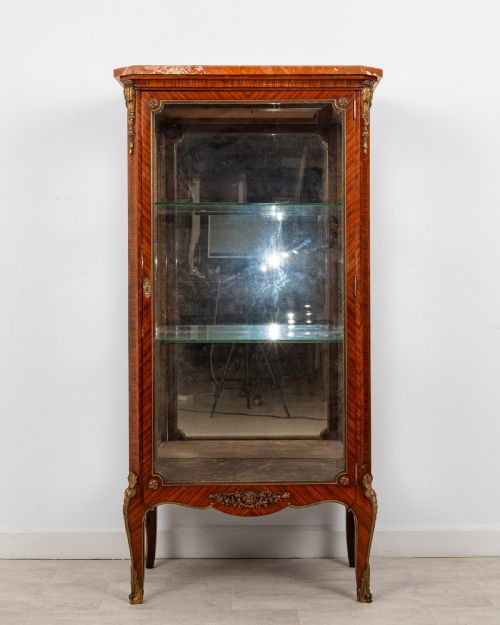
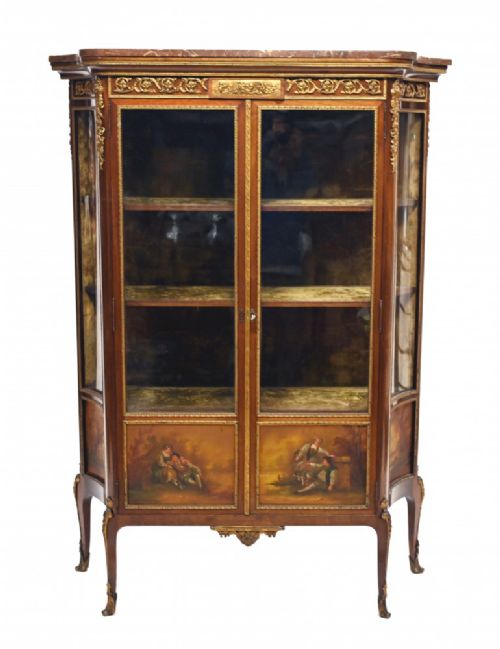
French workshops predominate, often pairing kingwood, walnut, or mahogany carcasses with marble tops and glazed doors. English makers focus on burr walnut and marquetry inlay enhanced by gilt mounts.
Materials and construction methods
Cabinets utilise timber veneers such as kingwood, walnut, mahogany, and satinwood applied to sturdy carcass woods. Marquetry, boulle inlay, and painted vernis martin panels decorate the exterior surfaces.
Gilt bronze ormolu mounts frame the glass doors, corners, and apron rails, secured with traditional brass fixings. White or variegated marble tops frequently crown the French vitrines.
Interiors often feature fabric linings in velvet alongside glass shelving designed to reflect light onto displayed objects.
Ormolu Display Case Retail Price Guide 2026
Typical asking prices for ormolu display case among the pieces listed under this phrase on Sellingantiques today, from the lower quarter to the upper quarter. They describe what is for sale here now, not the wider market.
Listings feature walnut, kingwood, mahogany, and satinwood alongside marble, glass, and velvet.
Distinctions in craftsmanship
The precision of the ormolu casting and subsequent chasing dictates the visual sharpness of the mounts. Finer pieces display crisp foliage and scrollwork rather than soft, mass-produced definition.
Timber selection and veneer matching reveal the standard of cabinet-making. Symmetrical grain patterns across serpentine fronts indicate deliberate planning by the maker.
Attribution to documented makers such as François Linke or G. Durand elevates a piece through superior structural execution and material density.
François Linke·G. Durand
The Ormolu Display Case Glossary
- Ormolu
- Gilt bronze mounts applied to furniture. This technique involves coating cast bronze with gold amalgam.
- Vitrine
- A glass-fronted cabinet designed for displaying porcelain or curiosities. These pieces often feature glazed side panels to maximise light.
- Vernis Martin
- A simulated Japanese lacquer developed in France. The technique uses multi-layered varnishes, frequently depicting pastoral scenes.
- Boulle
- Marquetry formed of brass and tortoiseshell inlaid into wood. Named after the royal cabinet-maker André-Charles Boulle.
- Pier cabinet
- A low cabinet built to stand against the wall space between windows. Victorian examples commonly incorporate marquetry inlay.
Ormolu Display Case: Frequently Asked Questions
What fits inside an ormolu display case?
These cabinets suit porcelain collections, small silver items, glass, and curiosities. The internal glass shelves support delicate objects safely behind glazed doors.
Lighting plays a part in presentation, so placing the cabinet near a natural light source helps illuminate the contents through the side glass panels.
How do I identify French and English styles?
French examples often use kingwood veneers, marble tops, and elaborate ormolu mounts reflecting Louis XV or Louis XVI revival tastes. Vernis Martin painted panels frequently appear on these pieces.
English alternatives tend to be Victorian pier cabinets or bookcases executed in burr walnut with marquetry inlay and subtle gilt bronze mounts.
How do I care for the ormolu mounts?
Gilt bronze requires gentle dusting with a dry, soft cloth to prevent abrasive particles from scratching the surface. Moisture and chemical cleaners damage the historical gilding.
Checking the stability of the mount fixings periodically ensures the bronze elements remain securely attached to the timber carcass.
Where should I place a vitrine?
Vitrines need stable interior environments away from direct sunlight to protect timber veneers, fabric linings, and internal objects from fading. Level flooring is essential for heavy marble-topped cabinets to prevent door alignment issues.
Allowing clearance around the piece ensures the decorative ormolu mounts remain visible and protected from passing traffic.