





Ormolu Desk Inkstand
An ormolu desk inkstand brings sculptural weight and gilded warmth to a workspace, uniting heavy cast metal with fitted glass and stone bases.
Ormolu Desk Inkstand
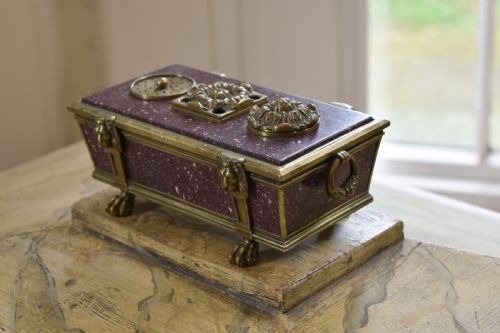
An ormolu desk inkstand is a substantial writing accessory designed to hold ink vessels, pens, and sanders upon a desk or library table. These pieces combine cast metal mounts with heavy stone or timber plinths to create a permanent fixture for correspondence.
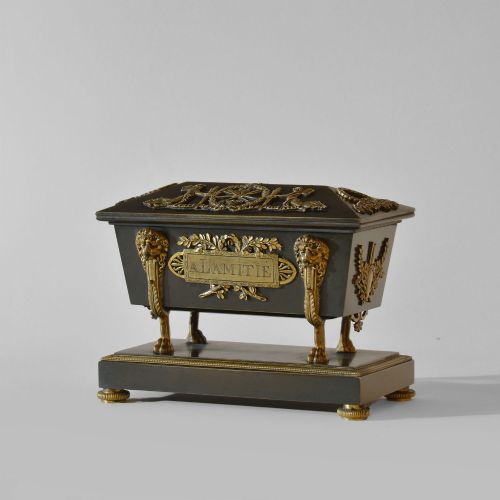
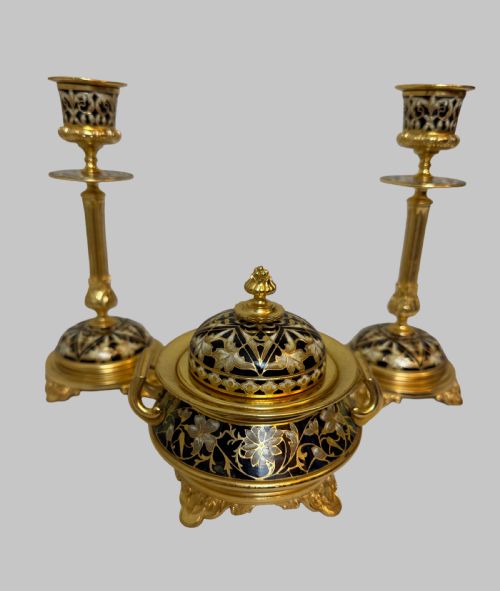
The version you meet most frequently on this page is the nineteenth-century French desk set, often pairing gilded bronze with marble bases. Makers combined decorative boxes, candlestands, and figurative bronzes with central inkwells to form complete sets.
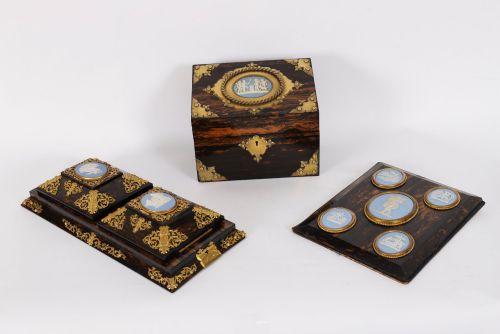
The form spans periods from the eighteenth century through to the early twentieth century, taking inspiration from Neoclassical, French Empire, and Victorian design. Materials extend beyond metal and marble to include coromandel-wood, champleve enamel, and cut glass.
What varies in quality
The crispness of the bronze chasing dictates the visual sharpness of the cast ornament, separating finely detailed work from softer, mass-produced pieces. Deep, hand-chased foliage, animal forms, and architectural mouldings show a master craftsman's hand.
The choice and preparation of the mounting stone reveal the maker's ambition, with select Sienna and vert marbles offering rich veining and polished heft. High-grade sets integrate matching marble plinths across associated candlestands and inkwells.
The survival of original glass ink inserts and well-fitted hinged lids preserves the integrity of the desk set. Complete multi-piece suites with integrated clocks or matching candlesticks represent the upper tier of production.
Ormolu Desk Inkstand Retail Price Guide 2026
Typical asking prices for ormolu desk inkstand among the pieces listed under this phrase on Sellingantiques today, from the lower quarter to the upper quarter. They describe what is for sale here now, not the wider market.
Object forms range from single inkwells and decorative caskets to four-piece desk sets with candlestands.
Albert Marionnet·A. Marionnet·Moser
The Ormolu Desk Inkstand Glossary
- Ormolu
- Gilded bronze produced by applying an amalgam of gold and mercury to a bronze base, then heating to drive off the mercury. This technique creates a durable, warm golden finish characteristic of fine decorative arts.
- Encrier
- A French term for an inkstand or inkwell fitted for a desk. These portable or stationary writing pieces often incorporate multiple wells, sanders, and pen trays.
- Champleve
- An enamelling technique where troughs or cells are hollowed out of the metal surface and filled with vitreous enamel powder before firing. The resulting coloured patterns sit flush with the surrounding metal.
- Sienna marble
- A decorative yellow and ochre marble quarried in Italy, featuring dark purple or grey veining. It provides a striking, colourful base for gilt bronze mounts.
- Coromandel-wood
- A dense, dark brown timber with contrasting black stripes imported from Asia. Nineteenth-century makers used it for high-end fitted desk stands and caskets.
Ormolu Desk Inkstand: Frequently Asked Questions
What is an ormolu desk inkstand?
An ormolu desk inkstand is a decorative writing accessory featuring gilded bronze mounts combined with stone, glass, or timber elements. These pieces served as both functional containers for writing fluid and ornamental centerpieces for nineteenth-century desks.
They often include fitted glass inkwells, pen trays, and matching desk accessories like candlestands or caskets. The weight of the metal and stone kept the stand stable during use.
How do I date a nineteenth-century inkstand?
Dating relies on stylistic clues, such as the rigid symmetry of French Empire designs versus the flowing naturalism of later Art Nouveau pieces. Materials like champleve enamel or specific marble types also help narrow the period of manufacture.
Maker signatures, registry marks, or specific escapement types in associated clocks provide further chronological evidence. Comparing the casting quality with known dated examples confirms the era.
Were these inkstands used for writing?
Yes, they were the primary desktop tools for holding liquid ink before the invention of the fountain pen. Writers dipped quill or steel nibs directly into the glass reservoirs housed within the ormolu mounts.
Many sets included a sander alongside the inkwell to blot wet ink on paper. Their substantial construction reflected the formal nature of nineteenth-century correspondence.
How do I care for ormolu and marble?
Maintenance requires dusting gently with a soft, dry cloth to prevent abrasive particles from scratching the gilded surfaces. Avoid liquid cleaners, polishes, or chemical solvents that can strip the historic ormolu surface or damage porous marble.
Marble bases benefit from occasional wiping with a damp cloth followed by immediate drying. Glass ink liners can be removed and washed separately with mild soap and water.
What styles are common in these sets?
French Empire and Neoclassical styles dominate, featuring classical motifs, strict symmetry, and dark marble bases. Victorian and French Second Empire pieces introduce heavier ornamentation and rich combinations of bronze and exotic timbers.
Later nineteenth-century examples embrace Art Nouveau naturalism, incorporating organic plant forms or playful animal figures. Each style reflects the prevailing aesthetic tastes of European cabinetmakers and bronze-workers.