
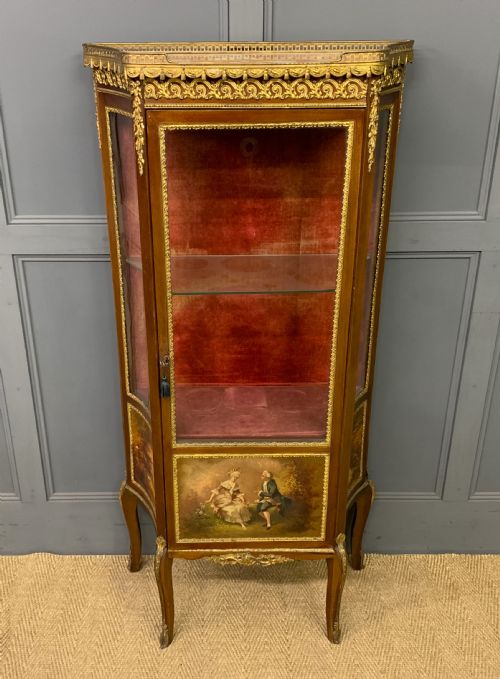
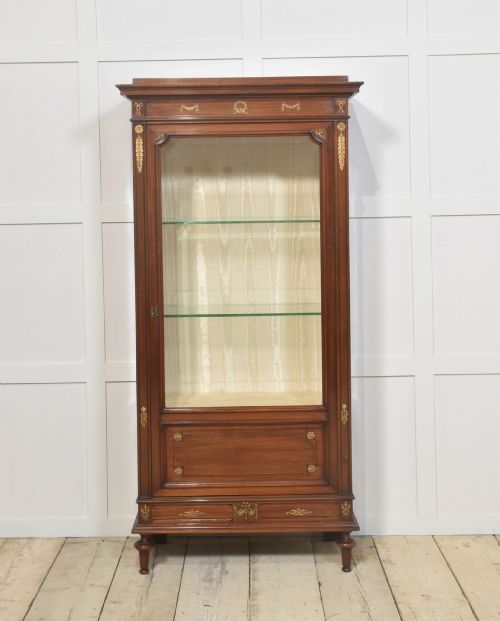
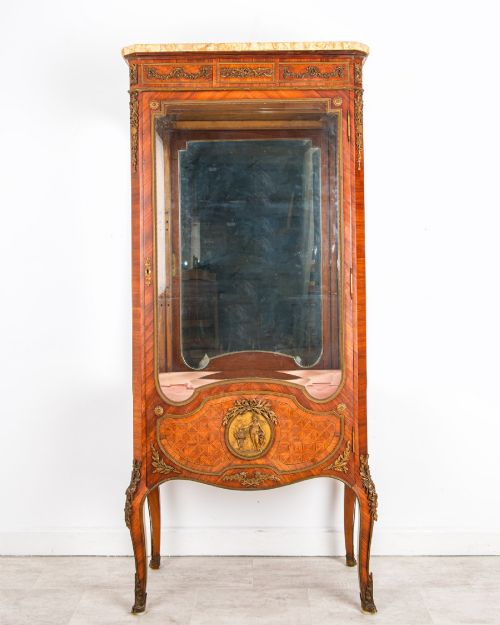

Ormolu China Cabinet
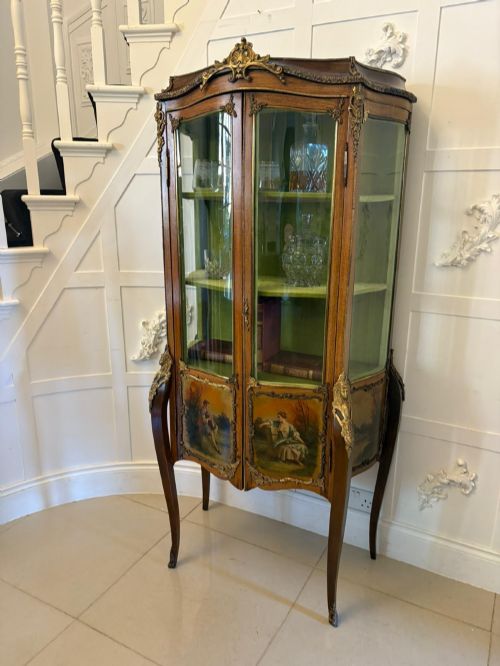
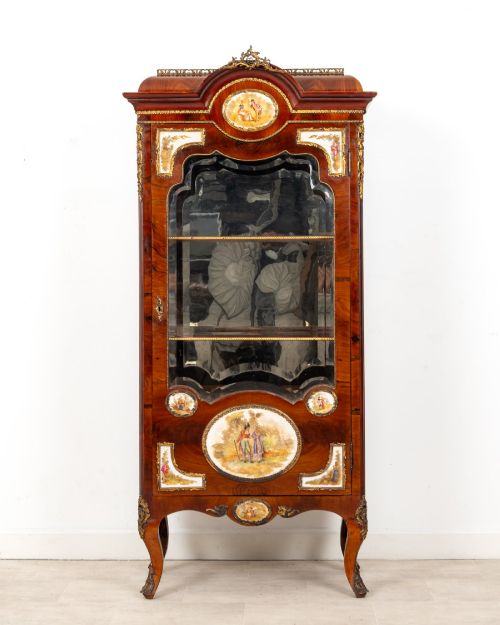
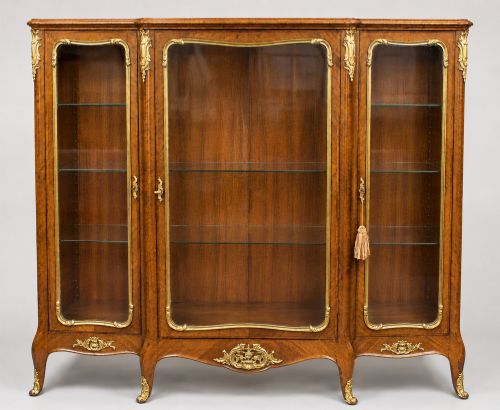
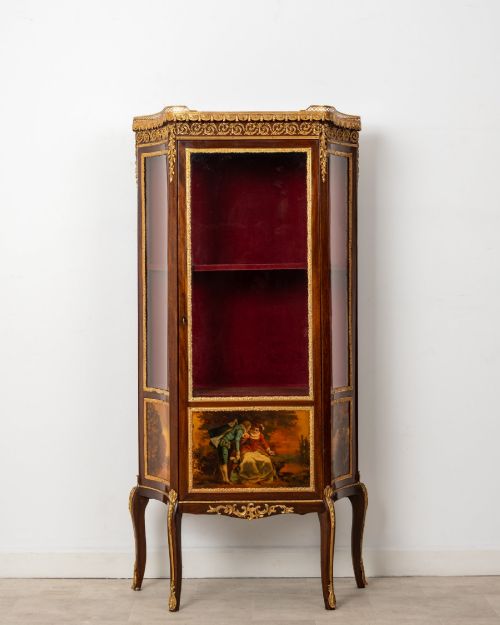
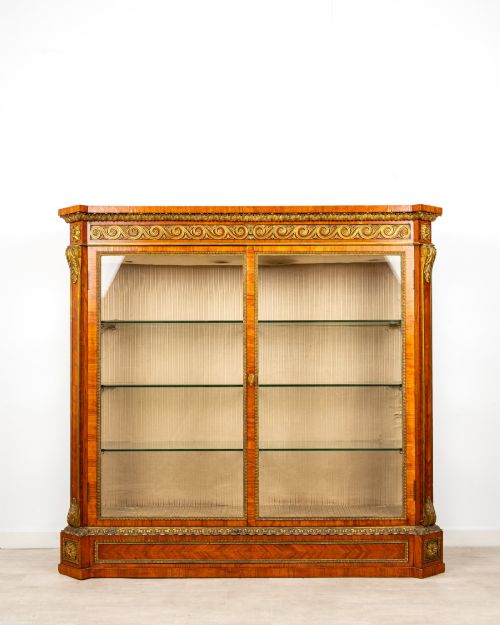
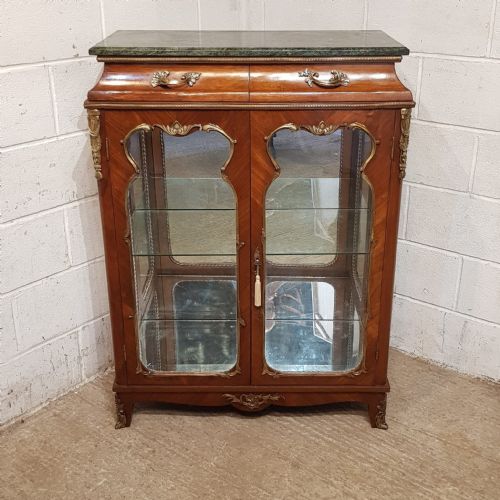
An ormolu china cabinet brings together rich cabinet timbers and gilt mounts to showcase porcelain and glass behind glazed doors.
Ormolu China Cabinet
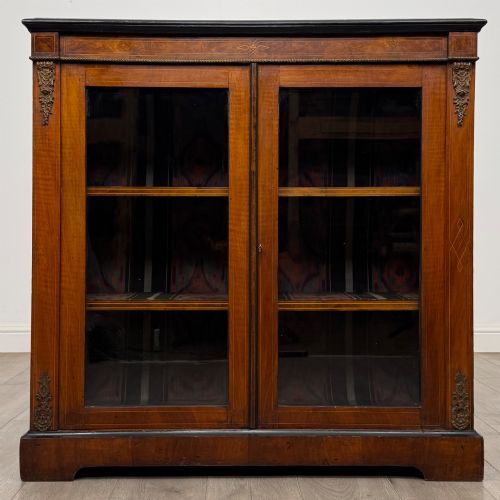
An ormolu china cabinet is a display piece designed to hold precious items, appearing most frequently in French revival styles and Victorian walnut or kingwood frames across the nineteenth century.
These pieces function as vitrines, pier cabinets, and bookcases with glass panels, bringing together polished timbers and gilt metal decoration for domestic display rooms.
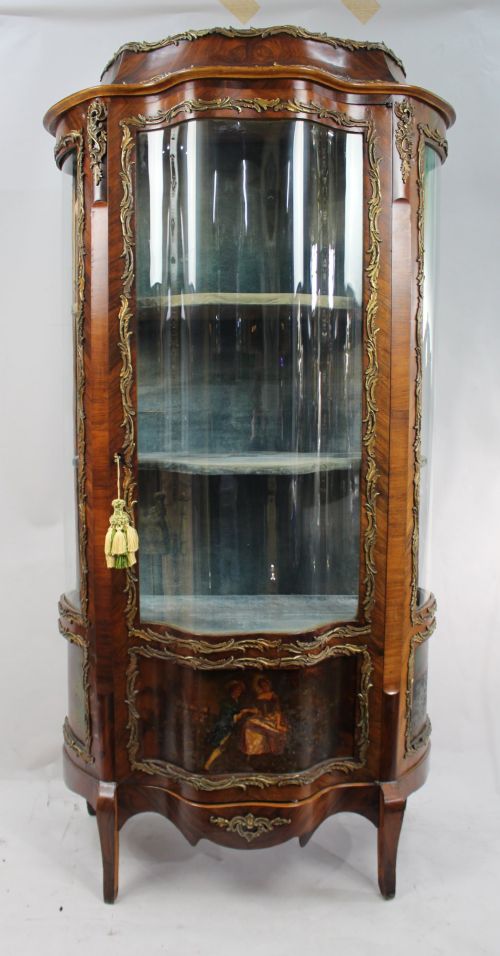
The format draws heavily on Louis XV and Louis XVI revivals, pairing serpentine or straight timber bodies with transparent shelving to let light through the stored porcelain.
Materials and construction
Cabinetmakers constructed carcass frames from dense hardwoods like walnut, mahogany, and kingwood, frequently applying decorative veneers and marquetry across the surface.
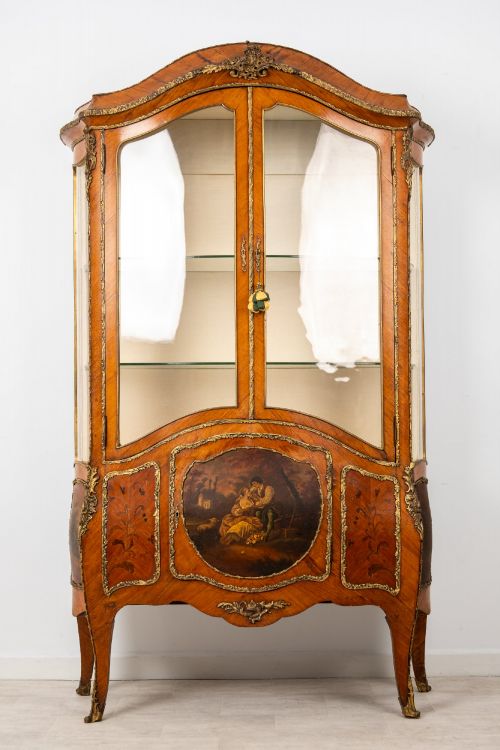
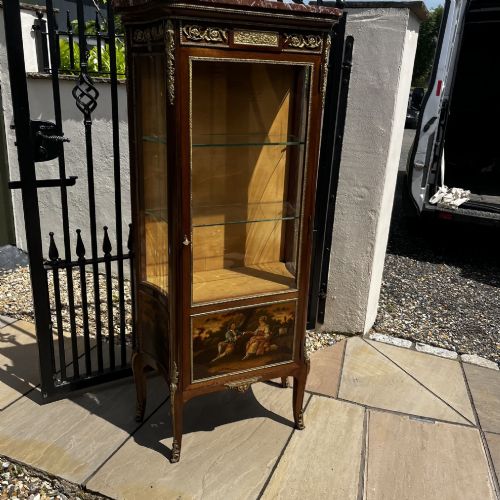
Cast gilt bronze or ormolu mounts were secured to corners, feet, and friezes, complementing marble tops and hand-painted Vernis Martin panels where included.
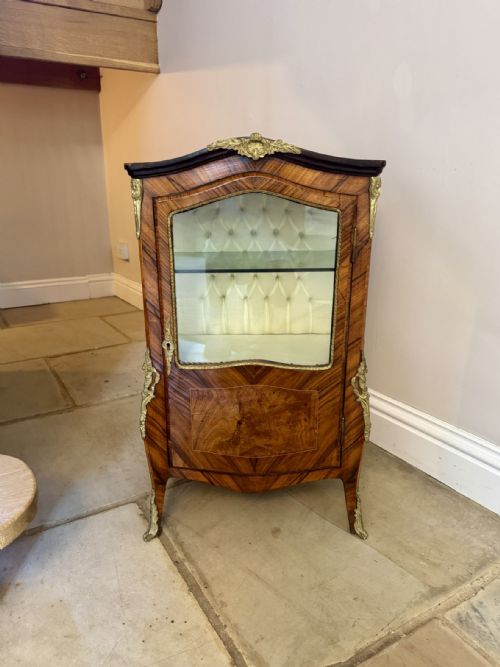
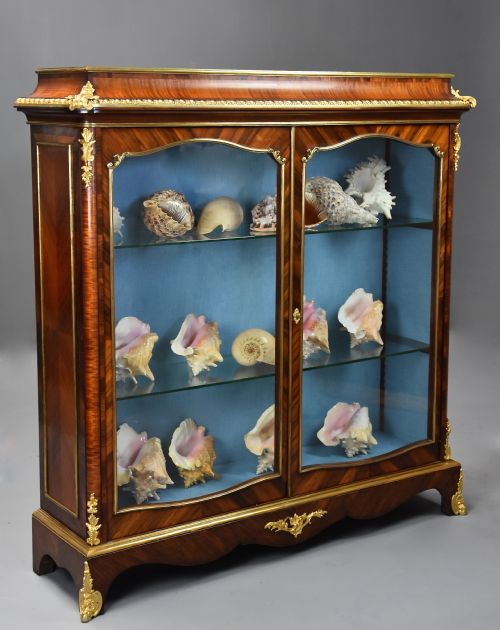
Glass panes were fitted into glazed doors and side panels, supported internally by tiered wooden or glass shelving designed to carry light ceramic collections.
Current listings feature glass, ormolu, kingwood, marble, walnut, fabric, mahogany, and brass across nineteenth-century and Edwardian forms.
Assessing quality and execution
Quality rests in the crispness of the ormolu casting and the depth of the timber figuring, where finer pieces show hand-chased metalwork and precise parquetry patterns.
The structural integration of marble tops, heavy glass doors, and secure carcass joints separates standard production items from master-workshop cabinets.
H. J. Hatfield And Sons·François Linke·Paul Sormani·G. Durand
The Ormolu China Cabinet Glossary
- Ormolu
- Gilt bronze mounts applied to furniture surfaces. The technique involves a mercury amalgam applied to bronze, creating a durable golden finish.
- Vitrine
- A glass-fronted display cabinet. These pieces allow porcelain and curiosities to be viewed from multiple angles.
- Vernis Martin
- A simulated Japanese lacquer technique developed in France. It provides decorative painted panels featuring pastoral or oriental scenes.
- Marquetry
- Inlaid wood pieces forming decorative patterns. Craftsmen fit contrasting veneers together to create geometric or floral designs on the cabinet surface.
Ormolu China Cabinet: Frequently Asked Questions
What is an ormolu china cabinet?
An ormolu china cabinet is a glazed display piece decorated with gilt bronze mounts, housing porcelain and glassware behind glass panels.
Originating largely in nineteenth-century French and Victorian workshops, these pieces combine fine timbers like kingwood and walnut with decorative metalwork.
How were these cabinets used?
These cabinets served to display valuable ceramics, glass, and curiosities within formal reception rooms and drawing rooms.
The glazed doors and sides protected delicate items from dust while allowing light to illuminate the collections inside.
Where do French and Victorian styles differ?
French revival pieces frequently employ kingwood, mahogany, or Vernis Martin panels alongside elaborate ormolu mounts and marble tops.
Victorian examples often utilise burr walnut, amboyna, or ebonised timber with marquetry inlay and simpler structural forms.
How do I care for marble and wood?
Maintain timber surfaces by dusting regularly and avoiding direct sunlight that can dry out walnut and kingwood veneers.
Marble tops require gentle cleaning with non-acidic solutions to protect the polished stone surface from staining.