

Ormolu Chest
When you search for an ormolu chest, you are looking at substantial storage furniture elevated by cast bronze metalwork designed to catch the candlelight.
Ormolu Chest
An ormolu chest brings together practical drawer storage and decorative metal mounts, spanning forms from grand salon commodes to bedside cabinets and cellarets. The search phrase covers both eighteenth-century originals and nineteenth-century revival pieces that draw on earlier French court aesthetics.
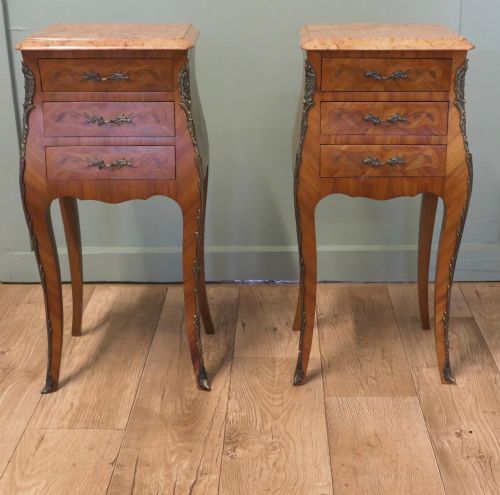
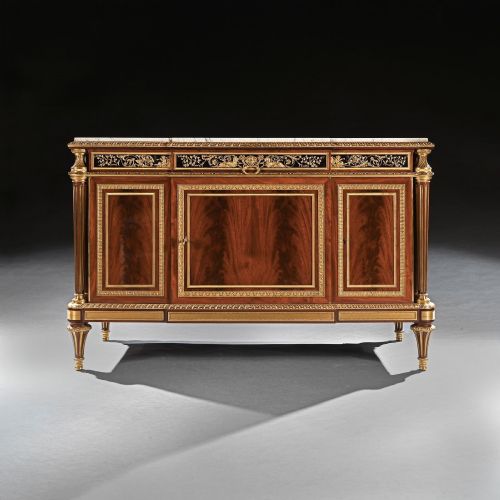
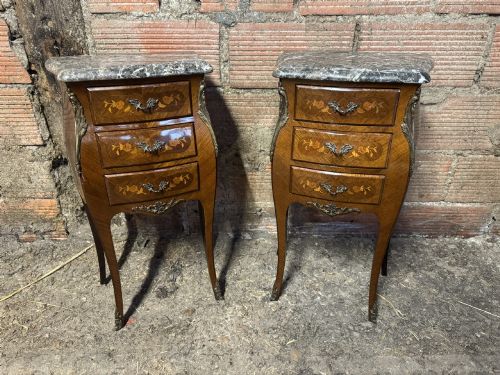
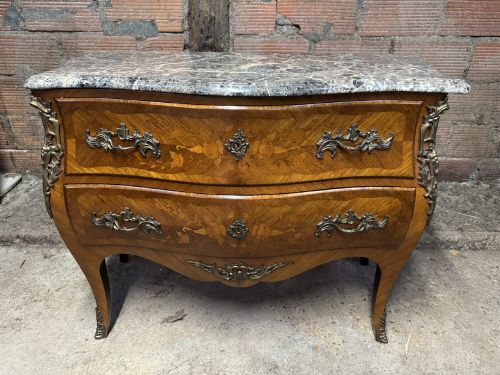
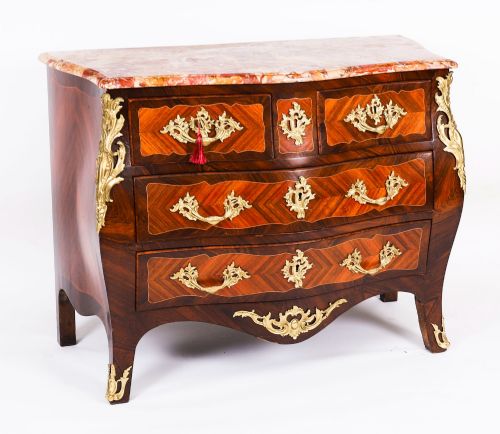
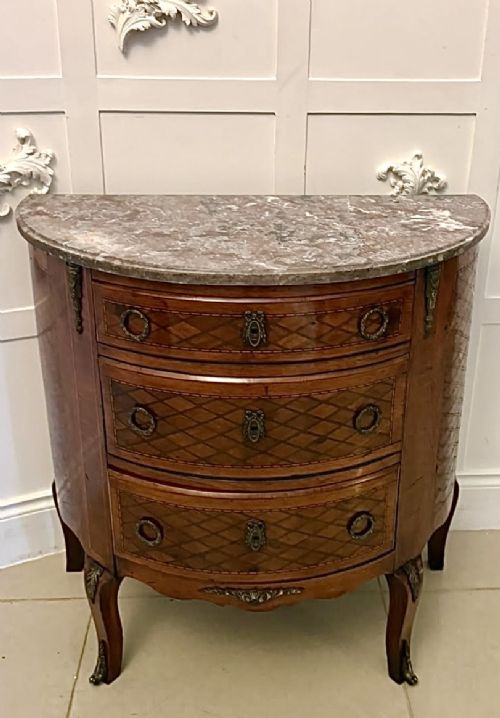
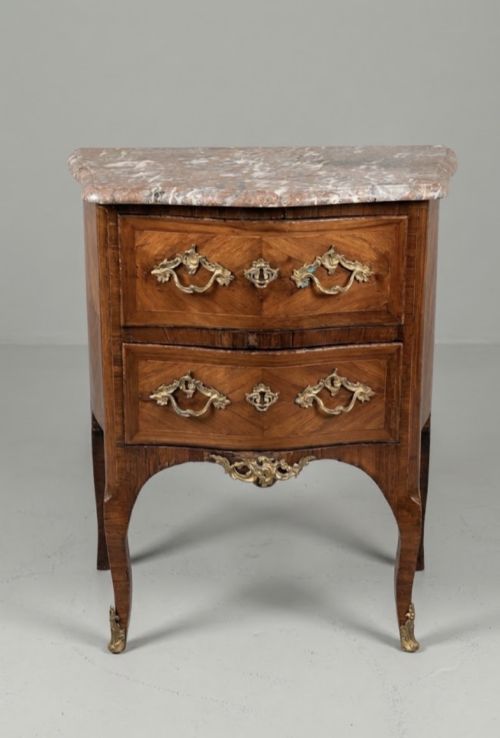
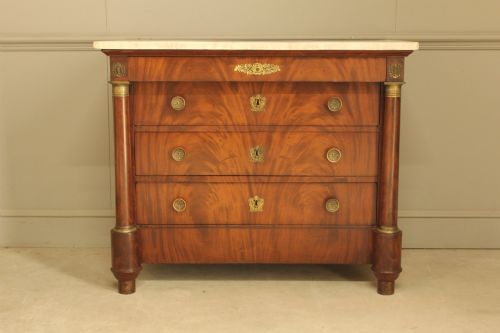
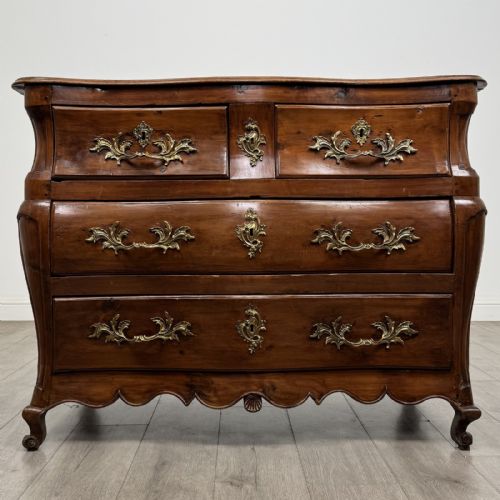
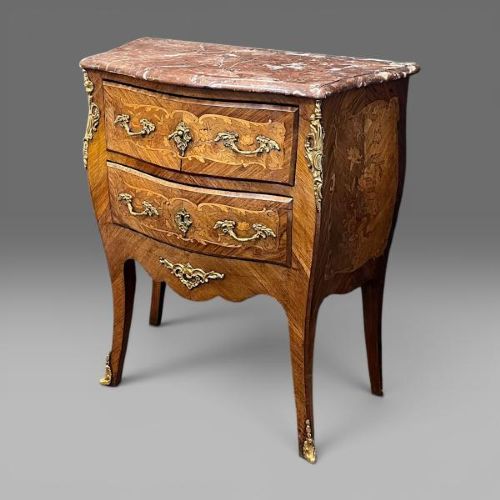
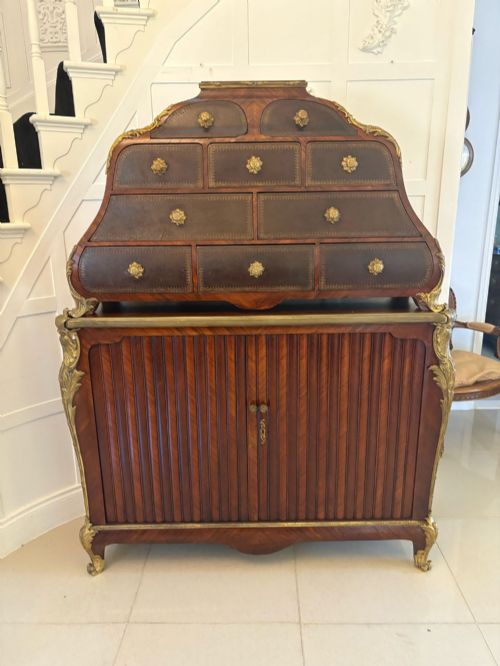
The pieces on this page appear most frequently as French commodes, chests of drawers, and petite bedside cabinets constructed in walnut, mahogany, or exotic veneers. Makers employed serpentine outlines, bombe profiles, and upright upright formats such as the semainier or cartonnier cabinet.
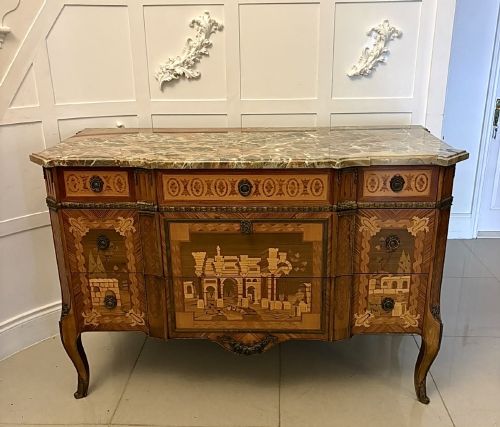
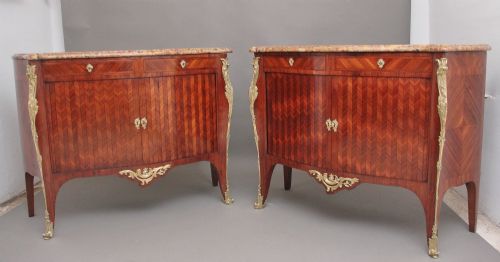
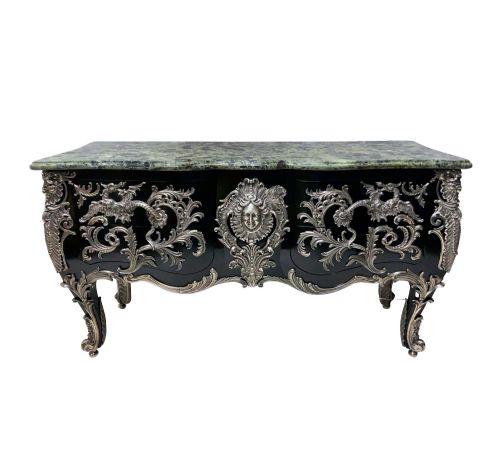
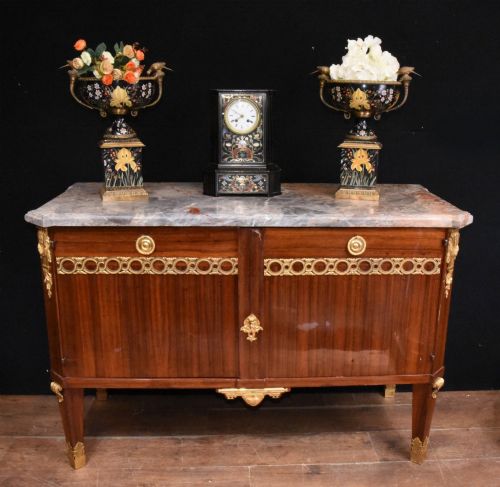
Cabinetmakers integrated marble tops in white, red, and variegated tones to cap the wooden carcases, pairing stone surfaces with gilt bronze handles and escutcheons. These works reflect regional traditions from provincial burr elm examples to elaborate Parisian marquetry workshops.
Materials and construction
Carpenters built the carcases using solid timbers like oak or mahogany, then applied decorative surface veneers including kingwood, tulipwood, rosewood, and walnut laid in parquetry or floral marquetry patterns. Vernis Martin lacquer panels and intricate brass stringing frequently enrich the exterior surfaces of revival and period pieces alike.
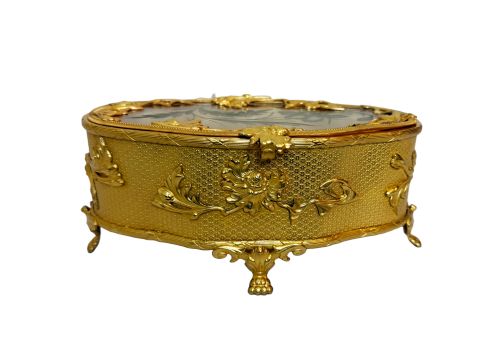
The signature ormolu mounts consist of cast bronze that underwent mercury gilding or chemical finishing to produce a bright gold appearance before being screwed or pegged to the wooden frame. Heavy marble slabs were cut and polished to fit precisely over the upper framing of commodes and bedside cabinets.
Ormolu Chest Retail Price Guide 2026
Typical asking prices for ormolu chest among the pieces listed under this phrase on Sellingantiques today, from the lower quarter to the upper quarter. They describe what is for sale here now, not the wider market.
Listings feature pieces spanning the eighteenth, nineteenth, and early twentieth centuries, dominated by nineteenth-century French revival designs.
Distinctions in quality
Quality rests upon the crispness of the bronze chasing and the depth of hand-finishing applied to the mounts, where sharper relief and heavier casting separate finer examples from routine production. The precision of the cabinetwork, visible in the tight alignment of parquetry veneers and the smooth action of serpentine drawers, determines the tier of the piece.
The selection of secondary timbers inside the drawers and the weight and figuring of the surface veneers indicate the workshop's investment in materials. Original marble tops that match the exact contours of the carcase add significantly to the integrity of the ensemble.
Jacques Bircklé·Henry Dasson·Gillows·E. Kahn
The Ormolu Chest Glossary
- Ormolu
- Gilded bronze metalwork used for decorative mounts on furniture. The technique involves applying a gold amalgam to cast bronze before heating.
- Commode
- A low chest of drawers, typically standing on four legs and associated with eighteenth and nineteenth-century French domestic interiors.
- Bombe
- A swollen or bulging convex shape used in cabinet fronts and sides. This curved profile requires complex carpentry and specialised veneer work.
- Marquetry
- Inlaid patterns of wood veneers arranged to form pictorial or geometric designs on furniture surfaces. Craftsmen cut contrasting timbers together to ensure tight joints.
- Semainier
- A tall, narrow chest of drawers traditionally designed with seven drawers, one for each day of the week. This form emerged in France during the eighteenth century.
- Vernis Martin
- A simulated Japanese lacquer technique developed by the Martin brothers in eighteenth-century France. It employs multiple resin layers to achieve a translucent finish.
Ormolu Chest: Frequently Asked Questions
What is an ormolu chest?
An ormolu chest is a drawer-based storage piece decorated with gilded bronze mounts, combining functional joinery with sculptural metalwork.
These items range from large salon commodes to compact bedside cabinets across eighteenth and nineteenth-century European styles.
How do I care for marble and ormolu?
Clean marble surfaces with mild soapy water and dry them immediately to prevent staining from acidic liquids. Dust ormolu mounts gently with a soft brush without using abrasive metal polishes that strip the gilding.
Avoid placing these pieces in direct sunlight or areas with extreme humidity fluctuations to protect the wood veneers.
Are these pieces French?
Most pieces listed under this category originate from France or follow French design traditions like the Louis XV and Empire styles. Cabinetmakers across Paris and provincial centres produced these works using native and exotic woods.
British makers like Gillows also adopted similar cabinet forms during the nineteenth century.
What is a commode?
A commode is a low chest of drawers designed for domestic storage, often featuring a marble top and decorative bronze mounts. The form developed in France and evolved through various revival periods.
Versions span serpentine fronts, bombe profiles, and straight-sided geometric parquetry designs.