

Ormolu Bronze Mantel Clock
An ormolu bronze mantel clock brings together heavy cast metal and precise horology, dominating domestic interiors since the nineteenth century with gilded shine and classical form.
Ormolu Bronze Mantel Clock
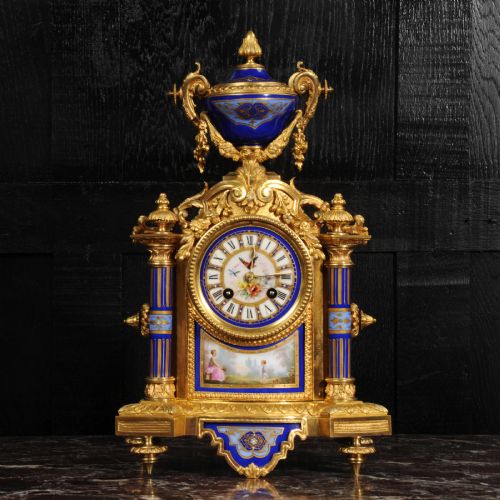
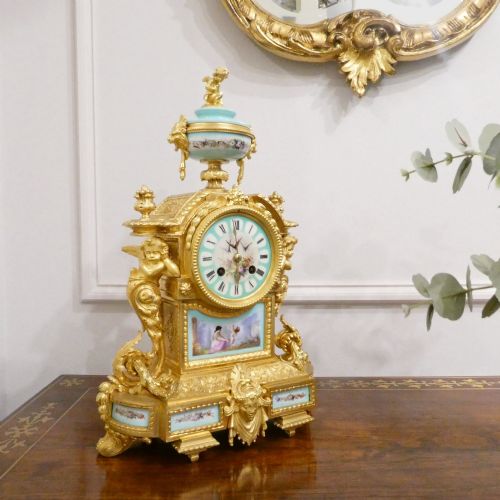
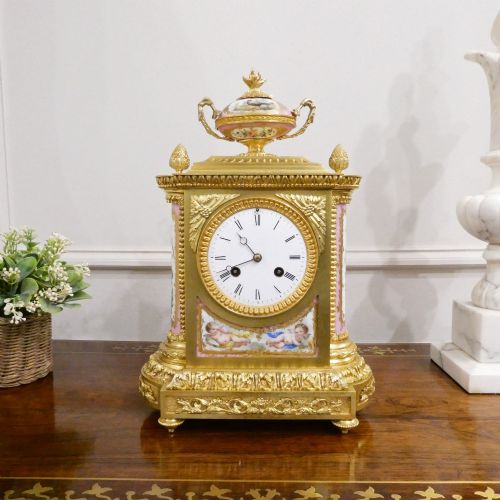
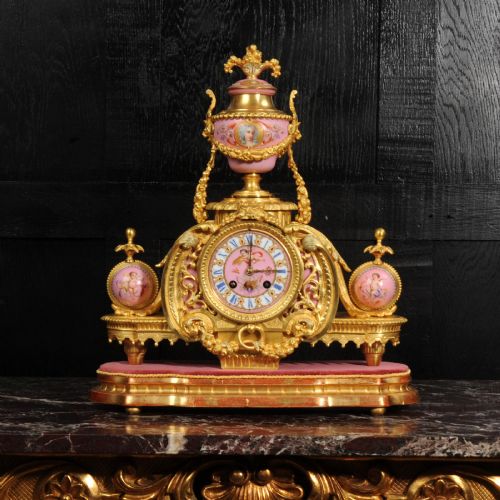
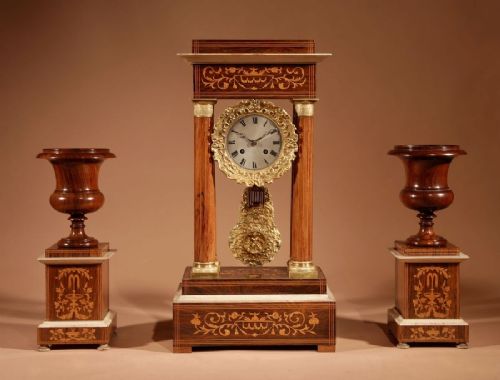
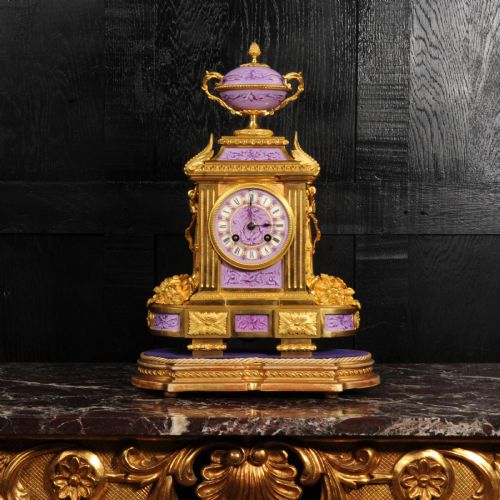
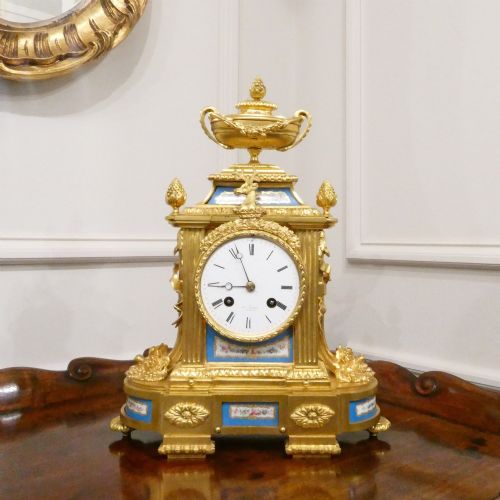
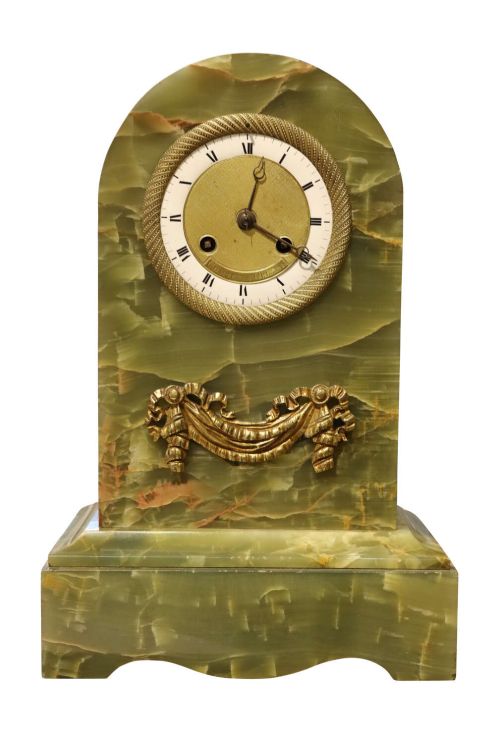
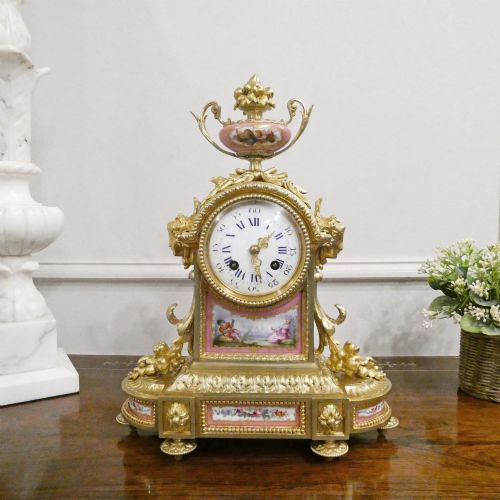
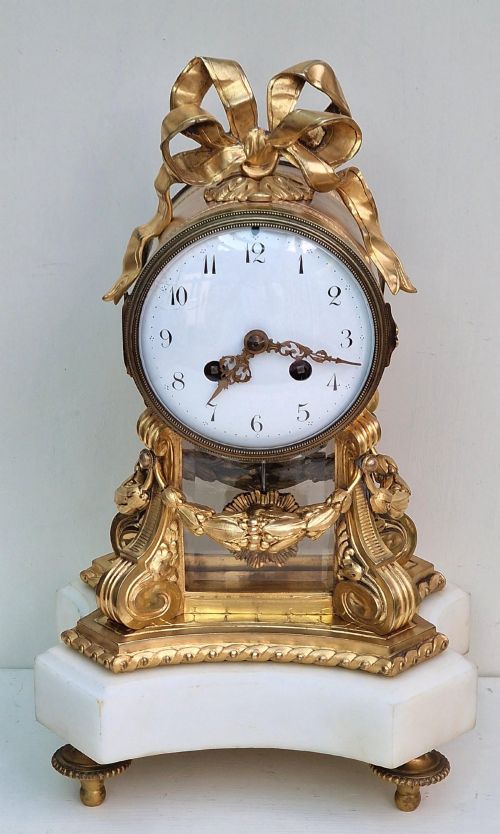
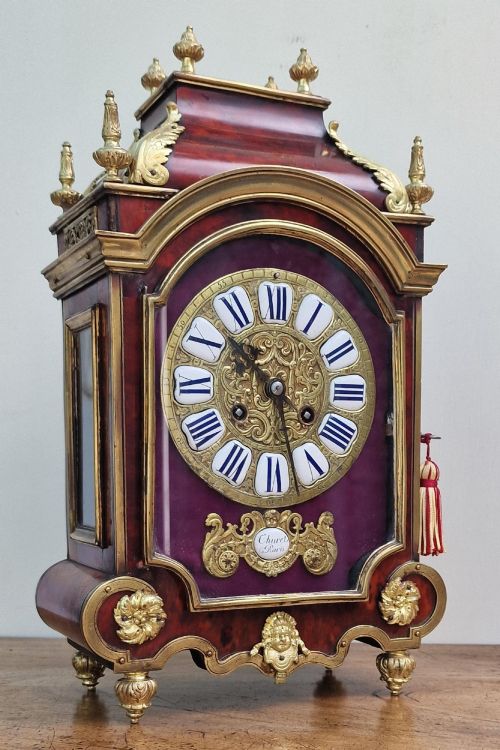
When searching for an ormolu bronze mantel clock, buyers encounter timepieces dominated by nineteenth-century French makers working in Empire, Rococo Revival, and Louis XVI styles. These domestic instruments sit upon shelves or mantelpieces, combining timekeeping mechanisms with sculptural metalwork, marble bases, and sometimes matching garniture sets.
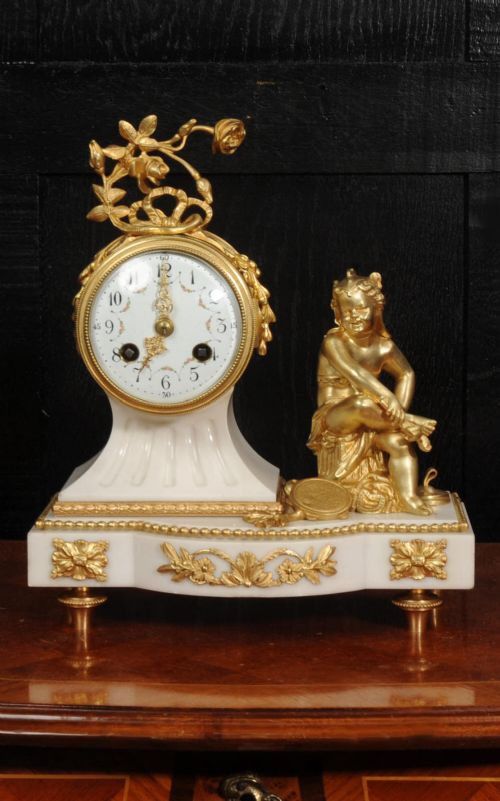
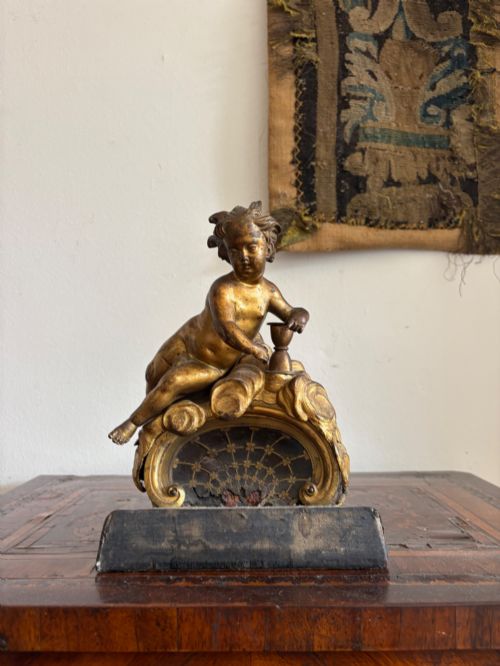
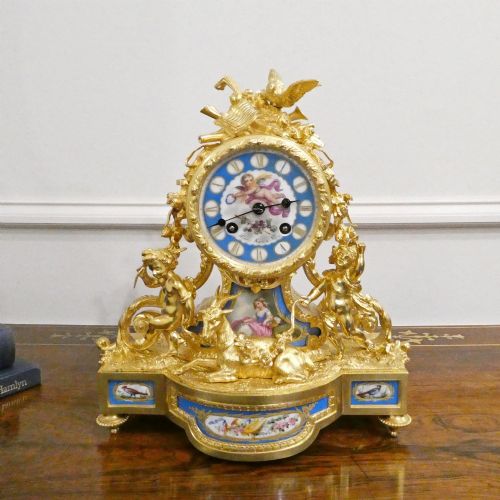
The objects span varied configurations, from portico clocks and drumhead timepieces to figural compositions depicting cherubs, animals, or classical themes. Most examples originate from French workshops operating during the Victorian and Napoleon III periods, though occasional Regency English pieces appear in the selection.
Materials and construction methods
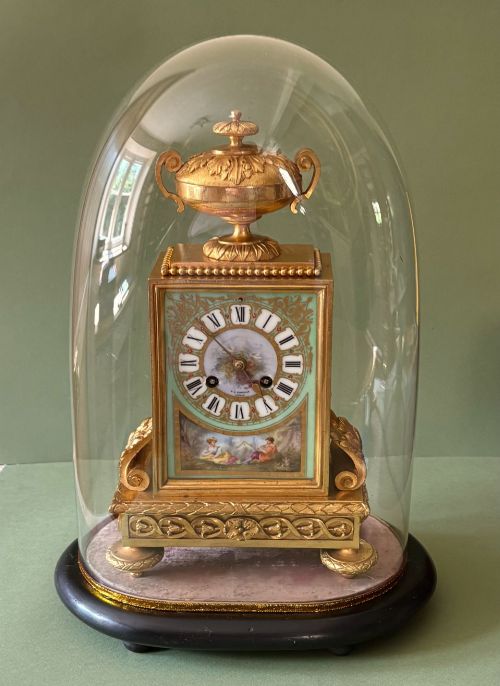
The manufacture relies on cast bronze treated with mercury gilding or modern electroplating to achieve the distinctive ormolu finish, paired with patinated bronze elements for textural contrast. Dials frequently employ white enamel with painted numerals, protected behind glass bezels and driven by brass mechanical movements.
Many cases integrate natural stones such as white, green, or pink marble, alongside decorative inserts of Sèvres porcelain or champlevé enamel. Master horologists and bronze-founders collaborated to house precision escapements within these elaborate architectural and figural housings.
Several clocks depict exotic elephants serving as structural beasts of burden beneath heavy clock dials.
Distinctions in execution and design
Quality separates through the sharpness of the bronze chasing and the depth of the mercury gilding, where superior examples retain crisp detail in hair, drapery, and acanthus leaf mounts. Lesser pieces show softer casting edges and flat, uniform surface treatments that lack the multi-toned warmth of hand-chased metal.
The sophistication of the internal movement dictates standing, with recognised makers supplying durable mechanisms that feature complicated escapements and strike reliably on bells or gongs. The harmony between the sculptural figures and the architectural marble or wood plinth indicates the original ambition of the workshop.
Achille Brocot·Henry Marc·Japy Freres·Vincenti·Siffel and Cartier·Henry Dasson·F Baetens·Raingo Freres·Canaillor of Paris·Charles a Orleans
The Ormolu Bronze Mantel Clock Glossary
- Ormolu
- A method of applying finely ground high-carat gold to a bronze object, creating a rich golden surface finish. This technique defines the visual character of nineteenth-century French decorative metalwork.
- Garniture
- A set of decorative objects designed to be displayed together, typically comprising a central clock flanked by matching vases or candelabra. These sets created a balanced arrangement for a fireplace mantel.
- Pendule d'Officier
- A portable military-style clock featuring a distinctive square case, often fitted with a carrying handle on top. These travel-friendly pieces retained sophisticated mechanical movements.
- Portico Clock
- A timepiece structured like a classical temple, featuring columns supporting the central clock housing. This architectural style gained popularity during the Empire and Charles X periods.
- Brocot Escapement
- A visible pin-pallet deadbeat escapement invented by Louis-Gabriel Brocot, allowing easy regulation of the clock without removing the dial. Achille Brocot and other prominent makers utilised this mechanism frequently.
- Champlevé
- An enamelling technique where troughs are dug into the metal surface and filled with vitreous paste before firing. The resulting patterns frame the metal structure with vibrant coloured glass.
Ormolu Bronze Mantel Clock: Frequently Asked Questions
How do I wind an antique mantel clock?
Most mechanical clocks require a specialised key inserted into the winding holes on the enamel dial to tension the mainsprings. Care must be taken not to overwind the mechanism.
Striking clocks should be allowed to complete their chime cycle between hour adjustments to prevent damage to the internal rack and snail components.
Were these clocks meant for daily use?
Nineteenth-century households relied on these timepieces for keeping daily schedules in drawing rooms and parlours. The eight-day movements required weekly attention to maintain accurate timekeeping.
Today, many owners continue to run them regularly, though some treat them primarily as decorative sculptural objects.
How do I identify a clock garniture set?
A clock garniture consists of a main mantel clock accompanied by two matching side pieces, such as urns, candelabra, or vases. All components share identical materials, styles, and decorative motifs.
Placed across a fireplace mantel, these matched sets created visual symmetry popular in Victorian interior design.
What is the difference between ormolu and brass?
Ormolu is a gilded surface treatment applied to a bronze base, resulting in a warm golden lustre achieved through mercury amalgamation or electroplating. Brass is an alloy of copper and zinc that maintains its metallic yellow colour throughout its entire thickness.
Ormolu pieces generally exhibit heavier cast detailing and hand-chased finishing compared to standard brass items.