
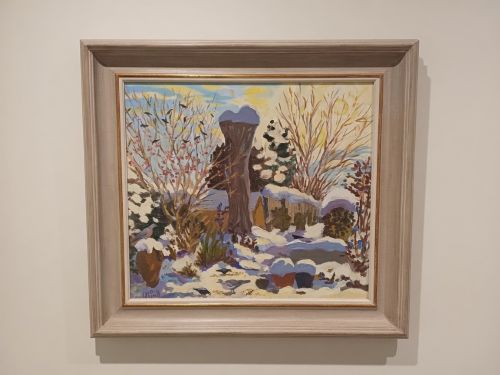
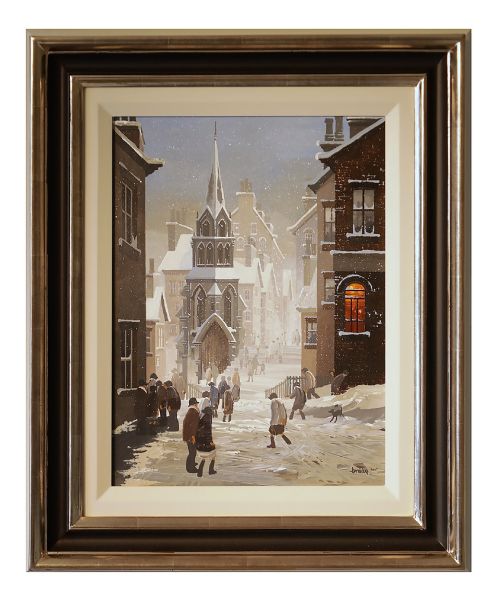
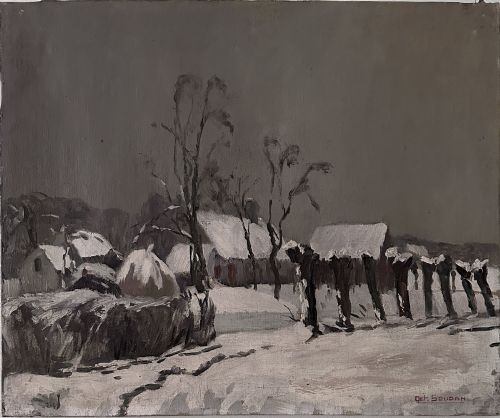


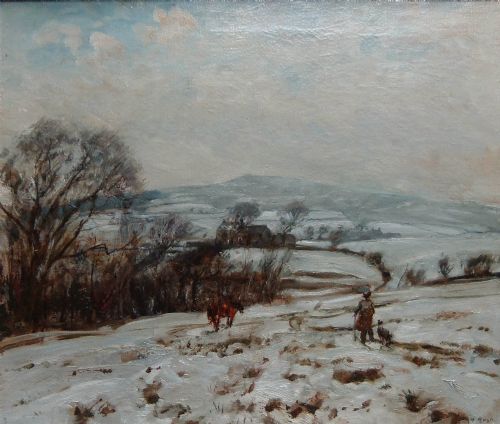


Original Winter Scene Painting
An original winter scene painting brings the quiet hush of snow, ice and bare branches directly into a room through oil, watercolour and canvas.
Original Winter Scene Painting
An original winter scene painting captures the stillness of cold weather, snow-covered fields and frozen waterways across various periods from the nineteenth century into the contemporary era. These works range from village lanes and rural valleys under heavy skies to figures skating on Dutch lakes.
The most common examples on this page are oil paintings on canvas and watercolours on paper, often framed behind glass, depicting British, French, Dutch and Canadian landscapes. Works span the 19th century, the 1910s, 1920s, 1930s, 1940s, 1950s, 1960s and later decades.
Buyers look for these pieces to anchor a room with muted palettes of white, grey and sepia, balanced by the warmth of oil paint or the translucency of watercolour. Each piece records a distinct approach to light on snow, from Impressionist dabs to Realist detail.
How they were made
Artists painted these scenes primarily using oil paint on canvas or wood panel, or watercolour and gouache on paper. Oils allowed for thick impasto to build up drifts of white snow, while watercolours relied on the white of the paper to shine through washes for frozen skies and frost.
Support materials varied from stretched canvas and wooden panels to heavy paper and card, often mounted within gilt frames and protected under glass for works on paper. Brushwork ranges from rapid, atmospheric strokes characteristic of Impressionism to precise draughtsmanship.
Listings feature works from the nineteenth century through the 1920s, 1950s, and into the contemporary period.
What varies in quality
Quality rests upon the artist's ability to render the specific, low-toned light of a cold day without letting the palette turn muddy. Stronger works capture the atmospheric chill and the dense weight of snow through confident brushwork rather than mere description.
Condition plays a part, distinguishing works with original untouched surfaces and period framing from those with later re-stretchings or heavy restoration. The vitality of the mark-making separates routine topographical records from compelling artistic interpretations of winter.
Lucy Pratt·Brian Shields Braaq·A McDonald·Gaston Cornil·Ernest Uden·John Smith Atherton·Arthur Winter Shaw·Herbert Royle·W Tatton Winter·George Graham·Ernest Higgins Rigg·Louis Smets·Anthonij Anton Mauve·Matthew Hale·Wilson·William Cave Day·Fred Lawson·Sam Bough
The Original Winter Scene Painting Glossary
- Impressionism
- A style of painting emphasising light and small, visible brushstrokes rather than detailed finish. This approach captures the fleeting effects of winter sunlight on snow.
- Gouache
- An opaque water-based paint often used alongside watercolour on paper. It provides dense highlights for snow and frosted branches.
- Panel
- A rigid wooden board used as a support for oil paintings instead of canvas. Artists frequently utilised panels for smaller outdoor sketches.
- Imposter
- A thick application of paint that stands proud of the canvas surface. Painters applied it heavily to suggest the texture of piled snow.
- Gilt
- A gold-leaf or metallic finish applied to frames. It enhances the visual warmth around cool-toned winter landscapes.
Original Winter Scene Painting: Frequently Asked Questions
How should I hang a winter painting?
Keep these works away from direct sunlight and damp walls to protect both the canvas and the paper.
Pair them with neutral wall colours that allow the subtle whites and greys of the snow scenes to stand out clearly.
Are watercolours harder to care for than oils?
Watercolours require glass protection and stable indoor humidity to prevent fading or paper discolouration over decades.
Oil paintings on canvas are generally more robust but still benefit from avoiding extreme temperature shifts.
How do I tell a 1920s painting from a 19th-century one?
Examine the materials, stretcher bars, framing construction and any signature styles typical of British Impressionism or earlier Realism.
Turn-of-the-century works often carry distinct framing styles and canvas stamps that help pinpoint their decade of creation.
Why do some winter scenes feature figures skating?
Frozen rivers and lakes provided communal gathering spaces for transport, work and leisure during colder historical winters.
Artists recorded these figures to add a sense of narrative scale and human activity to vast, cold landscapes.