
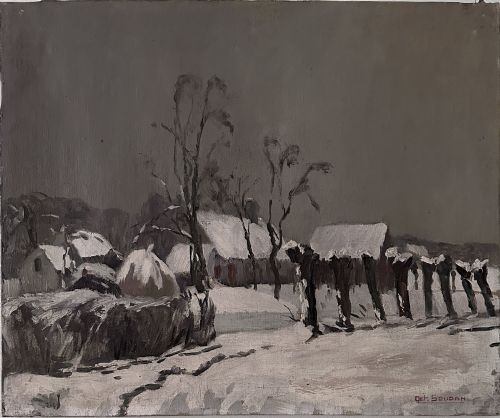


Original Winter Artwork
Original winter artwork captures the hush of snow and cold light through the eyes of painters from the nineteenth century onward.
Original Winter Artwork
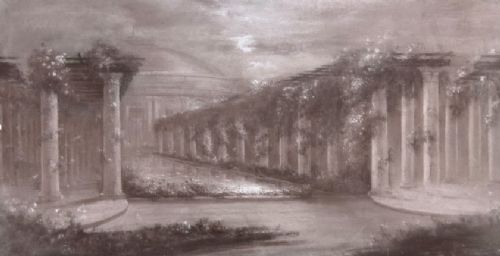
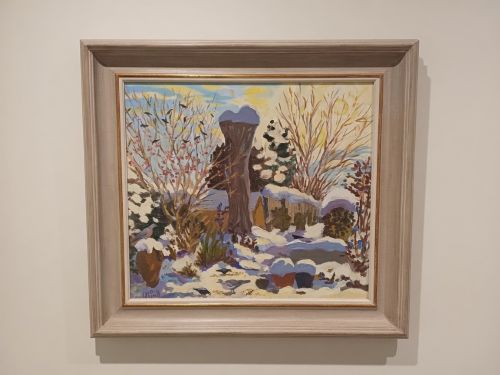
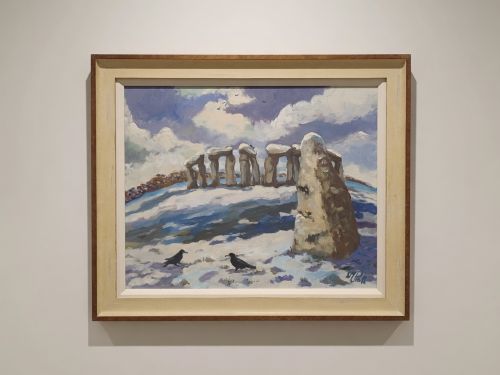
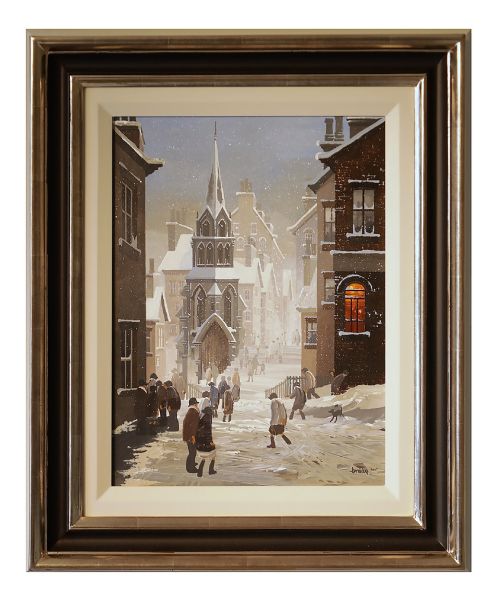
Original winter artwork encompasses paintings and works on paper recording cold seasons, frost, and snow from the nineteenth century to the modern era. You will encounter pastoral scenes, village streets in snow, and quiet rural landscapes spanning Edwardian and mid-twentieth century periods. These pieces bring the subdued palette and crisp atmosphere of cold weather directly onto the wall.
The selection here leans heavily towards early twentieth century watercolours and oil paintings depicting British and European country scenes. Works by regional painters such as Herbert Royle and Ernest Higgins Rigg sit alongside atmospheric watercolours by artists like William Tatton Winter. Landscapes featuring Yorkshire dales and snowy pastures dominate the selection.
Framed watercolours and oil paintings on canvas form the bulk of the available visual record. Many pieces carry the specific brushwork of British Impressionism and Tonalism, prioritizing mood and seasonal light over rigid detail. Buyers searching this phrase look for authentic period atmosphere rendered through historical pigments and traditional supports.
Materials and technique
Artists built these compositions using oil paint on canvas or stretcher-mounted paper, alongside watercolour and gouache on paper supports. Pigments were applied with brushes or palette knives to capture the texture of snow and frozen ground. Wood frames, often gilt, house the paintings and watercolours.
Watercolour works rely on washes of pigment and ink on paper to render mist, snow, and twilight. Oil paintings utilise thicker layers of paint to build up the heavy ground and cold skies characteristic of winter scenes. Charcoal and pastel appear in select works on paper to define stark tree lines and figures in the cold.
What separates the work
Quality rests in the handling of light and the fidelity of the seasonal atmosphere rather than the mere presence of snow. Stronger pieces convey the specific chill of a winter afternoon through confident brushwork and balanced tonal relationships. Weaker examples rely on formulaic compositions that lack depth in the shadows.
The handling of the medium distinguishes accomplished studio output from more routine output. Masterly watercolours preserve the white of the paper for snow while controlling wet-in-wet washes, whereas lesser works appear overworked. The relationship between the painted surface and the period frame also contributes to the integrity of the piece.
Lucy Pratt·Brian Shields Braaq·Thomas Hicks·Gaston Cornil·Fred Lawson·John Hobson Nicholson·Ernest Uden·Harry Bright·John Smith Atherton·Arthur Winter Shaw·Herbert Royle·W Tatton Winter·Ernest Higgins Rigg·William Greaves·Emily M Paterson·Louis Smets·Anthonij Anton Mauve·Matthew Hale
The Original Winter Artwork Glossary
- British Impressionism
- A painting style developed in Britain focusing on everyday scenes and natural light, prevalent in early twentieth century landscapes.
- Tonalism
- An artistic style where painters prioritized overall mood and shadow, often using dark, muted palettes to depict twilight and winter.
- Gouache
- An opaque water-based paint used alongside transparent watercolour to add solid highlights of snow and frost.
- Canvas stretcher
- The wooden framework that holds a canvas taut behind an oil painting.
- Watercolour
- A painting method where water-soluble pigments are applied to paper to create translucent washes.
Original Winter Artwork: Frequently Asked Questions
How should I display a antique watercolour?
Watercolours require placement away from direct sunlight to prevent the pigments and paper from fading over time. UV-filtering glass and acid-free mounts protect the delicate washes.
Keep these works in rooms with stable humidity to avoid warping the paper or damaging the surrounding period frame.
What defines a Tonalist winter landscape?
Tonalist works use a restricted palette of greys, browns, and muted blues to evoke the quiet atmosphere of a cold day. Painters emphasised shadow and mood over bright, literal colours.
This approach gives winter scenes a heavy, atmospheric quality that draws the viewer into the landscape.
How do I date an oil painting from this period?
Dating relies on stylistic clues, stretcher construction, and signatures or inscriptions left by the artist on the reverse of the canvas. Exhibition labels and framing materials also provide chronological markers.
Comparison with documented works by the same hand confirms the likely period of execution.
Are these paintings ready to hang?
Most works arrive fitted with traditional framing and picture wire suitable for immediate wall placement. It remains prudent to check the security of the cord and the condition of the backing board.
Professional assessment ensures the frame securely supports the weight of the canvas or framed paper.