

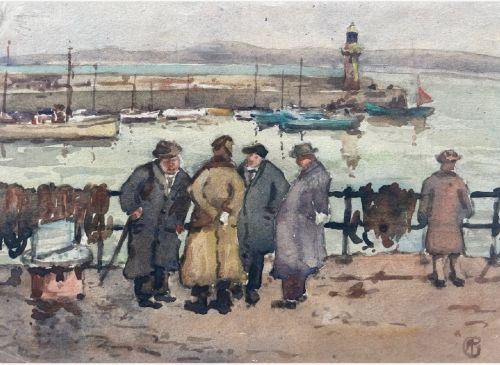


Original Watercolour Harbour Painting
An original watercolour harbour painting captures coastal life and maritime history through fluid pigment applied directly to paper.
Original Watercolour Harbour Painting
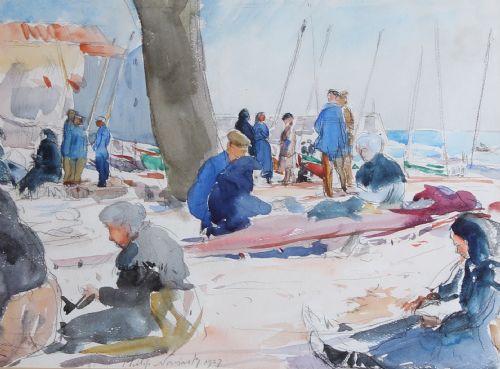
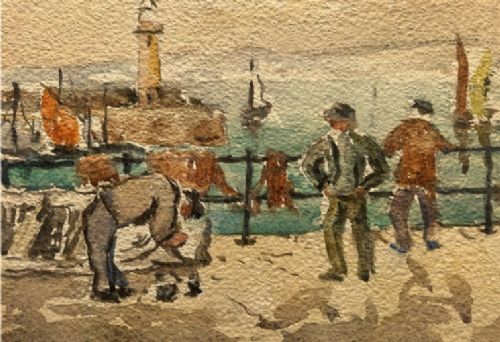
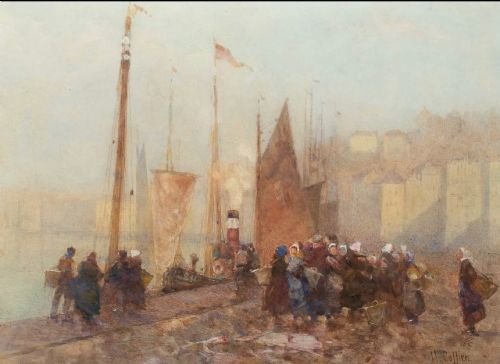
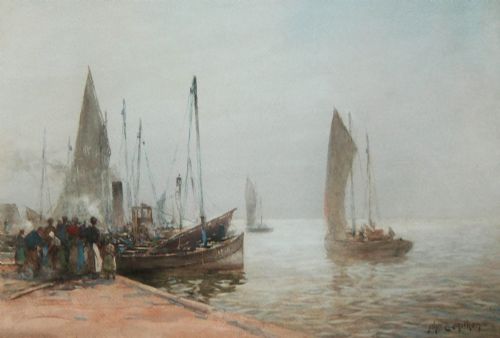
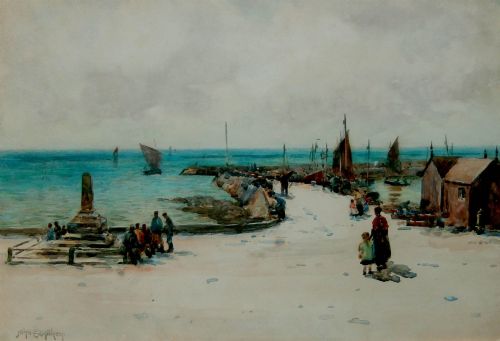
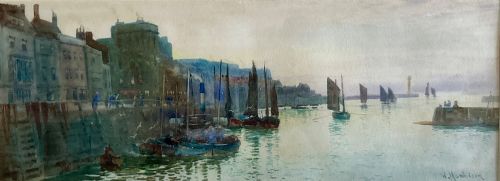
An original watercolour harbour painting documents coastal communities, fishing fleets, and bustling estuaries across Britain and Europe. These works capture maritime trade and leisure from quiet Victorian jetties to mid-twentieth-century naval docks.
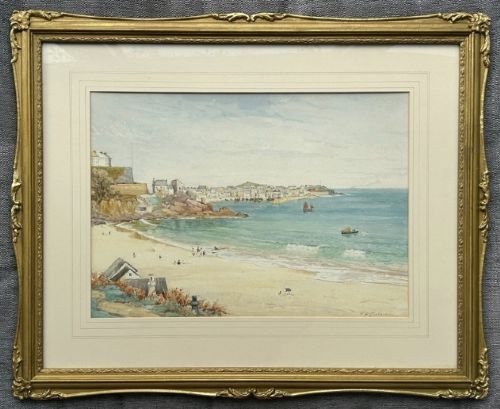
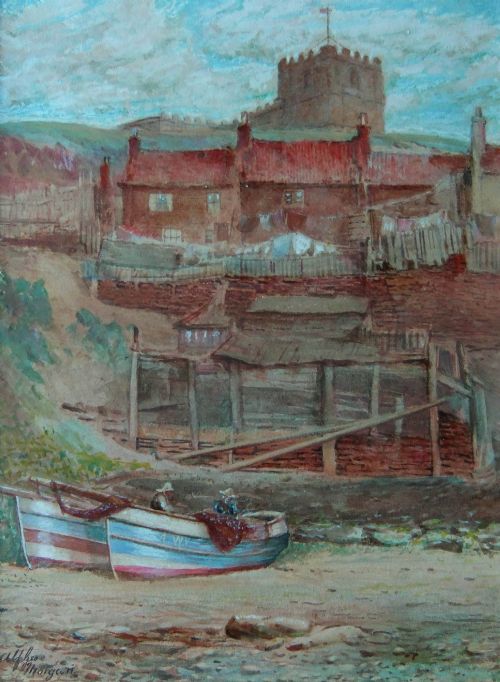
The selections available range from late nineteenth-century depictions of Yorkshire fishing ports to early twentieth-century views of Cornish coastal villages. Artists frequently focused on local vessels, tidal estuaries, and historic abbey backdrops.
Buyers encounter traditional topographical studies alongside works influenced by British Impressionism and regional art schools. Each piece records specific light and weather conditions observed along historical waterfronts.
How they were made
Watercolour pigment was diluted with water and applied to heavy paper surfaces to create transparent washes and luminous atmospheric effects. Artists combined fluid brushwork with precise pencil or ink underdrawing to define architectural details and rigging.
Finished works were typically preserved behind glass within wooden frames, sometimes featuring gilt enrichment to complement the palette. Pigments reacted directly with the paper grain, preserving the spontaneous gestures of the painter.
Original Watercolour Harbour Painting Retail Price Guide 2026
Typical asking prices for original watercolour harbour painting among the pieces listed under this phrase on Sellingantiques today, from the lower quarter to the upper quarter. They describe what is for sale here now, not the wider market.
Listings span periods from the Victorian era through the 1950s, executed on paper using watercolour pigments and ink.
What varies in quality
Quality rests upon the artist's command of light, tonal depth, and atmospheric perspective within the maritime setting. Superior examples demonstrate confident brushwork and precise compositional balance rather than purely mechanical architectural recording.
The preservation of the paper and pigment vibrancy also distinguishes finer examples from faded or light-damaged works. Original framing and documented provenance further elevate individual pieces within the historical record.
James E. Aitken·John E. Aitken·William Banks Fortescue·Hector Caffieri·Richard Henry Wright·Alfred G. Morgan·William Matthison·Frank Kelsey·George F Pennington·Commander Eric Tufnell·Richard Harry Carter·William Lee Hankey·Fred Lawson·Thomas Bush Hardy·Tom Clough·William Tuck·James Thomas Watts·Kate E Booth·Jan van Couver·Stanley Orchart·Frederick Stuart Richardson·Albert Robert Quinton·William Kay Blacklock·Rowland Henry Hill·Frank W. Scarborough
The Original Watercolour Harbour Painting Glossary
- Watercolour pigment
- Finely ground colour particles mixed with a water-soluble binder. This medium allows for transparent washes that reveal the texture of the underlying paper.
- Wash
- A thin, fluid layer of diluted watercolour spread across the paper. Artists utilise this technique to render expansive skies and open stretches of sea.
- Gilt wood
- Timber frames finished with a thin layer of gold leaf or metallic paint. Such framing was frequently selected to enhance the warmth of the painted composition.
- Newlyn School
- A nineteenth and twentieth-century art colony based in Cornwall. Painters associated with this movement favoured plein-air realism and coastal subjects.
- Provenance
- The documented history of ownership associated with an artwork. Clear records help establish the authenticity and exhibition history of a painting.
Original Watercolour Harbour Painting: Frequently Asked Questions
How should I hang watercolour paintings safely?
Watercolours require protection from direct sunlight to prevent the fugitive pigments from fading over time. Position them away from moisture-heavy rooms and unfiltered windows.
Ensure frames are securely hung using appropriate wall fixings suited to the weight of the glass and wooden moulding.
Can I identify the exact harbour from the painting?
Many works include contemporary inscriptions, artist signatures, or recognizable landmarks such as parish churches, abbeys, and breakwaters. Comparing these architectural details with regional coastal topography often reveals the specific location.
Artists frequently recorded local fishing luggers and trading vessels unique to particular stretches of coastline.
What distinguishes Victorian watercolours from later works?
Victorian watercolours frequently employ highly detailed linework combined with intricate washes to describe narrative maritime scenes. The palette tends toward rich, traditional tones.
Twentieth-century examples often display looser brushwork and simplified forms influenced by impressionist tendencies and modern plein-air observation.
Why are some watercolours painted on tinted paper?
Tinted or grey papers allowed artists to work from a middle tone rather than starting with blank white sheets. Highlights could then be introduced with bodycolour or white gouache.
This technique helped painters capture shifting coastal light and overcast maritime atmospheres with greater speed.