



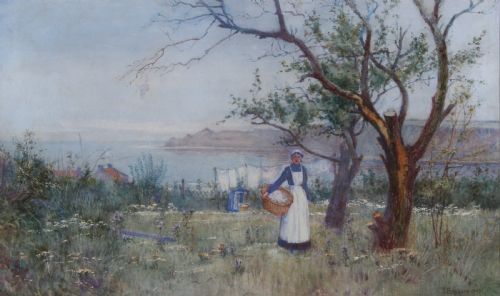


Edwardian Maritime Watercolour Landscape
An edwardian maritime watercolour landscape captures coastal life and harbour scenes through delicate pigment on paper, prized by collectors for its atmospheric depiction of British shores.
Edwardian Maritime Watercolour Landscape
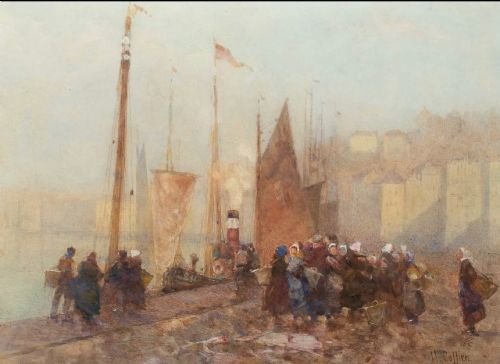
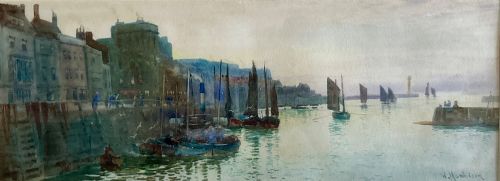
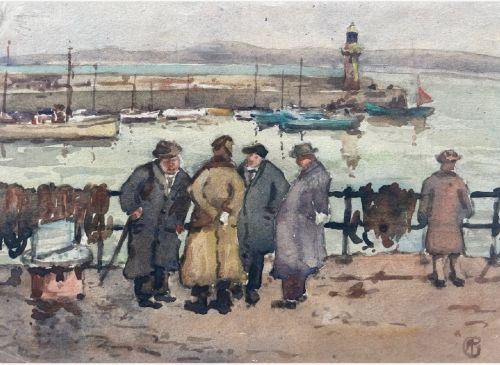
An edwardian maritime watercolour landscape typically portrays British coastal views, bustling fishing ports, and tidal rivers executed during the early decades of the twentieth century. These works frequently record specific locations along the Yorkshire coast, Cornwall, and London waterways, combining topographical detail with marine subjects.
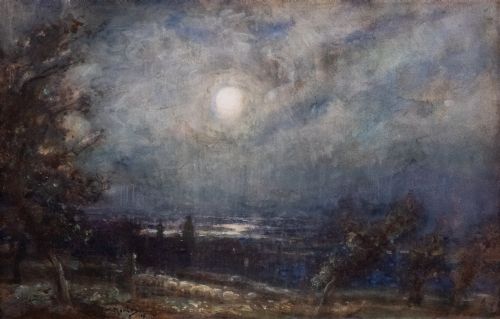
The pieces on this page span styles from Victorian realism to British Impressionism and the Staithes School, encompassing works framed in wood and glass alongside unframed sheets. Subjects range from moonlit coastal views and docked fishing boats to grand city river scenes with prominent bridges and cathedrals.
Materials and technique
Artists relied primarily on watercolour pigment applied to paper supports, utilising the natural luminosity of the white paper to illuminate skies, sea foam, and sunlit stone. Washes of colour create transparent expanses of water and sky, while finer brushwork defines rigging, architecture, and figures.
Framing materials commonly incorporate wood and glass to protect the delicate water-soluble pigments from moisture and environmental degradation.
Edwardian Maritime Watercolour Landscape Retail Price Guide 2026
Typical asking prices for edwardian maritime watercolour landscape among the pieces listed under this phrase on Sellingantiques today, from the lower quarter to the upper quarter. They describe what is for sale here now, not the wider market.
The selection includes British Impressionism and Staithes School styles depicting coastal harbours, rivers, and historic docks.
What separates works within the range
Quality rests upon the artist's handling of light, atmospheric depth, and the assurance of the brushwork across the paper surface. Works by established regional painters and members of recognised groups such as the Staithes School demonstrate a superior grasp of coastal atmosphere and tonal harmony.
Condition also influences standing, as watercolours maintained behind glass away from direct sunlight preserve their original pigment vibrancy without fading or paper discolouration.
Thomas William Morley·Hector Caffieri·William Matthison·Frank Kelsey·George F Pennington·Alfred George Morgan·Tom Clough·Fred Waugh·James Watson·George Hamilton Constantine·James Thomas Watts·Leslie Rackham·H E Tidmarsh·Percy Brooke·Walter Duncan·William Kay Blacklock·John McDougal·Frank Wood·Frank W Scarborough·Harry Wanless·Fred Mayor·Rowland Henry Hill·Willie Stephenson·William Knox·George Stanfield Walters
The Edwardian Maritime Watercolour Landscape Glossary
- Watercolour pigment
- Finely ground colour particles mixed with a water-soluble binder, applied in translucent washes to paper.
- Gilt wood
- Timber framing finished with a thin layer of gold leaf or metallic gilt paint, frequently enclosing antique paintings.
- Staithes School
- A group of late nineteenth and early twentieth-century British artists who painted en plein air in the Yorkshire fishing village of Staithes.
- British Impressionism
- A painting style emerging around the turn of the twentieth century that focused on transient effects of light and spontaneous brushstrokes.
Edwardian Maritime Watercolour Landscape: Frequently Asked Questions
What subjects appear in these watercolours?
These works primarily depict British coastal harbours, fishing fleets, tidal rivers, and maritime activities. Common scenes include Yorkshire fishing villages, London river pools, and coastal cliffs.
Views frequently feature boats, shipping docks, architectural landmarks, and coastal workers engaged in daily maritime routines.
Which periods do these paintings represent?
The listings span from the late Victorian era through the Edwardian period and into the nineteen-twenties and nineteen-thirties. Most pieces date from the turn of the twentieth century.
Artistic approaches reflect the transition from Victorian academic realism toward British Impressionism and regional plein air painting.
How should I frame and display a watercolour?
Watercolours require framing behind glass with a mount that keeps the paper surface from touching the glazing directly. This prevents condensation damage and preserves the delicate pigments.
Display these paintings away from direct sunlight and high humidity to prevent the paper from yellowing and the watercolours from fading.
Who were the artists creating these marine works?
The creators include professional landscape and marine painters working within Britain during the late nineteenth and early twentieth centuries. Many were associated with regional artistic communities such as the Staithes School.
Others exhibited widely in London and provincial galleries, capturing maritime commerce and coastal topography.