
Original Still Life Art
Original still life art captures composed arrangements of everyday objects, offering a quiet window into domestic interiors across multiple past decades.
Original Still Life Art
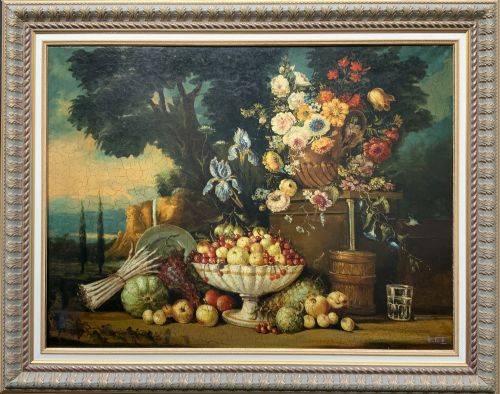
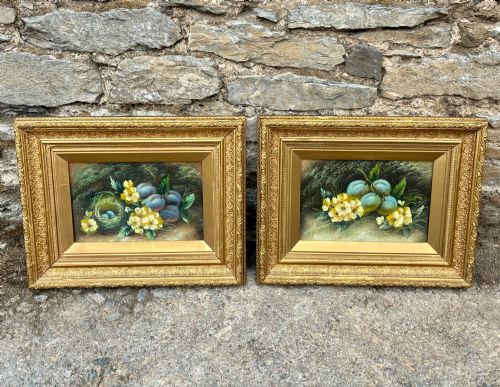
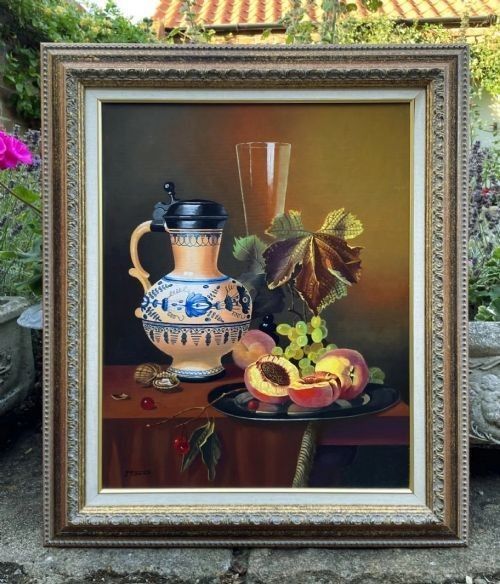
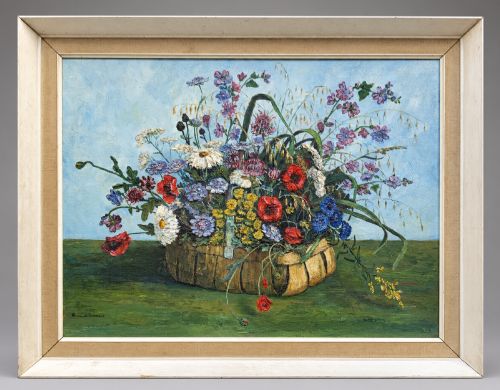
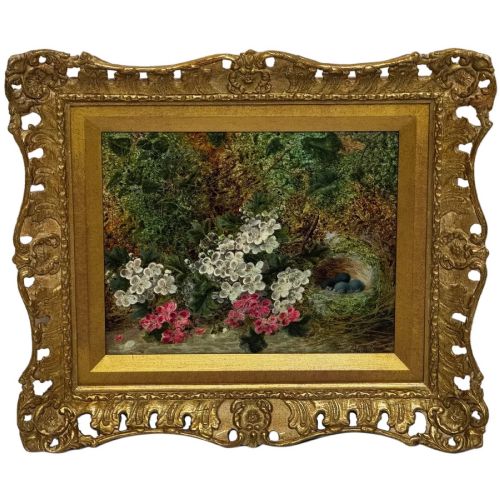
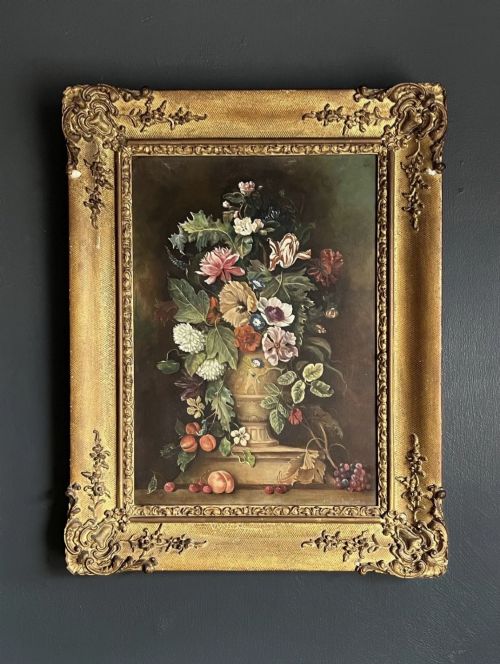
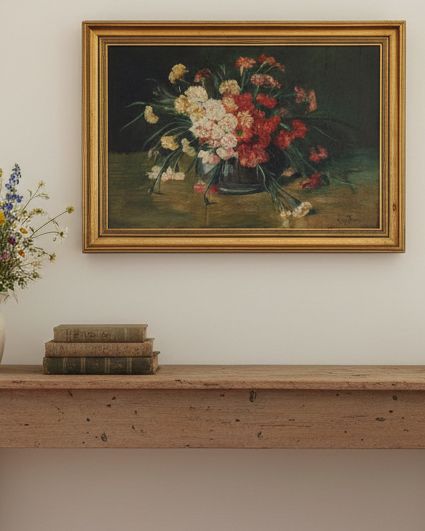
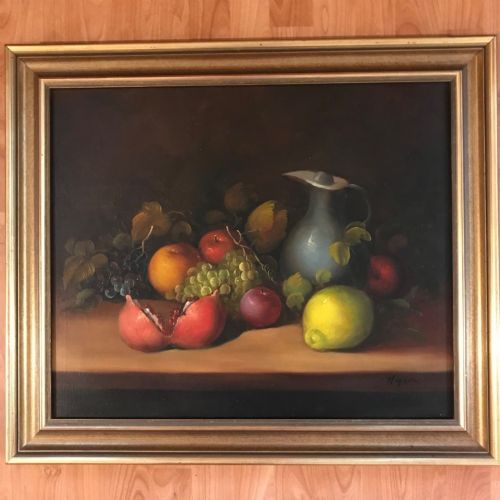
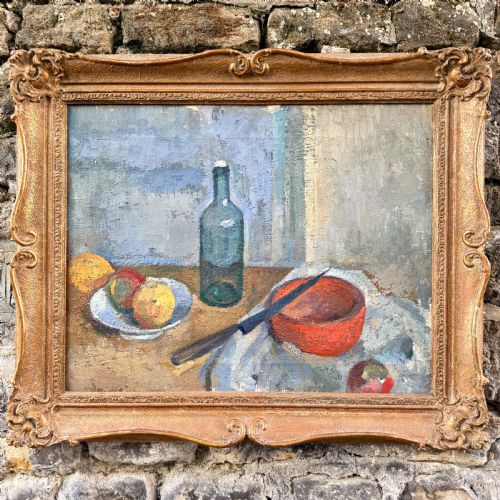
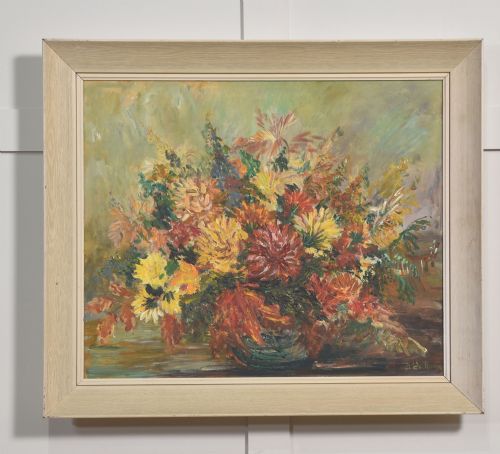
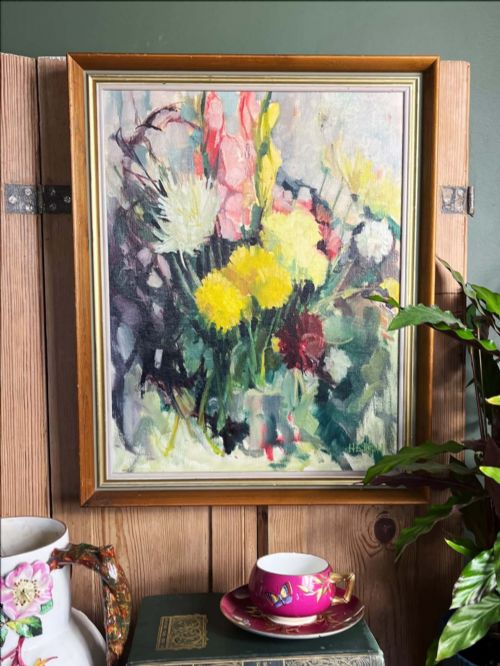
Original still life art encompasses hand-painted works depicting inanimate subject matter such as flowers, fruit, and household items. When exploring original still life art on this page, collectors frequently encounter pieces spanning from the Victorian era through the mid-twentieth century.
Originating from various British and European studios, the pieces demonstrate how artists across different periods recorded the tactile qualities of everyday domestic scenes.
Distinctions in quality
Quality rests upon the artist's command of light, shadow, and tonal balance within the arranged composition. Works demonstrating confident brushwork and precise rendering of textures tend to stand apart from simpler decorative pieces.
The preservation of the pigment layer and the originality of the accompanying period frame also contribute significantly to the standing of an individual work.
Several artists clearly found biscuits and candlesticks just as inspiring as traditional summer roses.
Oliver Clare·Arthur Dudley·James Tower·Owen Bowen·Konstantin Stoitzner
The Original Still Life Art Glossary
- Bodycolour
- Watercolour paint mixed with a white pigment to make it opaque. This technique adds solid highlights and dense areas of colour to works on paper.
- Panel
- A flat piece of wood used as a rigid support for painting. Artists frequently utilised wooden panels before stretched canvas became dominant.
- Gesso
- A plaster-like mixture applied to frames or panels as a base for paint or gilding. It provides a smooth surface that accepts decorative detail.
- Impressionism
- A style of painting emphasising immediate visual impressions and loose brushwork. Artists working in this manner focused on shifting light rather than meticulous detail.
Original Still Life Art: Frequently Asked Questions
How do I date a still life painting?
Dating relies heavily on stylistic markers, framing techniques, and the type of support used by the artist. Canvas weaves and panel preparations often align with specific historical periods.
Signatures, exhibition labels, and artist biographical details found on the reverse further help narrow the exact decade of creation.
Where should I hang a still life?
These works suit dining rooms, kitchens, and living spaces where their domestic subjects can complement surrounding interior furnishings. Placing them away from direct sunlight protects vulnerable watercolours and oil pigments.
Appropriate wall placement allows the lighting to enhance the textures of fruit, ceramics, and floral bouquets depicted in the composition.
What subjects are most common?
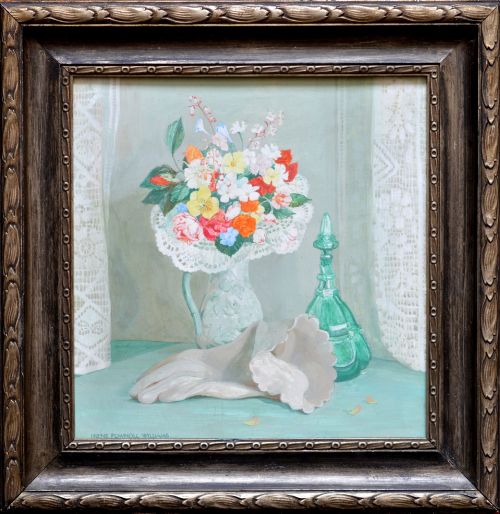
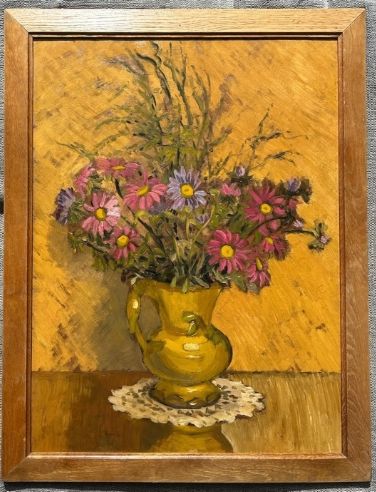
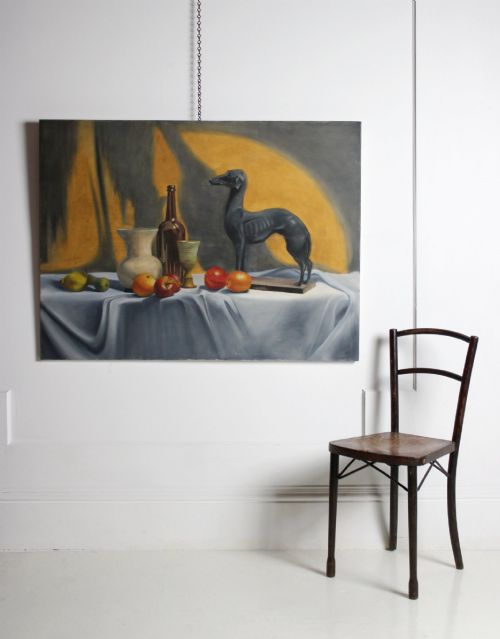
Floral bouquets, arrangements of fruit, and tabletop collections of vessels or books appear frequently across these historical listings. Artists enjoyed arranging these familiar objects to study light and colour in a controlled setting.
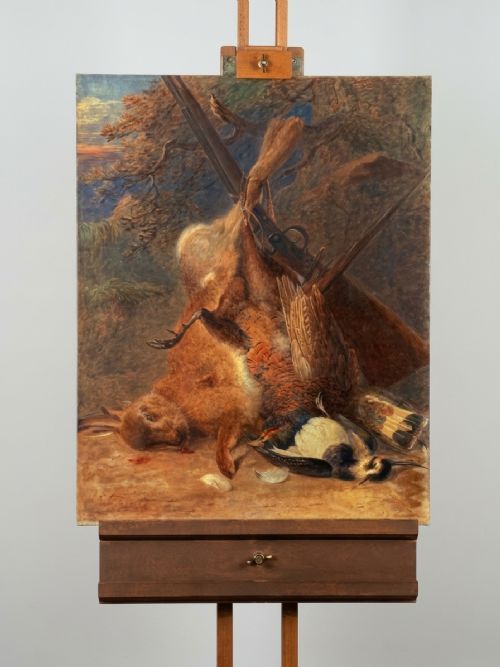
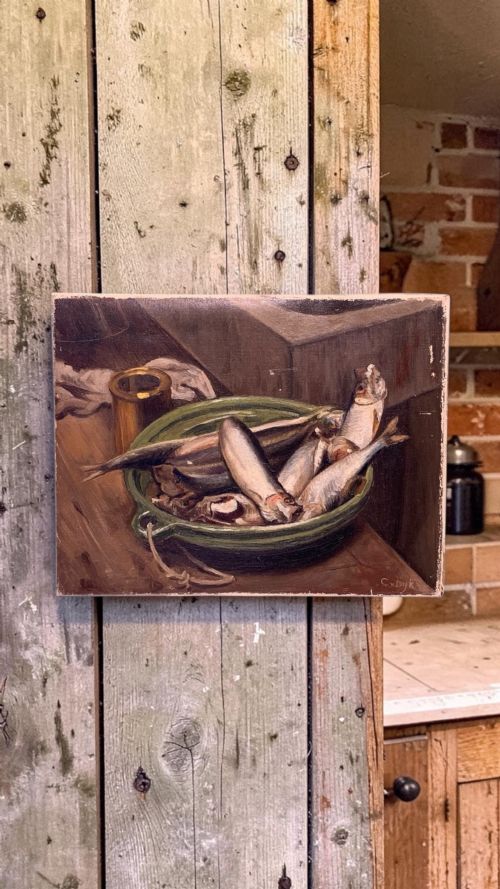
Some pieces incorporate game birds or fish, reflecting broader traditions in European and British domestic painting.
How do watercolours differ from oils?
Watercolour paintings utilise water-soluble pigments on paper supports, creating translucent effects that benefit from protective glass framing. Oil paintings employ slow-drying pigments on canvas or board, yielding richer textures and deeper colour saturation.
Both mediums offer distinct approaches to capturing the stillness of domestic arrangements.