




Original Sheep Landscape Painting
An original sheep landscape painting captures the quiet rhythm of rural life through the enduring partnership between shepherd, flock, and countryside.
Original Sheep Landscape Painting
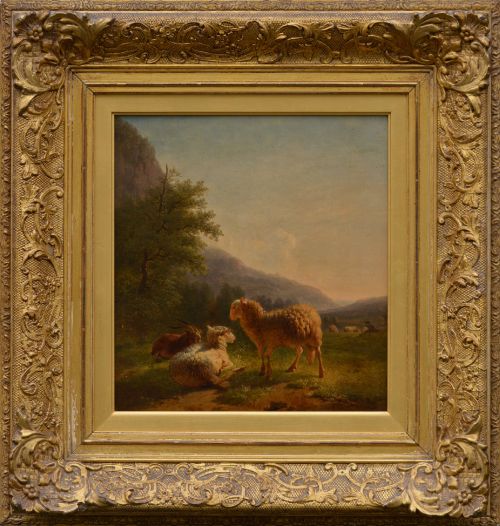
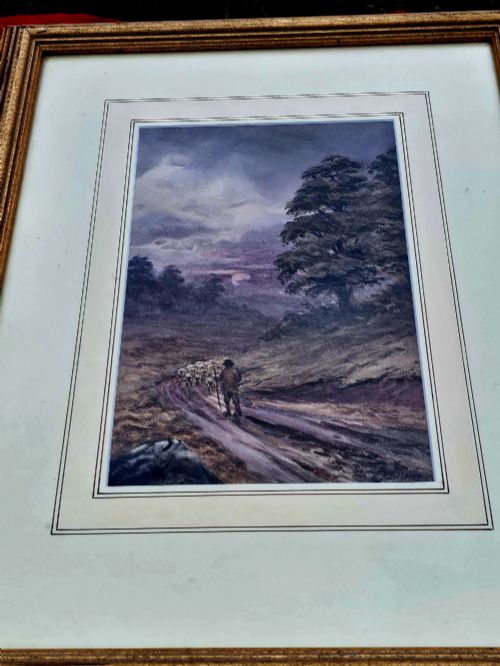
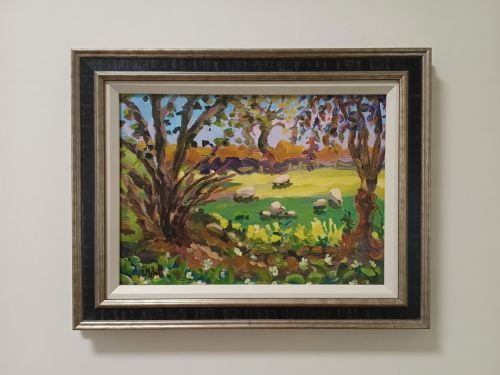
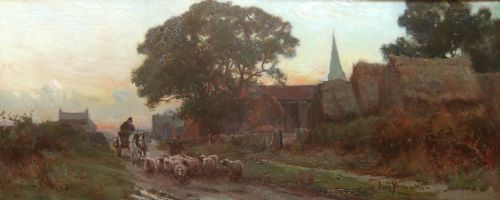
An original sheep landscape painting depicts pastoral scenes across British and European countryside, executed primarily during the nineteenth and early twentieth centuries. These artworks capture rural life, featuring drovers, shepherds, and grazing flocks set against moorland, river valleys, and rolling hills.
The pieces available stem from distinct regional schools and recognisable artistic movements, including Victorian pastoral and British impressionism. Surviving works range from intimate watercolour studies on paper to large canvas oils painted by both celebrated Academicians and regional artists.
How They Were Made
Artists utilised traditional oil paints on stretched canvas, wood panels, and copper plates to build rich, textured compositions with deep atmospheric depth. Watercolours were applied to heavy paper or buff-toned sheets to achieve luminous skies and translucent washes across wide moorland views.
Many works were painted en plein air to capture the changing light of eventide, dawn, or stormy coastal skies before being mounted in heavy gilt frames.
Some observant sheep appear to pose directly for the artist, holding eye contact while the rest of the flock grazes obliviously.
What Varies in Quality
The distinction between standard works and masterpieces lies in the confidence of the brushwork and the artist's ability to render the individual movement and woolly texture of the flock rather than a generic white blur. Superior compositions integrate the animals naturally into the topography of the landscape, using light to guide the viewer's eye across the valley or down the country lane.
Condition and provenance further elevate a piece, particularly when original exhibition labels, artist signatures, and undisturbed period framing remain intact.
Eugène Verboeckhoven·Tom Campbell·Cornelius Pearson·Henry Charles Fox·Owen Bowen·William Sydney Cooper·Herbert Royle·George Turner·Ernest Higgins Rigg·Charles James Adams·Anthonij Anton Mauve·John Syer·Thomas Sidney Cooper·David Cox
The Original Sheep Landscape Painting Glossary
- Pastoral
- Pertaining to the countryside, rural life, and the tending of livestock. These scenes romanticise agricultural existence.
- Provenance
- The documented history of ownership of an artwork. A clear chain of custody verifies authenticity.
- Gouache
- An opaque watercolour medium used by artists to add highlights and solid areas of colour to paper works.
- En plein air
- The act of painting outdoors. This technique allows the artist to directly observe natural light and weather.
Original Sheep Landscape Painting: Frequently Asked Questions
How do I date a sheep painting?
Dating relies on a combination of stylistic clues, framing techniques, and the material support used by the artist. Canvas weaves, watermarked papers, and handwritten notes on the reverse often provide reliable chronological markers.
Furthermore, the clothing of figures and the specific pigments utilised can help narrow down the decade of creation.
Were these painted outdoors?
Many nineteenth-century artists worked directly in the landscape to capture accurate light and weather conditions. However, larger oil paintings were frequently finished or entirely composed inside a studio using preliminary pencil and watercolour sketches.
This hybrid method allowed painters to manage shifting weather while maintaining naturalistic details in the final composition.
Why are sheep common in Victorian art?
Sheep symbolised pastoral peace, economic prosperity, and a sentimental longing for traditional rural values during a period of rapid industrialisation. Artists used flocks to add a sense of scale, movement, and gentle harmony to vast moorland and valley views.
Collectors of the era eagerly sought these scenes to decorate urban homes with reminders of the countryside.
How should I frame an antique painting?
Antique paintings are best housed in period-appropriate frames that complement the weight of the canvas and the style of the era. Avoid modern minimalist mouldings that clash with historical brushwork and patinated gilt surfaces.
Consulting a professional conservator ensures the artwork remains properly ventilated and protected from environmental damage.