
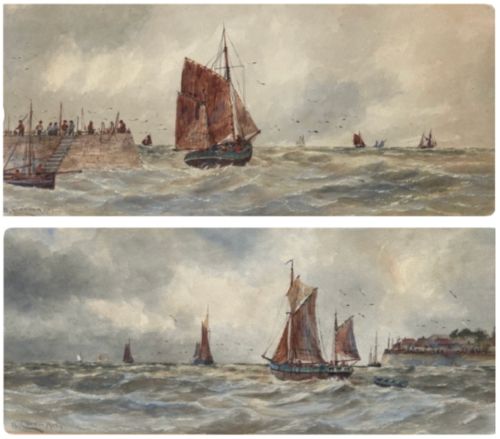

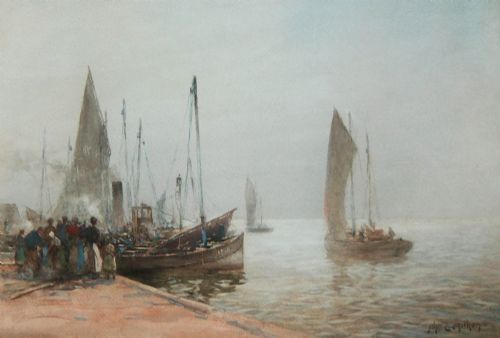
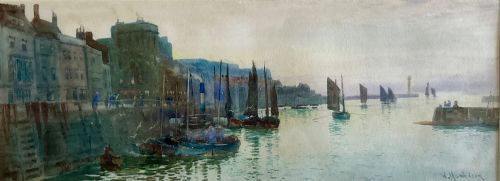
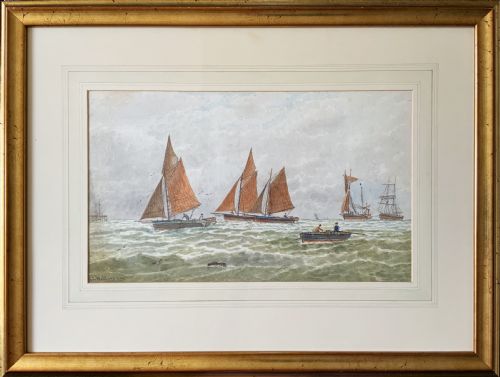
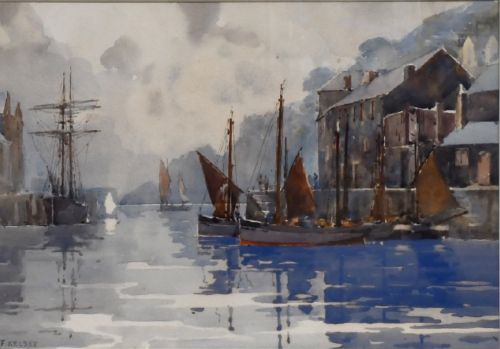


Original Sailing Watercolour
An original sailing watercolour captures maritime atmosphere through pigment on paper, offering buyers a direct window into nineteenth- and early twentieth-century coastal life.
Original Sailing Watercolour
When searching for an original sailing watercolour, buyers encounter framed maritime artworks spanning the nineteenth century through the mid-twentieth century, including the Victorian and Edwardian periods.
The selections on this page concentrate on British coastal scenes, fishing boats, clippers and harbour views created by named artists and regional painters.
Most examples present water-borne vessels under sail, rendered on paper using traditional pigment techniques and housed behind glass.
How they were made
Makers applied watercolour pigment onto prepared paper surfaces, occasionally incorporating ink for fine rigging details and linear definition on vessels.
Finished works were mounted behind protective glass and secured within wooden frames, sometimes featuring gilt ornamentation or hand-enamelled polychrome decoration.
Materials recorded across the archive and current listings include gilt wood, paper, watercolour and glass.
What varies in quality
Quality rests upon the artist's command of maritime atmosphere, light and movement, distinguishing works with brisk observational energy from formulaic coastal sketches.
The handling of water texture, hull proportions and atmospheric depth separates accomplished marine watercolours from standard topographical records.
William Cannon·James E Aitken·Charles Edward Dixon·William Matthison·George Stanfield Walters·Frank Kelsey·William Frederick Settle·Thomas Bush Hardy·Frank H Mason·Samuel Owen·Leslie Rackham·Clara Montalba·Frank Wood·Fred Mayor·Rowland Henry Hill·Thomas Clavering Alder·Robert Anderson·Frederick William Booty·GM de L'Aubiniere·Frank Wasley·Charles Edward Wilson·Edward Aubrey Hunt·Edward Wesson·Gordon Meadows·Henry Scott Tuke
The Original Sailing Watercolour Glossary
- Watercolour pigment
- The coloured powder medium mixed with a water-soluble binder, applied in washes to paper.
- Gilt wood
- Timber framing coated with a thin layer of gold leaf or metallic gilt finish.
- Seascape
- A work of fine art depicting the sea, coastal views or marine vessels.
- Framed artwork
- A painting protected behind glass and enclosed within a wooden moulding for hanging.
Original Sailing Watercolour: Frequently Asked Questions
How should I hang original sailing watercolours?
Keep watercolours away from direct sunlight to prevent the pigments from fading over time. Position them on interior walls where room temperature and humidity remain stable.
Ensure the frame is securely fixed to wall studs using appropriate picture wire and hooks. Glass fronts protect the delicate paper surface from dust and atmospheric moisture.
What subjects appear in these marine watercolours?
The works depict fishing boats, clippers, tall ships and steam-and-sail vessels navigating coastal waters, estuaries and busy harbours. Scenes often feature specific locations such as Whitby, Venice, Falmouth or the River Humber.
Artists recorded everyday maritime labour alongside leisure sailing regattas and tranquil river anchorages. The focus remains consistently on the interaction between vessels, water and changing coastal light.
How do I date an antique maritime painting?
Examine the paper, framing style, artist signatures and any inscribed location or date on the front or reverse. Victorian and Edwardian works often display specific stylistic markers and handwriting typical of the period.
The rigging style and vessel types depicted also provide clues, as steam vessels began appearing alongside traditional sailing craft towards the end of the nineteenth century.
Are these watercolours painted on canvas?
These works are executed on paper rather than canvas, utilising water-soluble pigments applied in washes. Paper provides the absorbent, bright white ground necessary for traditional watercolour techniques.
Because paper is sensitive to environmental conditions, every piece on this page is protected behind glass within its frame.