



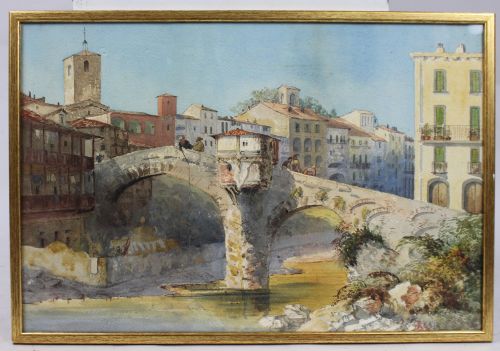
Original River Painting
An original river painting captures the enduring appeal of moving water through nineteenth and twentieth-century landscapes.
Original River Painting
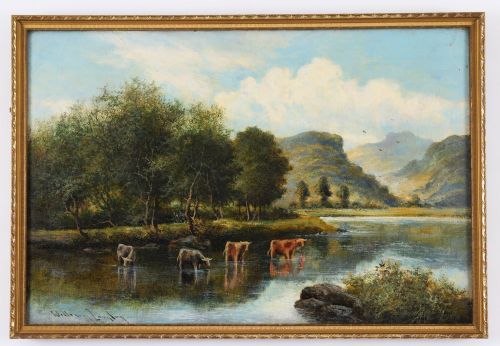
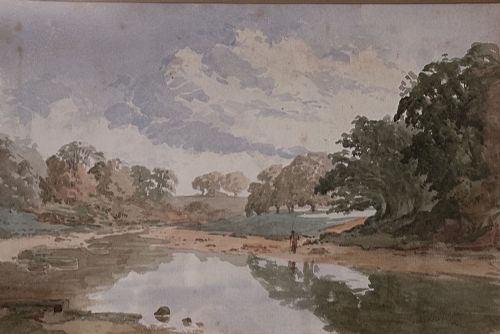
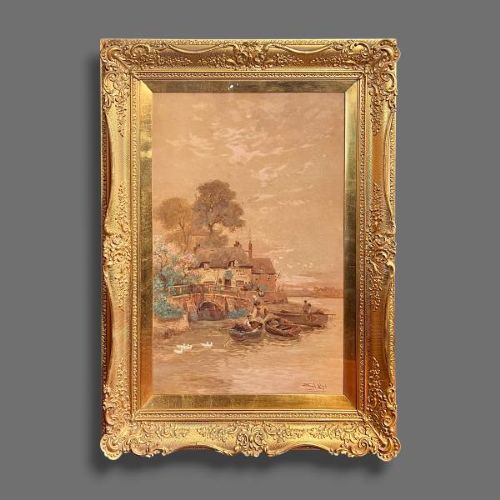
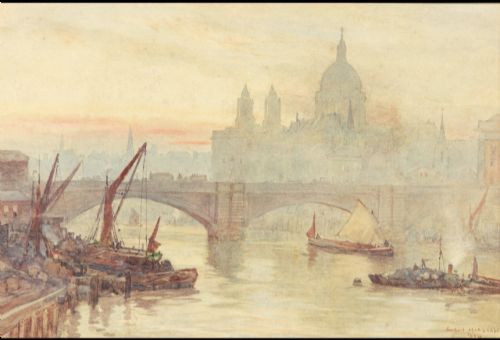
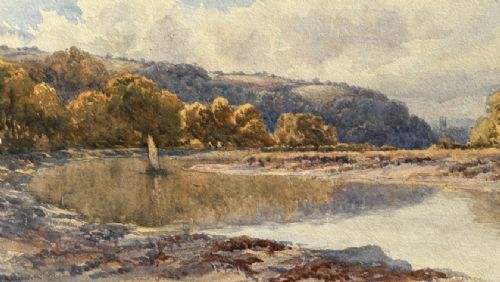
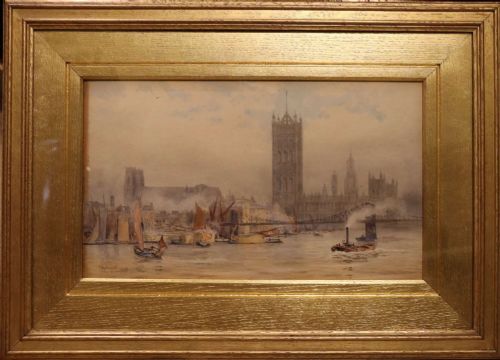
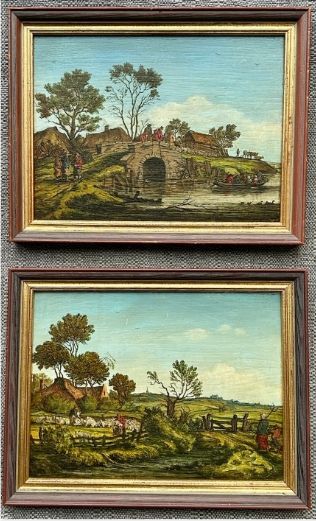
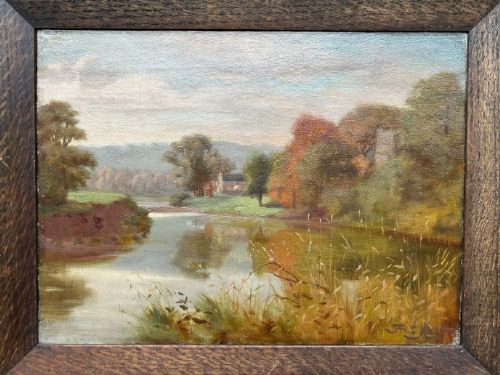
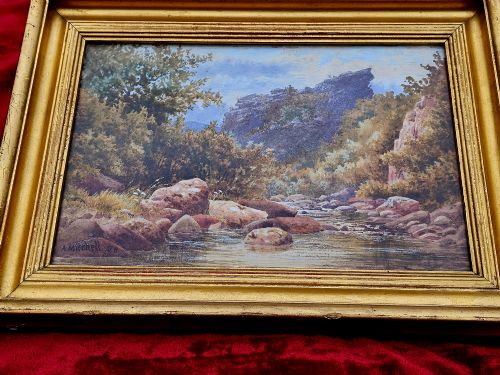
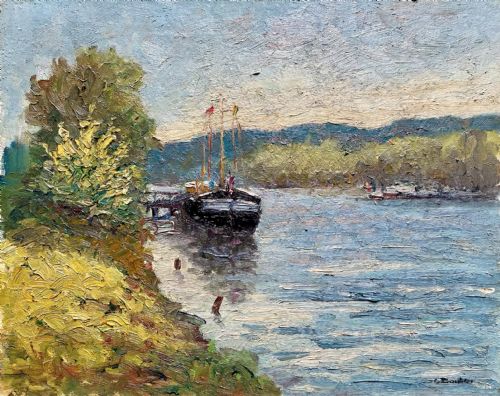
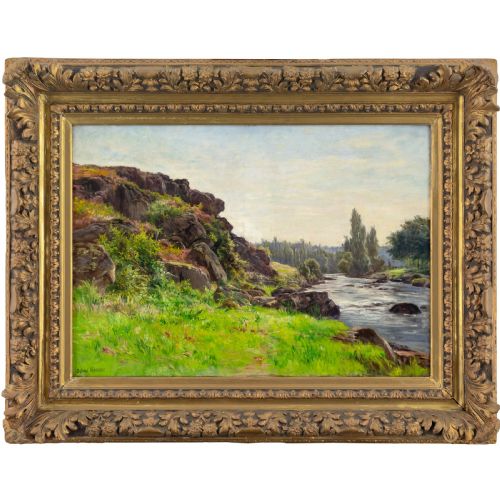
When searching for an original river painting, collectors encounter diverse interpretations of waterways, ranging from pastoral English streams to French Impressionist riverbanks. The selection spans works executed across the nineteenth and twentieth centuries, capturing bridges, barges, and quiet banks.
Most pieces on this page originate from the Victorian and Edwardian eras through to the mid-twentieth century. British and European landscapes dominate the selection, executed by regional painters and Royal Academy exhibitors alike.
Mediums vary from oil on canvas and wood panel to delicate watercolours on paper. Buyers find atmospheric depictions reflecting stylistic movements such as British Impressionism, the Barbizon School, and Edwardian Tonalism.
How They Were Made
Artists painted primarily with oil or watercolour, applying pigment to stretched canvas, wooden panels, card, or heavy paper. Canvas supports often show the texture of woven threads beneath layers of oil paint.
Many works utilise wood panels or board as a rigid base for detailed brushwork. Watercolours rely on the luminous quality of paper, sometimes enhanced by charcoal sketching underneath.
Listings feature works in oil, watercolour, and charcoal across the Victorian, Edwardian, and mid-twentieth-century periods.
What Varies in Quality
Quality rests in the handling of light and atmosphere across the water and surrounding landscape. Stronger pieces demonstrate confident brushwork and a coherent sense of space.
The distinction between standard decorative works and finer examples lies in the artist's command of tone and composition. Signed pieces by documented exhibitors carry greater historical weight than anonymous student works.
Kenneth Cozens·George Graham·Alfred Young Nutt·Frederick Marriott·William Joseph Boyes·Gabriel Mathieu·Robert Thorne Waite·Henri Ottmann·George Oyston·Albert Rieger·Herbert Royle·Paul Desire Trouillebert·Henry H Parker·John Ferneley Senior·William George Tennick·Hubert Wellington·Honore Cavaroc·Alfred George Morgan·Tom Anderton·John Syer·David Cox Senior·George Sykes·Claude Hayes·Walter Horsnell·Fred R Gibson
The Original River Painting Glossary
- Oil on canvas
- Pigment mixed with drying oil applied to a woven fabric stretched across a wooden frame. This method allows for rich texture and deep colour layering.
- Watercolour
- Pigment suspended in a water-based, translucent solution applied to paper. It requires precise brush control to achieve luminous washes of light.
- Panel painting
- Artwork executed on a flat piece of wood rather than canvas. Wooden supports provide a rigid surface favoured for smaller or more detailed outdoor sketches.
- Barbizon School
- A nineteenth-century French movement focused on direct observation of nature and tonal harmony. Painters associated with this group worked out of doors to capture natural light.
- Impressionism
- A style characterised by relatively small, thin yet visible brush strokes and an emphasis on accurate depiction of light. Artists sought to convey the momentary visual experience of a scene.
Original River Painting: Frequently Asked Questions
How do I date a river painting?
Dates are typically gathered from artist signatures, exhibition records, or stylistic markers inherent to the period. Examining the framing and backboards can also reveal clues regarding the age of the piece.
Comparison with documented works by the same hand helps narrow down the decade of creation. Costume, architecture, and shipping vessels depicted in the scene often provide reliable chronological anchors.
Were these painted outdoors?
Many nineteenth and twentieth-century landscape artists embraced plein air painting to capture transient effects of light on water. Portable box easels allowed painters to work directly beside rivers and estuaries.
Larger canvases were frequently finished or entirely executed within a studio using outdoor field sketches as reference. Both methods produced works with distinct observational qualities.
What is the difference between oil and watercolour?
Oils offer rich pigmentation and heavy texture that can be reworked over extended periods. Watercolour relies on transparent washes where the white of the paper illuminates the pigment.
Watercolours require protective glass framing to prevent moisture damage, whereas oil paintings on canvas remain open to the room environment. Each medium creates a fundamentally different mood on the river surface.
How should I frame these paintings?
Traditional gilt frames complement nineteenth-century oils, enhancing the depth and tonal warmth of the landscape. Watercolours traditionally sit behind an archival mount and glass within a simpler wood or gilded moulding.
Original frames should be preserved whenever possible as they often date contemporaneously with the artwork. Matching the frame style to the period of the painting ensures historical harmony.