
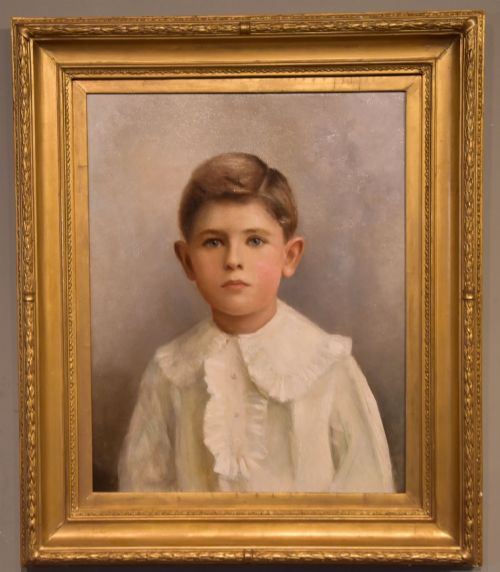


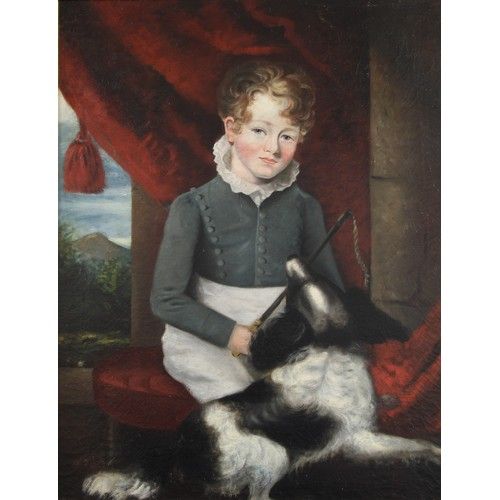
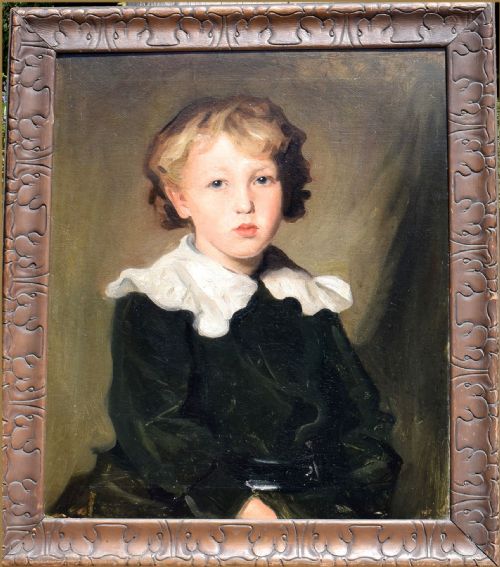

Original Oil Portrait Boy
An original oil portrait boy brings the character of past centuries directly to a wall, offering rich brushwork and enduring presence.
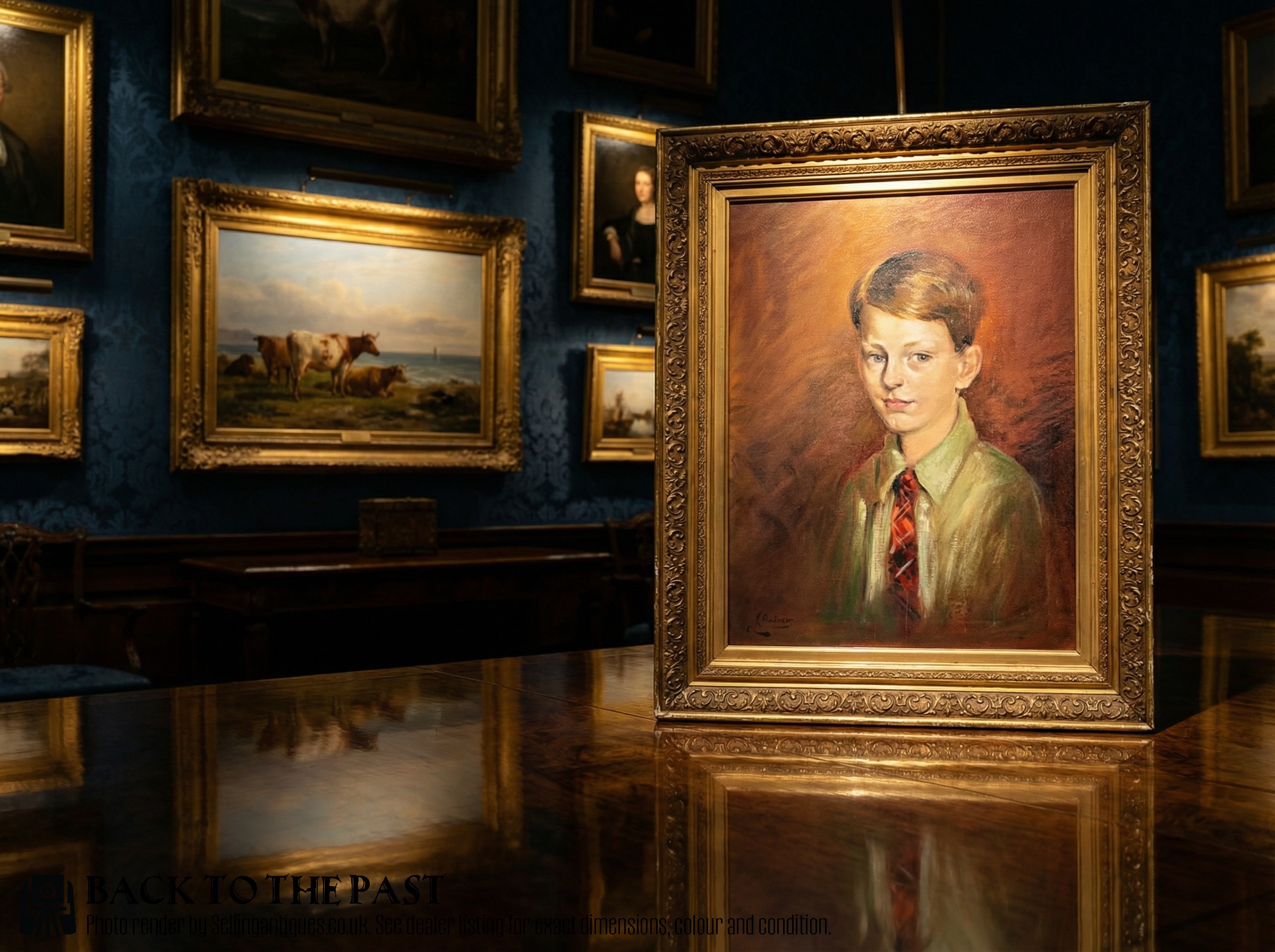
Original Oil Portrait Boy
An original oil portrait boy captures youthful subjects across centuries, ranging from Regency studies to mid-century modern interpretations. These works appear frequently on canvas, board, and wood panel, painted in styles that span from Edwardian realism to impressionism.
The collection includes formal depictions alongside informal domestic scenes, such as children with animals, books, or toys. The most common pieces encountered here originate from the nineteenth and early twentieth centuries, painted by both named artists and anonymous English or European schools.
Materials and construction
Artists painted these works primarily with oil paint applied to stretched canvas, wooden boards, or wooden panels. Canvas supports often bear the texture of the weave beneath layers of pigment, while panels provide a smooth, rigid ground for finer brushwork.
Many surviving pieces retain their original frames, frequently constructed from giltwood that complements the depth and tone of the oil medium. The pigments utilised range from earthy tones in earlier works to brighter palettes in later twentieth-century pieces.
Several young sitters appear accompanied by loyal dogs, a Peregrine Falcon, or a miniature model boat.
Assessing quality and execution
The strength of an original oil portrait boy lies in the artist's handling of light, shadow, and expression, which brings vitality to the sitter's face. Superior examples demonstrate confident brushwork and anatomical understanding, whereas simpler works by regional schools can be more static in composition.
Condition also distinguishes pieces, particularly the stability of the oil paint and the preservation of the canvas or board. Works that retain their original stretcher bars and period frames generally present a more unified historical object.
Margaret Sarah Carpenter·Henry Windsor Fry·Septimus Scott·Thomas Beach·Herbert Butler·William Orpen·Sir James Guthrie·Walter Goodin·Valentine Cameron Prinsep
The Original Oil Portrait Boy Glossary
- Canvas
- A heavy woven fabric stretched across a wooden frame to serve as a support for oil painting. It provides a slightly flexible surface that holds thick applications of pigment.
- Oil paint
- A slow-drying paint made by mixing pigments with oils, typically linseed oil. This medium allows for rich blending, luminosity, and deep colour saturation.
- Giltwood
- Wood carved and covered with a thin layer of gold leaf or gold paint. It frequently frames antique paintings from the eighteenth and nineteenth centuries.
- Board
- A rigid flat surface made of wood or pressed material used as a painting support instead of canvas. It offers a stable ground that resists punctures.
- Impressionism
- A nineteenth-century painting style characterised by relatively small, thin yet visible brush strokes and an emphasis on accurate depiction of light.
Original Oil Portrait Boy: Frequently Asked Questions
How do I date an oil portrait?
Dating relies heavily on the clothing, hair style, and surrounding objects depicted in the painting, as well as the framing materials.
Technological clues such as the type of canvas weave, stretcher construction, and composition of the wood panel also help narrow down the decade.
What is the difference between canvas and board?
Canvas consists of woven fabric stretched over a wooden frame, giving a slightly springy surface that shows textural weave through the paint.
Board is a rigid wooden or composite sheet that provides a completely flat and firm foundation for the oil pigments.
How should I care for an old oil painting?
Keep the artwork away from direct sunlight, high humidity, and rapid temperature fluctuations to prevent the canvas from sagging or the paint from cracking.
Dust the surface very gently with a dry, soft brush and avoid using water or chemical cleaners on the paint layer.
Why are some portraits attributed to a school?
Paintings attributed to an English or European school lack a signature or clear documentation linking them to a specific named master.
These works reflect the prevailing artistic style, technique, and workshop standards of a particular region and period.