


Original Military Oil Painting
An original military oil painting captures the portraits and field operations of armed forces through centuries of hand-rendered pigment.
Original Military Oil Painting
When searching for an original military oil painting, buyers examine portraits of naval officers, air aces, and monarchs alongside depictions of aircraft and wartime service. These works span from the Victorian period through the mid-twentieth century, recording military figures and historical actions in paint.
The most common examples on this page are oil paintings on canvas and board, frequently housed in wood frames. They encompass twentieth-century realism, Victorian portraiture, and mid-century expressionism, reflecting the varied artistic approaches applied to military subjects over successive decades.
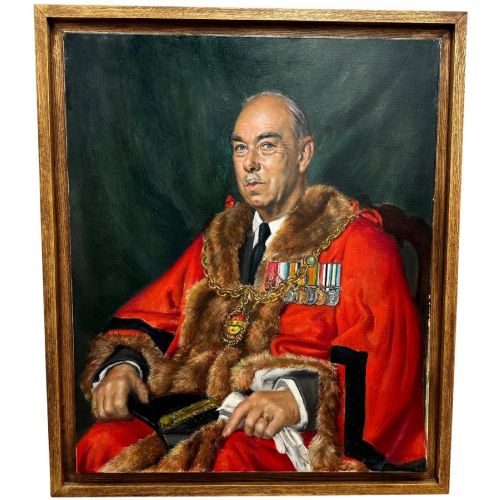
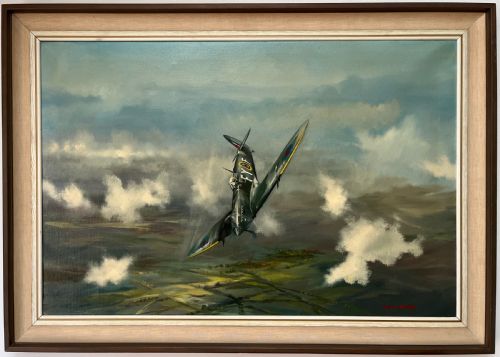
Subjects range from individual servicemen like mayors and admirals to specific machinery such as Spitfires and supply wagons. Each piece offers a direct visual record of military history preserved through traditional artistic mediums.
Materials and methods
Artists painted these works using oil paint applied to prepared canvas, wooden boards, and occasionally tin supports. The pigment was worked with brushes to build up form, tone, and fine detail in both portraits and operational scenes.
Finished paintings were secured within protective surrounds such as wood frames and rosewood frames. Some pieces include inscribed presentation plaques attached directly to the framing timber, documenting the context of the commission.
The listings on this site include works executed in oil on canvas, board, and tin, spanning from the nineteenth century through the 1960s.
Factors determining quality
Quality in these paintings rests on the skill of the artist in handling anatomy, likeness, and atmosphere within the medium of oil. Works by established portraitists and illustrators demonstrate superior command of light, posture, and facial expression compared to anonymous or school pieces.
The handling of the background and integration of subject matter also separate standard records from accomplished works of fine art. Strong compositions maintain spatial depth and textural variation across the canvas or board.
Bernard Hailstone·Dion Pears·Baruch Shalom Oskotsky·Donald Wood·Kershaw Schofield·Sidney Riesenberg·Frank Thomas Copnall·John Laviers Wheatley·William Edward Millner·Maurice Codner·Richard Hall
The Original Military Oil Painting Glossary
- Oil on canvas
- Pigment suspended in a drying oil applied to a stretched woven fabric support. This combination provides a flexible and durable surface favoured by portraitists.
- Oil on board
- Pigment applied directly to a rigid wooden or composite panel. This technique offers a firm surface often utilised for plein air or smaller preparatory works.
- Realism
- An artistic style focused on depicting subjects truthfully without artificiality or supernatural elements. Twentieth-century realism in military art records uniforms and machinery with factual precision.
- Victorian
- The period spanning the reign of Queen Victoria, characterising nineteenth-century British portraiture and aesthetics. Pieces from this era often employ formal compositional arrangements.
Original Military Oil Painting: Frequently Asked Questions
What subjects appear in these paintings?
The works depict naval and military officers, monarchs, air aces, and wartime scenes. Subjects range from formal dress portraits to aircraft in flight and military camp life.
Commissioned pieces often record specific historical individuals with named titles and service details inscribed on the frame or canvas.
How are periods identified?
Periods are determined through stylistic cues, artist life dates, framing materials, and accompanying inscriptions. Victorian and Edwardian works show distinct clothing and painting conventions.
Twentieth-century pieces reflect changing artistic movements from early realism to mid-century modern and expressionist approaches.
What supports were used?
Artists utilised stretched canvas, rigid wooden boards, and metal panels such as tin. Canvas supports dominate the selection, providing a traditional textured ground for oil paint.
Board and tin supports offer firmer surfaces that artists frequently used for smaller studies or panel paintings.
How should these frames be maintained?
Wood frames require gentle dusting with a dry, soft cloth to prevent particulate accumulation. Avoid moisture and chemical cleaners that can damage vintage timber and presentation plaques.
Keep the paintings away from direct sunlight and dramatic temperature fluctuations to protect both the oil pigment and the underlying canvas or board.