



Original Horse Watercolour
An original horse watercolour captures the vitality and movement of equine life through delicate washes and precise linework across past centuries.
Original Horse Watercolour
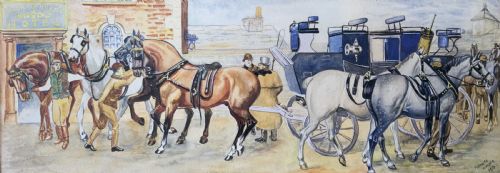
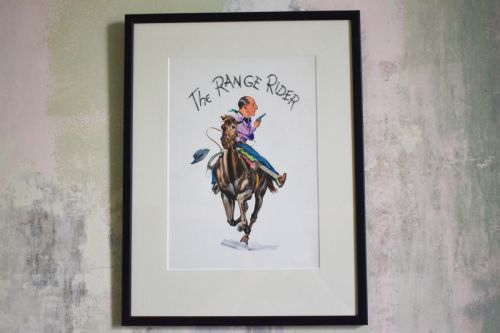
Collectors seeking an original horse watercolour encounter works spanning from the Georgian and Victorian eras through to the mid-twentieth century. These pieces record working animals, hunting scenes, coaching inns, and rural landscapes executed on paper.
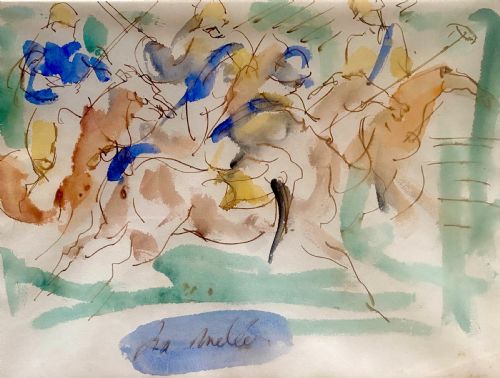
The selections on this page range from detailed genre studies to rapid field sketches and finished sporting art. Domestic farm horses, racing thoroughbreds, and carriage teams predominate within these historic watercolours.
Materials and Techniques
Artists applied watercolour pigment and bodycolour gouache onto paper supports, frequently combining ink for definition and detail. Washes created transparent atmospheric effects, while opaque highlights brought depth to harness leather and animal coats.
Framing typically involved timber mouldings, often oak, paired with glass to protect the fragile pigment layers from atmospheric moisture and light degradation.
Listings feature works executed on paper using watercolour, gouache, and ink across the nineteenth and twentieth centuries.
Markers of Quality
Superior execution is evident in the painter's command of anatomy, posture, and the dynamic tension of equine movement. Skillful handling of light across form separates accomplished works from ordinary topographical records.
Condition and provenance elevate individual sheets, with signed works by recognised practitioners or documented exhibition histories commanding greater attention among serious collectors.
Albert Ludovici Jnr·John Rattenbury Skeaping·Charles James Lauder·John Augustus Atkinson·Helena Maguire·George Hamilton Constantine·Rowland Henry Hill·Will Anderson·Robert Hollands Walker·Basil Bradley·Charles Clifford Turner·John Sanderson Wells·David Woodlock·Charles H Poingdestre·Snaffles·William Manners·William J Hodgson·Henry Charles Fox·Walter Duncan·Johan Noah Bemmel·Frank Saltfleet·William Kay Blacklock·Alfred George Stevens
The Original Horse Watercolour Glossary
- Watercolour
- A paint consisting of a pigment suspended in a water-soluble binder, traditionally applied to paper for translucent washes. It allows for rapid application and subtle tonal gradations.
- Gouache
- An opaque water-based paint, sometimes termed bodycolour, which includes a white pigment filler to create solid, light-reflecting highlights. Artists combined it with transparent watercolour to enhance texture.
- Sporting Art
- Depictions of rural pastimes, hunting, steeplechasing, and horse racing. This genre requires precise knowledge of animal conformation and human interaction.
- Grisaille
- A painting executed entirely in shades of grey or neutral monochrome. It was frequently used for preparatory studies or deliberate tonal compositions.
- Provenance
- The documented history of ownership of a work of art, establishing authenticity and origin. Reliable records connect the sheet to exhibitions, galleries, or artist estates.
Original Horse Watercolour: Frequently Asked Questions
How do I care for an antique watercolour?
Keep the artwork away from direct sunlight to prevent the pigments from fading over time. Ensure it is hung in a stable environment away from excess humidity.
Conservation-grade framing with acid-free mounts helps preserve the paper support. Professional framing protects the delicate surface from dust and atmospheric pollutants.
What subjects are common in these paintings?
Equine subjects encompass rural farm work, horse fairs, and coaching scenes from the nineteenth and early twentieth centuries. Hunting and racing compositions also feature strongly among these historic works.
Artists recorded the everyday dependence on working horses across changing rural and urban landscapes. Portraits of individual animals provide insight into historical breeds and uses.
How can I tell the period of a watercolour?
Stylistic clues, costume details, and framing methods often indicate the era in which the piece was created. Paper types and watermarks can also offer clues to the date of manufacture.
Signatures and inscriptions by the artist provide definitive dating when matched with exhibition records. The visual conventions of Victorian and Edwardian art differ markedly from later mid-century approaches.
Are these works signed by the artist?
Many of the watercolours bear signatures, monograms, or studio stamps placed by the creator. Unsigned works frequently emerge from identified periods or regional schools of painting.
Attributions rely on stylistic comparison with documented works by known artists or contemporaries. Archival evidence and framing provenance sometimes accompany unsigned sheets.