



Original Horse Wall Art
Original horse wall art spans centuries of fine artistic endeavour, capturing the power and grace of the animal in paintings and prints.
Original Horse Wall Art
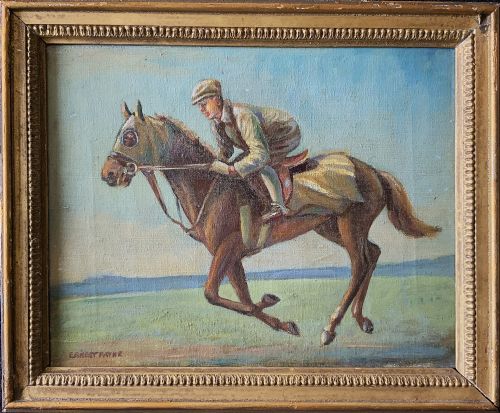
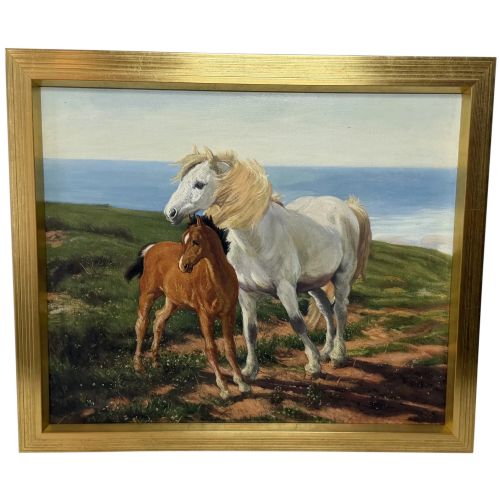
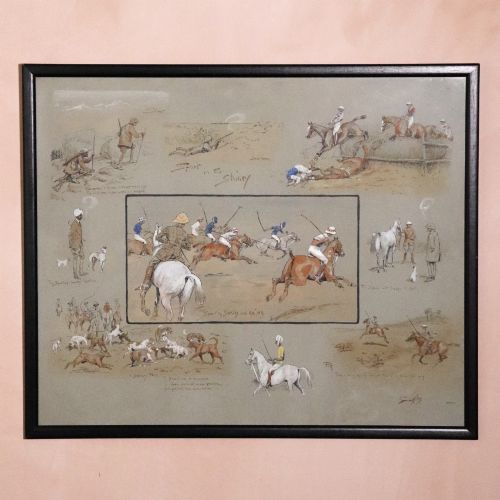
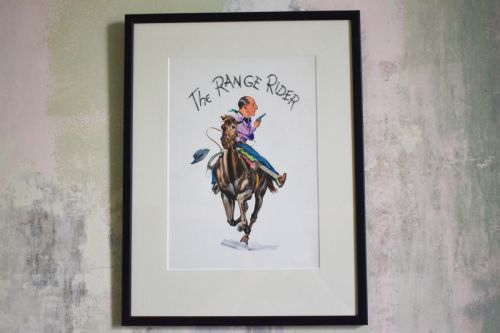
Original horse wall art encompasses a rich variety of paintings, drawings, and prints depicting equines in contexts ranging from portraiture to rural labour and sporting scenes. When exploring original horse wall art, buyers encounter works executed across the nineteenth and twentieth centuries, reflecting changing aesthetic movements.
How they were made
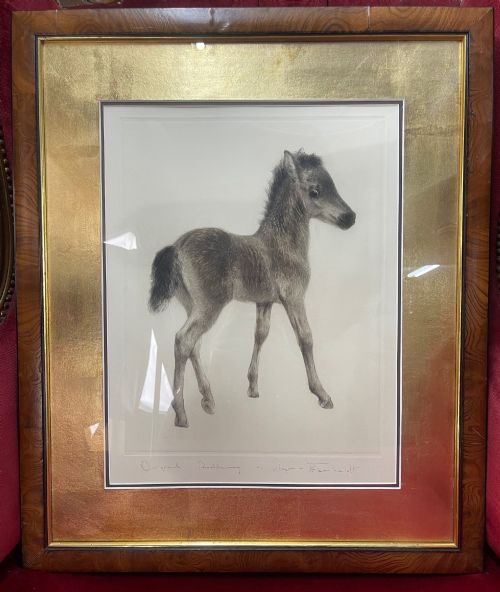
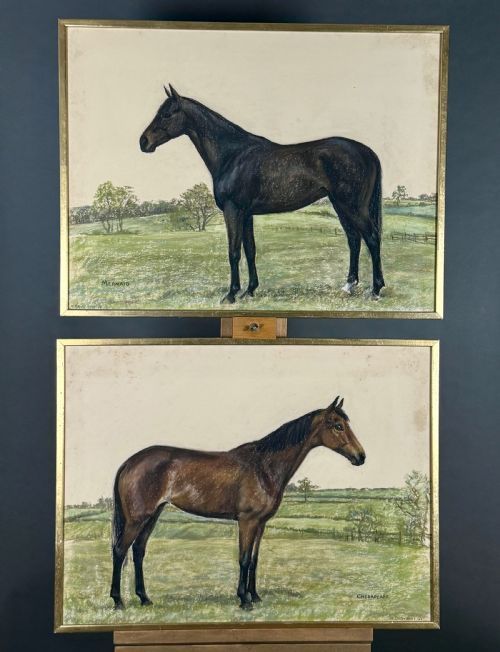
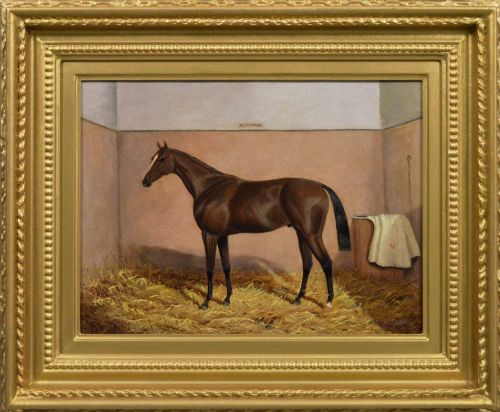
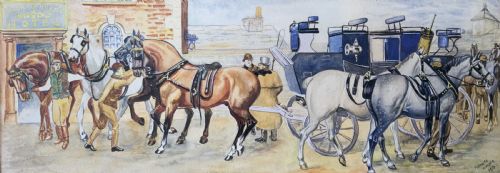
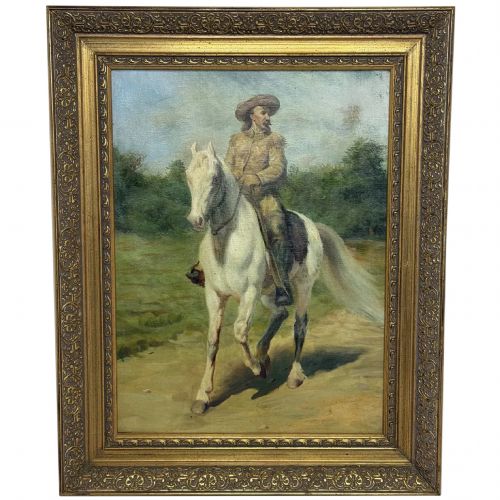
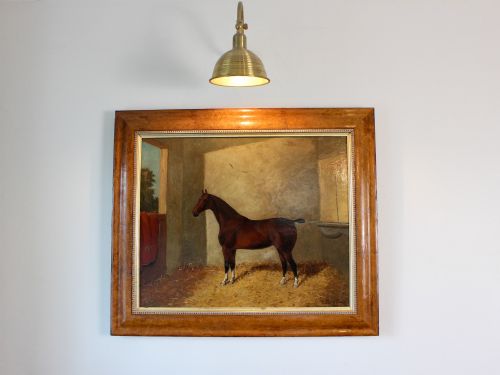
The works utilise traditional media including oil paint on canvas, watercolour, gouache, pastel, and chalk on paper or coloured stock. Painters and draughtsmen applied these materials with brushes, pencils, and drypoint techniques to build texture and tone.
Framing is an integral component of the construction, employing woods such as oak and walnut to protect and display the paper or canvas supports.
A youthful foal makes an uninvited snack out of a basket of fruit in one charming nineteenth-century watercolour.
What varies in quality
The standard of draughtsmanship and anatomical accuracy distinguishes superior works from more rudimentary studies. Master practitioners capture muscle tension, movement, and light with precision and economy of line.
Condition and preservation of the support, whether canvas or fragile paper, heavily influence the integrity of the piece. Intact framing and strong provenance underwrite the standing of the work within its period.
Kurt Meyer Eberhardt·Albert Clark·Ernest Payne·John Rattenbury Skeaping·Cecil Charles Windsor Aldin·John Ferneley Senior
The Original Horse Wall Art Glossary
- Drypoint
- A printmaking process where the artist scratches an image directly onto a metal plate with a sharp needle. This technique creates a characteristic velvety line due to the burr raised in the metal.
- Pastel
- A medium consisting of powdered pigment combined with a binder and pressed into sticks. Artists use it on paper to achieve rich, blended colour and soft textures.
- Gouache
- An opaque watercolour paint made from pigment mixed with water and a gum binder. It provides solid, flat areas of colour with a matte finish.
- Equestrian study
- An artistic work focusing specifically on the form, anatomy, and movement of horses. These studies often serve as preparatory sketches or finished portraits.
Original Horse Wall Art: Frequently Asked Questions
What periods do these pieces date from?
The available artworks span from the nineteenth century through the Edwardian era and into the mid-twentieth century. Pieces reflect the prevailing artistic styles of their respective decades.
Collectors can find examples representing nineteenth-century realism, Edwardian illustration, and mid-century modern expressionism within the collection.
How should I hang these artworks?
These framed paintings and works on paper require standard wall placement away from direct sunlight to protect pigments and paper supports. Maintaining stable room humidity preserves the integrity of both canvas and antique frames.
Matching the frame wood, such as oak or walnut, to your interior style helps integrate the artwork into the room.
Are the prints original?
The selection includes original prints and etchings produced by the artist during the period, rather than modern reproductions. Works often feature hand signatures or drypoint impressions confirming their authenticity.
Each print employs the specific graphic techniques characteristic of its production era.
What subjects are depicted besides portraits?
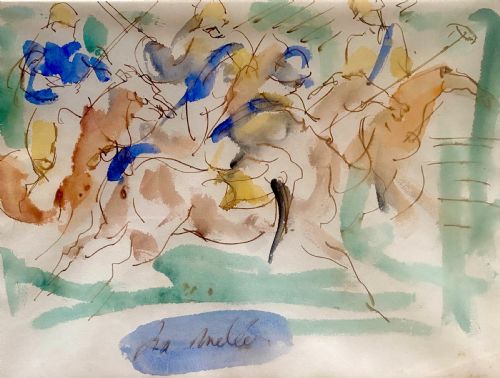
Beyond individual horse portraits, the artworks portray horse racing, polo matches, hunting scenes, and agricultural work with cart horses. These varied settings document the working and sporting roles of horses in past societies.
Artists captured both dynamic sporting action and quiet pastoral moments in countryside landscapes.