
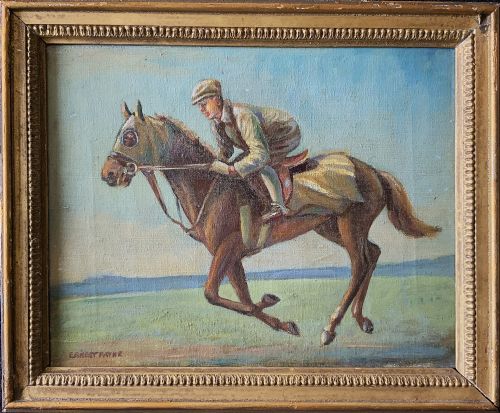
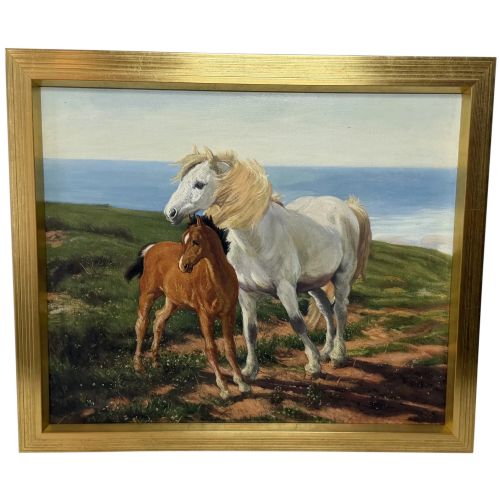
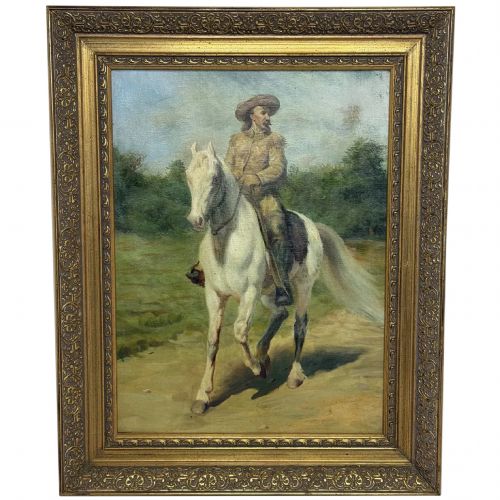


Original Horse Canvas Artwork
Original horse canvas artwork captures the spirit and power of equines through enduring painted portraiture.
Original Horse Canvas Artwork
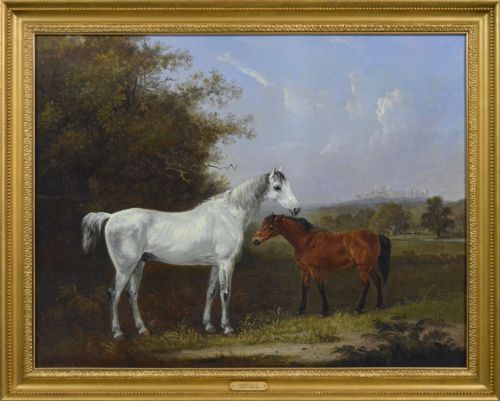
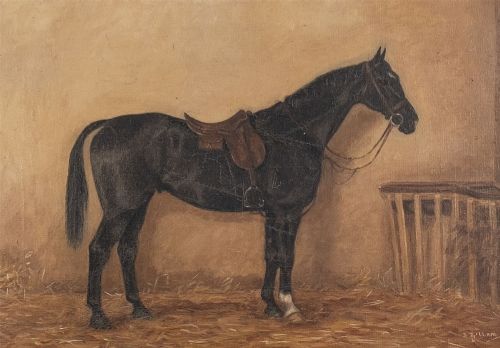
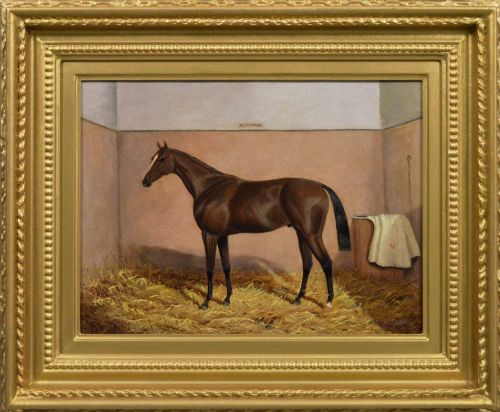
Original horse canvas artwork encompasses oil paintings executed on stretched canvas support. Buyers seeking original horse canvas artwork will encounter depictions ranging from individual animal portraits to dynamic racing and working scenes. These pieces span multiple centuries and stylistic traditions, reflecting changing artistic approaches to equine subjects.
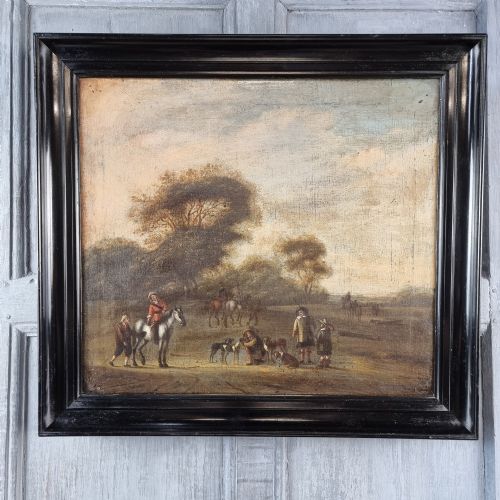
The selections on this page draw predominantly from nineteenth and twentieth-century British and European schools. Works include formal studies of named champions alongside pastoral landscapes featuring working shires, cart horses, and hunting scenes. Canvases vary from intimate cabinet studies to expansive gallery compositions framed in wood or gilt moulding.
How They Were Made
Artists built these compositions using oil paint applied to woven canvas supports stretched over wooden frames. The medium allowed painters to build rich layers of pigment, capturing the sheen of a bay coat or the texture of a horse's mane with precision.
Many surviving examples retain their original wooden frames, frequently finished with gold leaf or gilt ornamentation. The interaction between the oil pigment and the canvas weave provides the tactile surface characteristic of these traditional works.
Several canvases feature named racehorses staring out of their frames with absolute indifference to their historic victories.
What Varies In Quality
Quality rests upon the artist's command of equine anatomy, movement, and proportion. Superior works demonstrate an accurate rendering of muscle structure under tension, whereas lesser examples rely on formulaic postures.
Brushwork handling also defines the better tier of works. Master painters apply pigment with varied density to suggest light falling across flanks and stable interiors, whilst lesser paintings present flat, uniform application.
Albert Clark·Ernest Payne·John Ferneley Senior·Harry Freckleton·Hazel M Barnett·Gabriel Dauchot·John Sanderson Wells·John Linnell·Arthur Longley Vernon·Samuel Spode·James William Booth·Arthur Winter Shaw·Frederick J Knowles·WA Clark·Guillaume Urban Régamey·Frederick William Jackson·Ernest Higgins Rigg·Herbert Royle·Gudrun Sibbons·Benedict Angell Hyland·George Cole·Wilfred Bailey·Frank Giggs·William Edward Millner·James Edwin Meadows
The Original Horse Canvas Artwork Glossary
- Oil on Canvas
- A painting medium where pigments bound in drying oil are applied to a woven fabric support. This combination creates durable surfaces capable of retaining vibrant colour for centuries.
- Gilt
- A thin layer of gold applied to wood framing or decorative elements. It provides a reflective border that complements the warm tones common in historical oil paintings.
- Sporting Art
- A genre of painting dedicated to equestrian subjects, hunting, and rural pursuits. These works emphasise the specific conformation and performance of animals.
- British Impressionism
- A painting style developed in Britain that adopts loose brushwork and a focus on natural light. Artists working in this manner prioritized atmosphere over rigid academic finish.
Original Horse Canvas Artwork: Frequently Asked Questions
How do I care for an oil painting on canvas?
Keep the canvas away from direct sunlight and dramatic fluctuations in temperature or humidity. Dust the surface gently with a soft, dry brush without applying pressure.
Avoid using water or chemical cleaners on the paint layer. Professional conservators should handle any deeper cleaning or canvas tension adjustments.
How can I tell the age of a canvas painting?
Examine the canvas weave, stretcher frame construction, and types of nails or tacks used at the reverse. Older pieces often display oxidized priming layers and natural cracking known as craquelure.
Signatures, framing styles, and biographical details of the artist help narrow the date of creation. Comparing the subject matter to known historical periods provides further context.
Where should I hang equine artwork?
Select a wall with stable ambient conditions away from moisture sources like kitchens or bathrooms. Position the piece at eye level to appreciate the brushwork and detail.
Pairing traditional sporting canvases with wooden furniture enhances their classical aesthetic. Adequate lighting from a picture light brings out the depth in dark oil pigments.
What is the difference between a study and a finished portrait?
Studies are typically quicker, more spontaneous executions created to capture a specific posture, light effect, or animal proportion. They often show visible brushstrokes and unblended pigment.
Finished portraits present a highly polished depiction intended for formal display. These works feature meticulous detail in the background, tack, and animal coat.