




Original Highland Painting
An original highland painting captures the dramatic topography, sweeping lochs and native cattle of Scotland through nineteenth- and twentieth-century brushwork.
Original Highland Painting
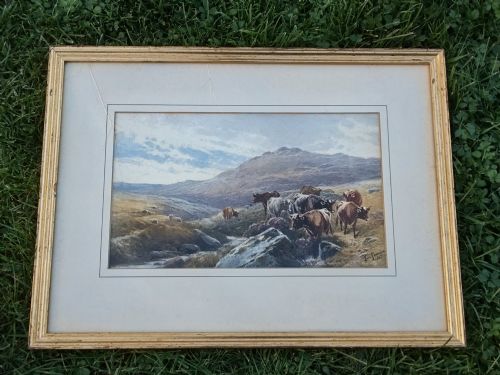
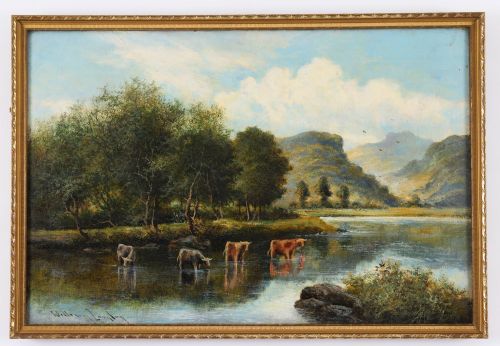
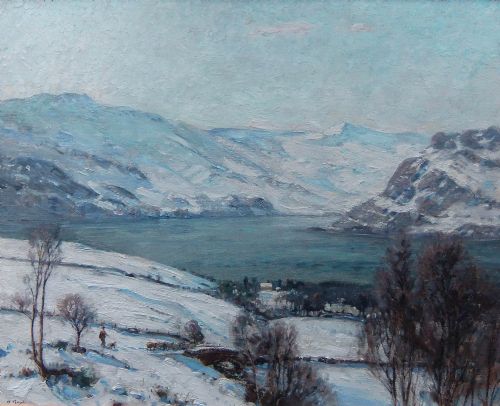
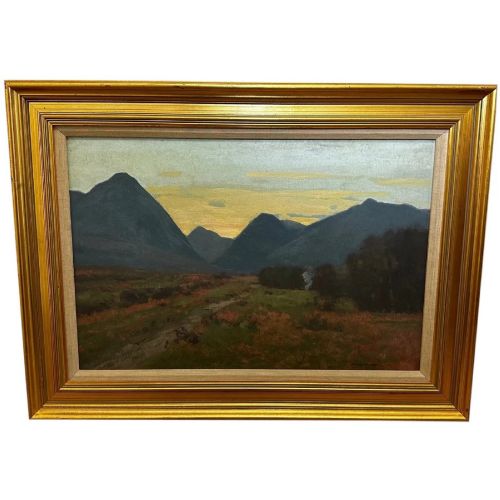
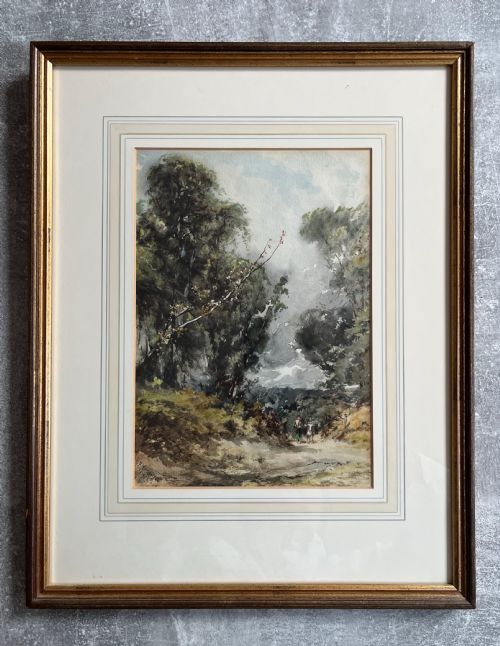
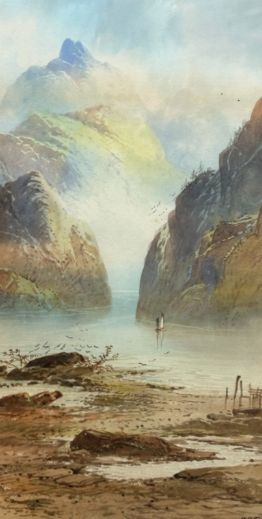
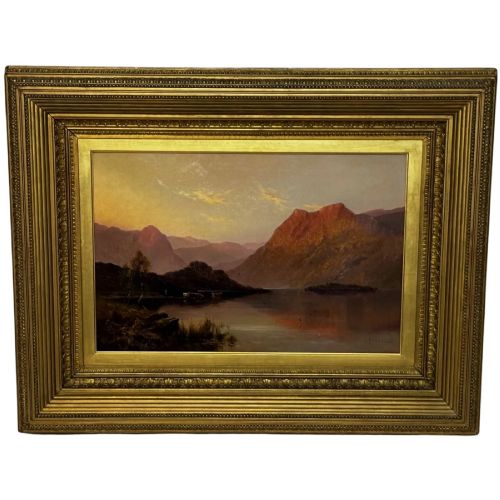
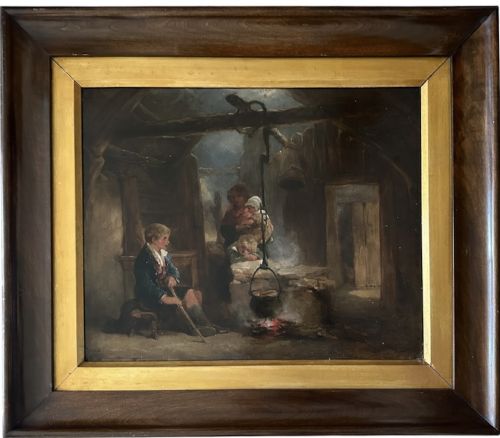
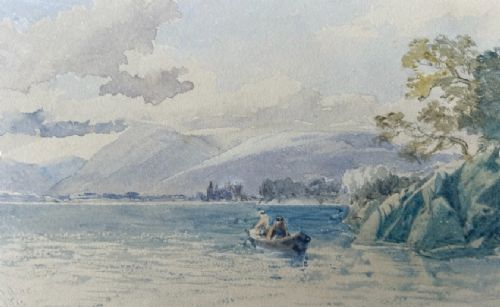
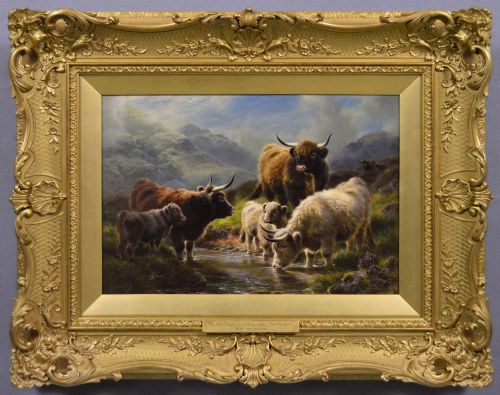
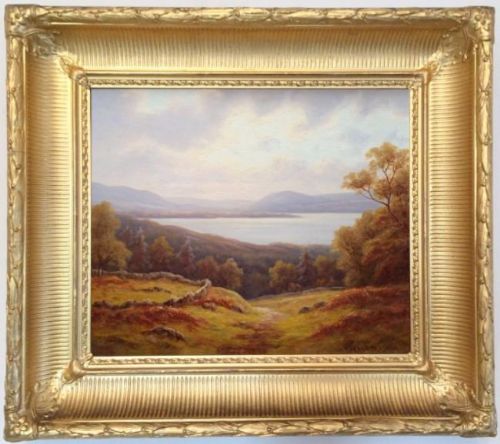
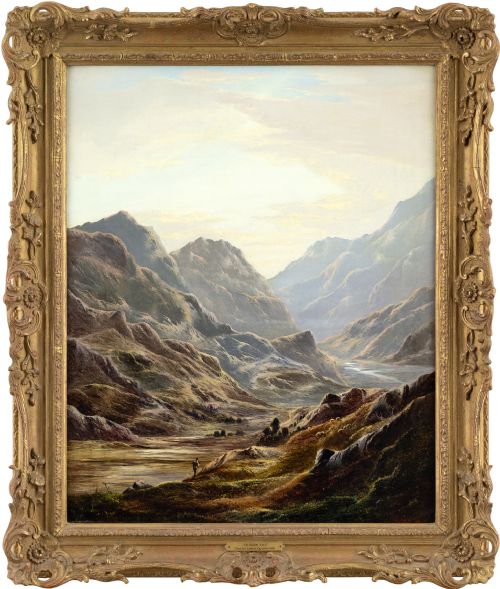
An original highland painting depicts landscape scenes from Scotland, featuring notable locations such as Loch Awe, Glen Tay and the Grampians alongside rural cottages and cattle.
The selection on this page spans the Victorian and Edwardian eras into the early twentieth century, taking the form of framed watercolours, gouache works and oils on canvas, wood panel or board.
Works range from intimate watercolours by named Victorian artists to large oils by followers of the Scottish School, recording changing light over highland water and mountain ranges.
How They Were Made
Artists painted primarily in oil or watercolour, applying pigment to stretched canvas, heavy paper, wood panels or board preparations.
Oils allowed for rich layering and textured depictions of heather moors and mist, while watercolours captured luminous skies and transparent washes over mountain water.
Original Highland Painting Retail Price Guide 2026
Typical asking prices for original highland painting among the pieces listed under this phrase on Sellingantiques today, from the lower quarter to the upper quarter. They describe what is for sale here now, not the wider market.
Listings feature works executed in oil, watercolour and gouache across Victorian, Edwardian and mid-twentieth-century periods.
What Varies in Quality
Quality depends on the surety of the draughtsmanship and the artist's ability to render the specific atmospheric conditions and topography of the Scottish terrain rather than generic scenery.
The handling of light, particularly in sunset or morning mist compositions, separates accomplished works from standard regional paintings.
George Fotherly Hargitt·Thomas Miles Richardson Jnr·William Henry Earp·Tom Campbell·Alfred Fontville de Breanski Jr·George Houston·William Watson Jnr·Charles Leslie·Everett Watson Mellor·Joseph Knight·William George Tennick·Archibald Kay·Henry Hillier Parker·William Grant Murray·Tom Seymour·Sidney Yates Johnson·Stanley Orchart·George Melvin Rennie·William Miller Frazer·Alfred de Breanski·Daniel Sherrin·Alfred de Breanski Snr·Frederick Richard Lee·Denys Garle·Benjamin Williams Leader
The Original Highland Painting Glossary
- Watercolour
- A painting method where fine pigment is suspended in a water-soluble binder and applied to paper.
- Gouache
- An opaque water-based paint that produces a heavier, more saturated surface than traditional watercolour.
- Panel
- A flat support made of wood used as an alternative to canvas for oil paintings.
- Board
- A rigid flat material utilised as a painting support in place of stretched canvas.
- Monogram
- A motif made by overlapping two or more letters to form a single symbol used as a signature.
Original Highland Painting: Frequently Asked Questions
What subjects appear in highland paintings?
These artworks typically show remote Scottish landscapes, including deep lochs, rugged mountain ranges, highland cattle, sheep and stone bridges.
Scenes frequently record specific locations such as Loch Lomond, Loch Etive and Glen Tilt under changing weather conditions.
How do I care for antique watercolours?
Watercolour paintings on paper require protection from direct sunlight to prevent fading of the pigments and discolouration of the support.
Framing behind conservation glass with suitable UV protection helps preserve the integrity of the work.
Are these paintings signed by the artist?
Many examples feature visible signatures, monograms or dates applied by the artist, often located in the lower corners of the composition.
Some pieces also retain inscriptions, artist details or additional sketches on the reverse of the panel or stretcher.
What framing is typical for these works?
Period works are commonly housed in decorative gilt or wooden frames that complement the painting style of the nineteenth and early twentieth centuries.
Original frames often show minor age-related wear which forms part of the piece's history.