


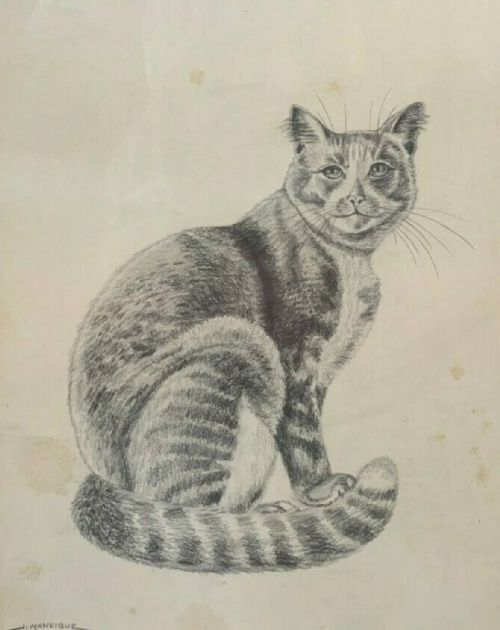
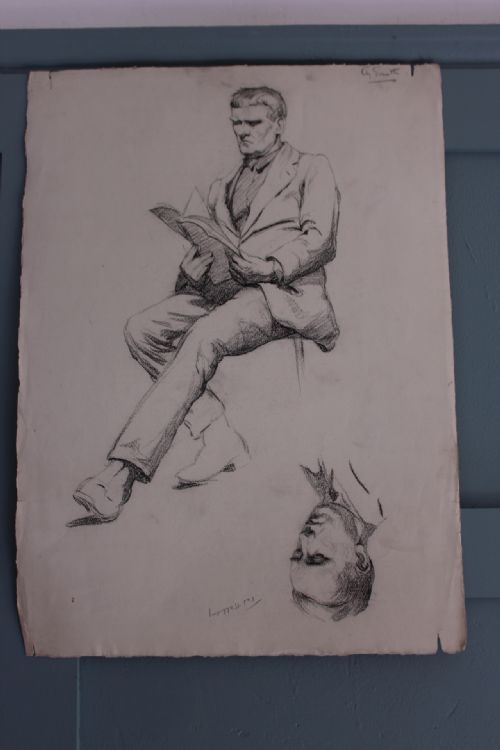


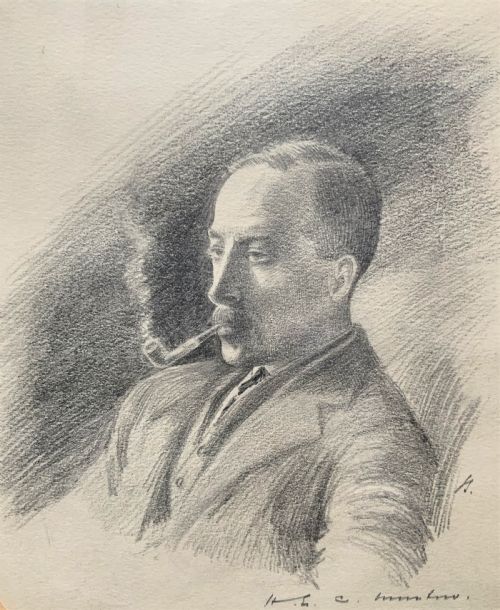


Original Graphite Portrait Sketch
An original graphite portrait sketch captures a direct, unmediated encounter with a human face through the simplest of dry mediums.
Original Graphite Portrait Sketch
An original graphite portrait sketch presents hand-drawn likenesses executed in pencil, graphite, and occasionally chalk or charcoal on paper. These works capture sitters ranging from Victorian ladies and gentlemen to mid-century artists and musicians, often rendered with immediate, expressive line work.
The selections span multiple eras, including the eighteenth century, nineteenth century, and twentieth-century movements such as Modern British and Mid-Century Realism. Buyers encounter diverse subjects, from formal studies of historical figures to intimate portrayals of women, children, and animals.
Works originate from various European and international schools, encompassing French academic practices, English portrait traditions, and modern compositions. These pieces provide a tangible connection to historical draftsmen and the subjects who sat before them.
Materials and Technique
Artists utilise graphite pencils, lead, and occasionally charcoal or ink applied to paper, toned paper, or card. These dry mediums permit subtle tonal gradation, precise cross-hatching, and rapid gesture drawing.
Listings span from the eighteenth century to the mid-twentieth century, featuring portrait drawings executed on paper, toned paper, and card using graphite, pencil, and chalk.
Assessing Quality and Execution
Quality rests upon the draftsmanship and the confidence of the line, where an experienced hand captures anatomical structure and expression with minimal hesitation. The relationship between light and shadow defines the three-dimensional presence of the subject.
Condition plays a vital role, distinguishing works preserved cleanly on stable paper from those compromised by heavy foxing, acid burn, or moisture staining. The historical significance of the sitter and the documented attribution to a recognised hand elevate the standing of a drawing.
Augustus John·Hans Holbein·Mariette Lydis·Faeq Hassan·Henri Josephe Hesse·Sir Nathaniel Dance-Holland·Juliet Pannett
The Original Graphite Portrait Sketch Glossary
- Graphite
- A crystalline form of carbon used in pencils, producing grey or black marks that range from hard and light to soft and dark. It became widely utilised for portable sketching from the sixteenth century onwards.
- Toned paper
- Paper that has a pre-existing colour, often grey, buff, or tan, allowing the artist to work up highlights with white chalk and shadows with dark graphite. This base tone unifies the overall palette of the sketch.
- Chalk
- A soft mineral material used for drawing, frequently combined with graphite in French academic traditions to build rich tonal contrast. It yields a velvety line that differs from the metallic sheen of hard pencil.
- Foxing
- Brown spots and discolouration that appear on old paper due to chemical reactions involving iron impurities in the pulp and damp environmental conditions. It is a common occurrence in historical works on paper.
- Academic realism
- An artistic style and training method rooted in nineteenth-century European academies, emphasising precise anatomical accuracy, careful observation, and finished draftsmanship. Works in this style adhere to traditional rules of proportion and perspective.
Original Graphite Portrait Sketch: Frequently Asked Questions
How do I care for a graphite drawing?
Keep works on paper away from direct sunlight to prevent fading of the graphite and yellowing of the support. Display them behind UV-filtered glass and maintain stable indoor humidity levels.
Avoid hanging drawings in damp spaces like kitchens or bathrooms where moisture can exacerbate foxing and paper degradation.
What is the difference between pencil and graphite?
Pencil is the manufactured writing or drawing instrument containing a graphite core encased in wood, while graphite is the actual mineral material making the mark. In art historical terms, the two words are frequently used interchangeably.
Older listings may use 'pencil drawing' while contemporary descriptions lean towards 'graphite drawing' for the same medium.
How can I tell the period of a sketch?
Dating relies heavily on costume, hairstyle, and framing techniques alongside any visible signatures, dates, or gallery labels on the reverse. Victorian pieces often feature distinct clothing styles and ornate mounts.
Paper characteristics, watermarks, and inscriptions also provide reliable clues to the decade or century in which the artist worked.
Are these sketches one-of-a-kind?
Every piece listed here is a unique, hand-drawn original work on paper rather than a reproduction or print. Artists created these individual studies directly from life or as preparatory drawings for larger paintings.
This means no two sketches share the exact same combination of hand, paper texture, and sitter.