


Framed Pencil Portrait Drawing
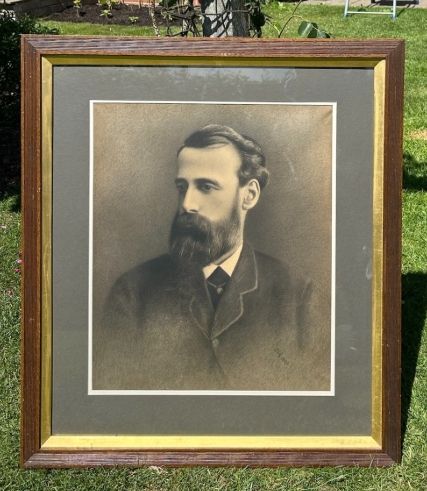
A framed pencil portrait drawing captures likeness through line alone, offering collectors an intimate record of sitter and hand alike across centuries of portraiture.
Framed Pencil Portrait Drawing
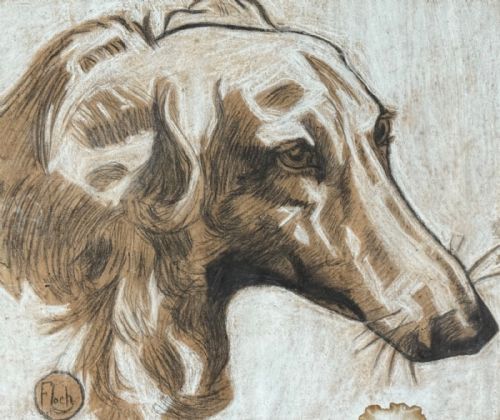
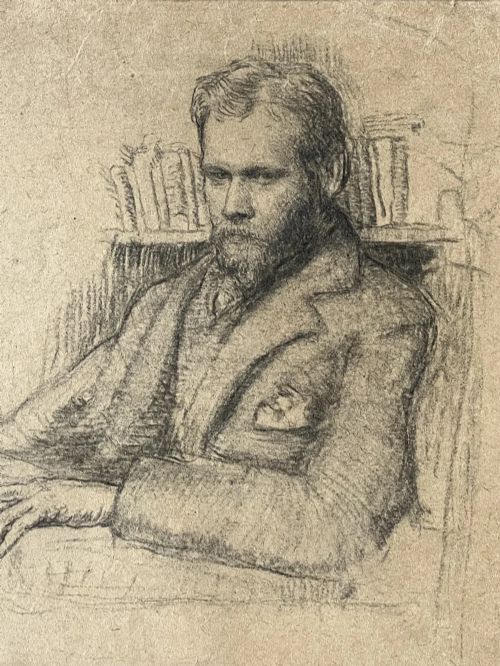
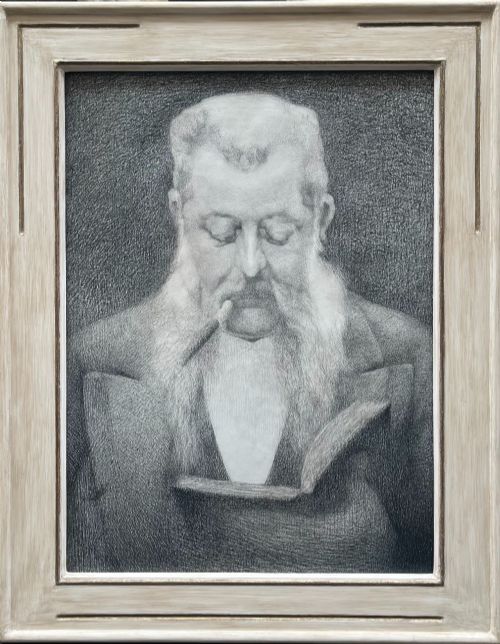
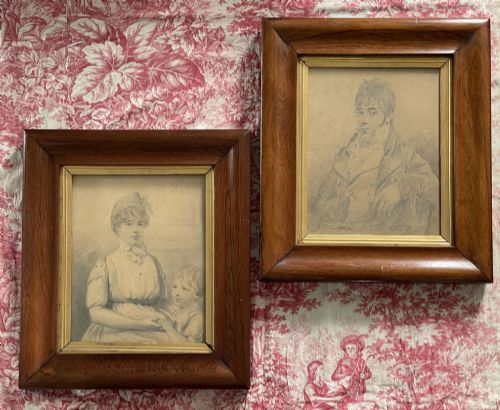
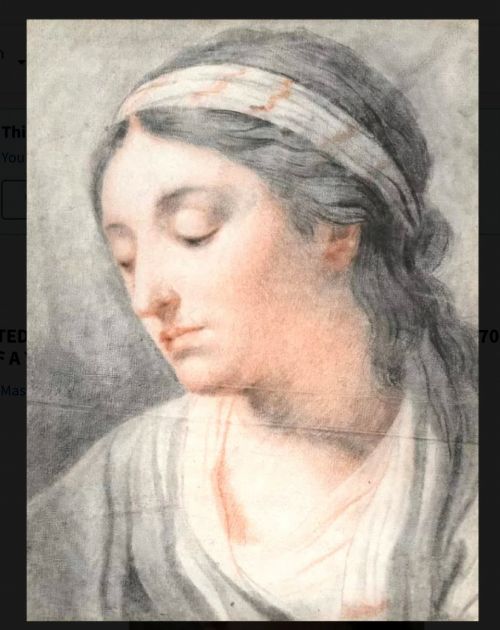
A framed pencil portrait drawing comprises graphic likenesses executed on paper and mounted behind protective glass within timber or gilded housings. These works range from rapid studio sketches and preliminary studies to highly finished plumbago compositions intended as independent finished pieces.
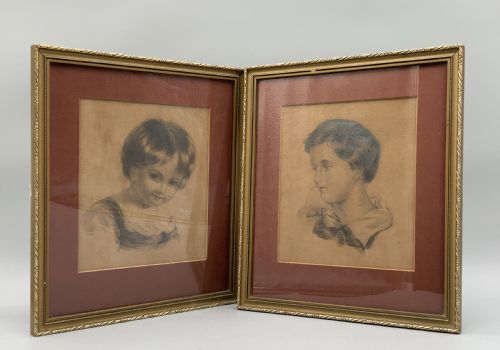
The selections span distinct historical periods from the eighteenth century through the Regency and Victorian eras into twentieth-century modernism. Buyers encounter diverse subjects including society figures, children, artists' models, and historical personages rendered in graphite, charcoal, or plumbago.
Most examples appear in traditional framing appropriate to their period, frequently utilising wood or gold leaf surrounds. The surviving body of work reflects varied international origins, from British academic studies to African and Middle Eastern schools.
How they were made
Artists relied primarily on graphite, plumbago, and charcoal applied directly to paper supports, occasionally incorporating delicate touches of watercolour, gouache, or pastel wash for subtle tonal emphasis. Plumbago technique demanded precise, fine-pointed execution using purified native graphite to achieve miniature-like clarity.
Support materials consisted predominantly of various grades of paper, sometimes buff-toned or tinted to receive highlights in white chalk. Finished drawings were subsequently secured behind glass and housed in timber frames, occasionally featuring gilded decorative mouldings to complement the subject.
Several sitters recorded by these artists led extraordinary lives, including a pioneering bio-pirate and an intrepid Victorian war correspondent.
What varies in quality
Quality rests primarily on the sureness of the draughtsmanship and the psychological depth captured in the sitter's expression. Superior examples demonstrate confident economy of line and acute observational skill rather than mechanical precision.
The preservation of the paper support and the clarity of the medium under glass significantly influence desirability. Pieces that retain their original framing and untouched surface state command greater appreciation among collectors.
Augustus John·John Taylor·James Ferguson·Ozias Humphry·Charles Prosper Sainton·Faeq Hassan·Theobald Chartran·Ernest Borough Johnson
The Framed Pencil Portrait Drawing Glossary
- Plumbago
- An early form of pencil drawing executed in graphite that achieved great popularity for miniature portraits during the eighteenth century. The technique yields a characteristic grey metallic sheen with exceptional linear detail.
- Buff paper
- A pale brownish-yellow paper stock frequently utilised by artists during the nineteenth and twentieth centuries. Its neutral tone allowed draughtsmen to add effective highlights in white bodycolour.
- Academic realism
- A style of painting and drawing produced under the influence of European academies of art. It prioritises precise anatomical accuracy, careful observation, and traditional finish.
- Study
- A preparatory drawing executed by an artist to explore composition, lighting, or anatomy before undertaking a larger finished work. Many such studies survive as finished works in their own right.
- Gouache
- An opaque watercolour medium composed of pigment mixed with a binding agent and a white filler. It provides solid, matte passages of colour alongside pencil line work.
Framed Pencil Portrait Drawing: Frequently Asked Questions
Can I hang these drawings in direct sunlight?
Direct sunlight causes graphite to fade and paper supports to yellow and degrade over time, meaning prolonged exposure must be strictly avoided.
Position pieces on interior walls away from windows or utilise specialist UV-filtering glass if natural light in the room cannot be moderated.
How do I distinguish an original drawing from a print?
Examining the surface under a magnifying glass reveals the microscopic indentations of the graphite or charcoal resting on the paper fibres rather than a uniform dot matrix.
Original works exhibit genuine hand pressure variations and subtle tonal buildup that mechanical reproduction processes cannot replicate.
What framing materials are period appropriate?
Eighteenth and Regency pieces typically feature narrow gilded wooden frames or simple dark timber mouldings, while Victorian examples often employ heavier gilt surrounds.
Maintaining period-correct framing preserves the historical integrity and aesthetic balance of the artwork.