
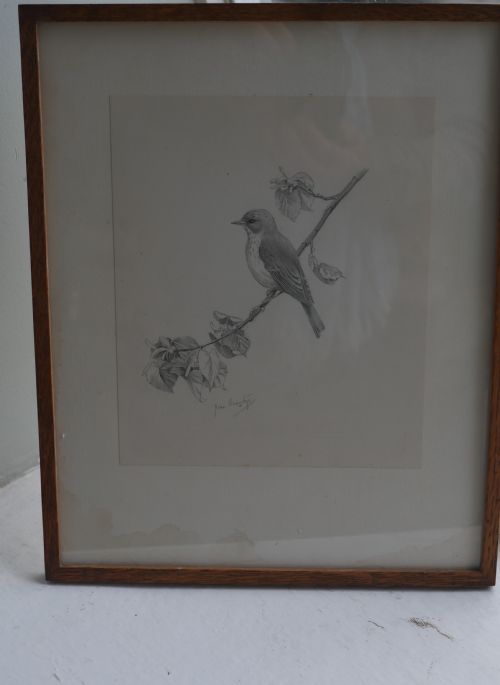


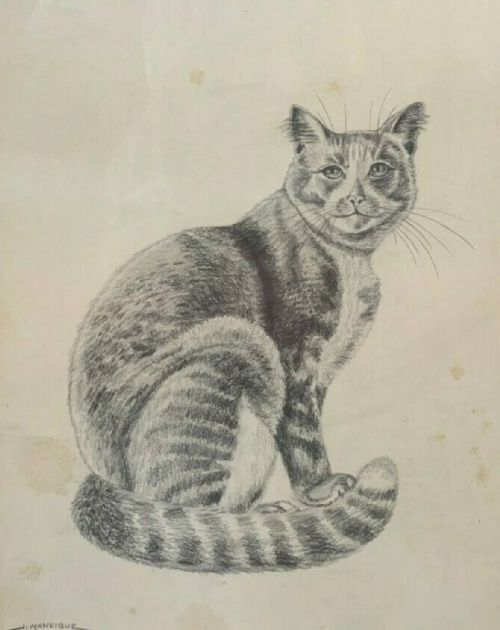


Original Graphite Drawing
An original graphite drawing brings directness and intimacy to a wall through the unmediated hand of the artist.
Original Graphite Drawing
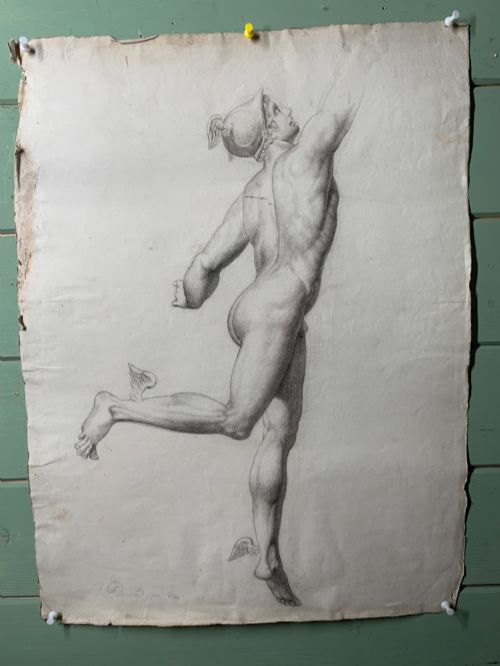
An original graphite drawing captures an artist's immediate observation or studio study, rendered directly onto a primary support without mechanical reproduction. The examples found here span from the eighteenth century through the Victorian era into mid-century modernism, encompassing both rapid field sketches and finished academic studies.
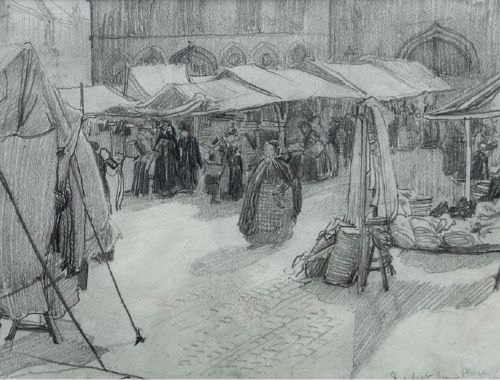
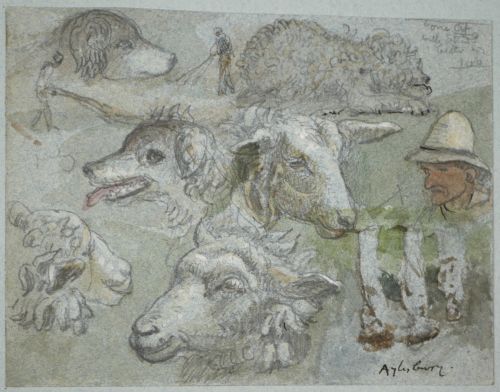
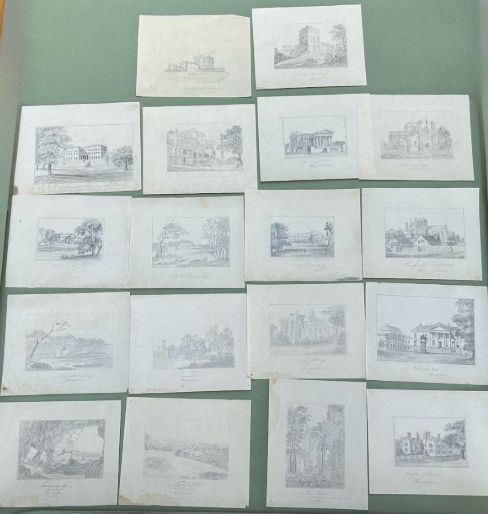
The most common formats on this page are portraits, landscapes, and figure studies executed on paper sheets. These works range from informal sketches of animals and local architecture to composed allegorical scenes and preparatory drawings for later paintings.
Subject matter varies widely across periods, including Georgian academic exercises, Victorian portraiture with subjects like ladies and spaniels, and twentieth-century modernist compositions. Many sheets bear signatures, studio stamps, or period annotations that connect the work to a specific hand or location.
Materials and technique
The primary medium across these works is graphite or pencil applied to paper, often accompanied by complementary media such as chalk, charcoal, ink, or watercolour washes. Support papers vary from delicate early machine-made sheets to heavier textured artist papers, sometimes displaying watermarks or age patination.
Listings feature works from the eighteenth, nineteenth, and twentieth centuries, utilising paper, graphite, charcoal, and ink.
Quality and execution
Quality in a graphite work rests upon the confidence and economy of the line, where a skilled hand communicates volume and expression with minimal hesitation. Stronger examples display a clear command of anatomy, perspective, or tonal balance that gives life to the subject.
Condition and preservation also define the standing of a piece, particularly the stability of the paper support and the absence of heavy foxing or moisture staining that obscures the delicate graphite marks. Works that retain their original framing, contemporary inscriptions, or clear provenance offer greater historical context.
Augustus John·Sir Francis Leggatt Chantrey·Fred Lawson·Mariette Lydis·Dame Laura Knight·Faeq Hassan·Sir Nathaniel Dance-Holland·Henry Edridge
The Original Graphite Drawing Glossary
- Graphite
- A crystalline form of carbon used as a drawing medium encased in wood or utilised as a stick. It provides a silvery-grey mark that can be smudged or layered for varied tones.
- Grisaille
- A painting or drawing executed entirely in shades of grey or neutral monochrome. This technique often served as a preparatory study for oil paintings or as a finished tonal artwork.
- Academic study
- A rigorous drawing or painting created by an art student or master following strict institutional methods. These works frequently focus on anatomy, classical sculpture, or live human models.
- Foxing
- Brown spots or discoloration on old paper caused by chemical reactions over time. It is a common occurrence in antique works on paper.
- Provenance
- The documented history of ownership of an artwork from its creation to the present day. Clear provenance helps establish attribution and authenticity.
Original Graphite Drawing: Frequently Asked Questions
How should I frame an old graphite drawing?
Old graphite drawings require acid-free mounting materials and conservation-grade backing boards to prevent the paper from degrading over time. Direct contact between the paper surface and the glass must be avoided by using a mat or spacers.
Positioning the framed work away from direct sunlight protects the paper from yellowing and prevents the graphite or secondary watercolours from fading.
Are these drawings preparatory studies for larger works?
Many graphite pieces on paper function as preparatory studies, capturing preliminary ideas, lighting, or compositions before an artist began an oil painting or print. Other drawings were created as independent finished works intended for exhibition or personal portfolios.
Inscriptions, artist stamps, or dates often provide clues regarding whether a sheet was a quick notebook capture or a deliberate standalone portrait.
How can I tell the period of a pencil drawing?
Dating relies heavily on the paper characteristics, watermark evidence, costume of the subjects, and the specific handwriting style seen in signatures or annotations. Stylistic markers, such as the rigid formality of Georgian academic studies versus the looser strokes of mid-century realism, also indicate the era.
Comparing the hand to known examples from specific artists or schools listed in the provenance helps narrow down the decade of creation.
How do I care for antique drawings on paper?
Drawings on paper should be kept in stable environments with moderate humidity and controlled temperature levels to prevent warping and mould growth. Handling should be kept to a minimum, and clean cotton gloves are recommended if the sheet must be touched.
Displaying pieces in rooms with indirect lighting ensures the paper fibres and delicate medium remain preserved for future years.