


Original Equestrian Watercolour
An original equestrian watercolour captures the movement and character of horses through fluid pigment on paper, offering collectors a direct link to traditional sporting life.
Original Equestrian Watercolour
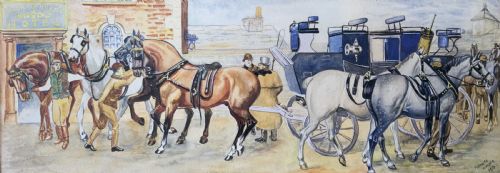
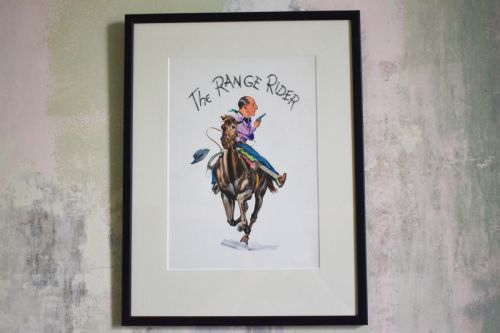
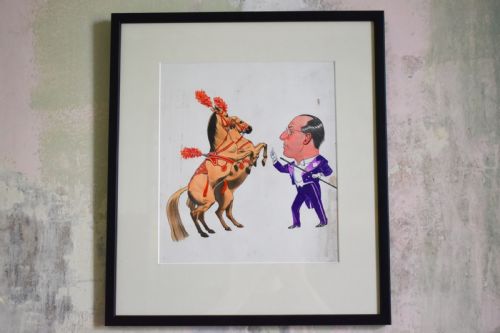
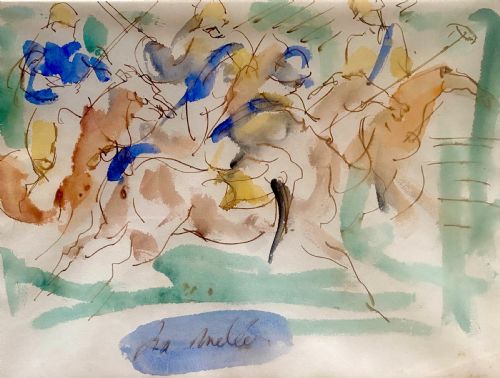
When you examine an original equestrian watercolour, you look at hand-painted works depicting horses, hunt scenes, racing, and rural working animals across various centuries. These pieces span from Victorian and Edwardian portrayals to mid-century modern interpretations and earlier depictions.
You are most likely to encounter framed artwork created on paper using watercolour pigment, often accompanied by ink or gouache highlights. The subjects range from detailed portraits of individual horses to energetic hunting scenes and coaching watercolours signed by established artists.
Materials and construction methods
These works rely primarily on watercolour pigment applied to paper, sometimes supplemented with opaque gouache for highlights and ink for definition. Artists utilised these water-soluble mediums to achieve both translucent washes and sharp linear details.
Many surviving examples retain their period oak frames and protective glass, which safeguard the delicate paper surface from environmental damage. The integration of paper support, pigment, and framing reflects standard professional mounting practices of the nineteenth and twentieth centuries.
Several horses in these watercolours clearly share opinions on the weather, judging by the expressions captured mid-gallop.
Distinctions in execution and condition
The standard of an original equestrian watercolour depends on the artist's anatomical accuracy in rendering horses and the confident handling of the medium. Works by listed sporting artists display superior control over composition and movement compared to anonymous sketches.
Condition plays a vital role in quality, specifically the preservation of the paper and the vibrancy of the pigments against fading. Framed pieces that maintain their original paper integrity and genuine period framing retain greater historical authenticity.
John Rattenbury Skeaping·John Augustus Atkinson·Helena Maguire·John Sanderson Wells·Charles Clifford Turner·Thomas Ivester Lloyd·William J Hodgson·Henry Charles Fox·Johan Noah Bemmel·Frank Dadd·Charles James Adams·George Soper
The Original Equestrian Watercolour Glossary
- Gouache
- An opaque water-based paint that provides solid highlights and heavier pigment areas on paper. Artists often combined it with transparent watercolour to add depth to equestrian paintings.
- Sporting Art
- A genre of painting focused on fieldsports, horse racing, hunting, and equine subjects. This category forms a major part of nineteenth and twentieth-century British art.
- Wash
- A thin, fluid layer of diluted watercolour pigment spread across paper to create skies, backgrounds, or uniform colour fields. Controlled washes require skill to avoid harsh edges.
- Provenance
- The documented history of ownership and origin of an artwork. Clear provenance helps verify the attribution of signed historical pieces.
Original Equestrian Watercolour: Frequently Asked Questions
How should I display a watercolour?
Watercolours require protection from direct sunlight to prevent the pigments from fading over time. Keep them away from damp environments to preserve the paper support.
Ensure the framing maintains a proper gap between the glass and the paper surface to prevent condensation damage. Professional framing with UV-filtering glass offers the best long-term preservation.
What is the difference between watercolour and gouache?
Watercolour pigment is transparent, allowing the reflective quality of the white paper to shine through the thin washes. This creates luminous effects suitable for skies and open landscapes.
Gouache contains added white pigment that makes the paint opaque, allowing artists to paint light areas over dark washes. Many equestrian works combine both mediums to capture highlights on horses and equipment.
How do I identify the date of a piece?
Examine the signature, framing style, and paper characteristics for clues regarding the period of creation. Many listings provide specific decades or centuries based on artist lifespans and stylistic evidence.
Clothing styles of riders, tack design, and the overall aesthetic movement help narrow down the historical context. Comparing the signature to known records of British sporting artists confirms the active period.
Are these paintings original works?
Every piece listed is a hand-painted original work on paper rather than a modern reproduction or print. Artists applied wet pigment directly to the surface by hand.
Close inspection under magnification reveals brush strokes, paper texture, and the distinct pooling of watercolour washes unique to each individual creation.