



Original Castle Painting
An original castle painting captures historic fortresses and ruined strongholds across Britain, offering a direct link to romantic landscape traditions.
Original Castle Painting
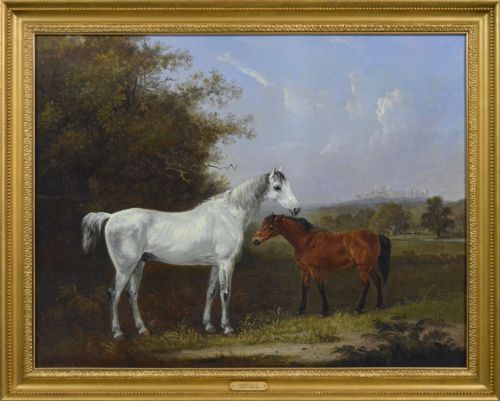
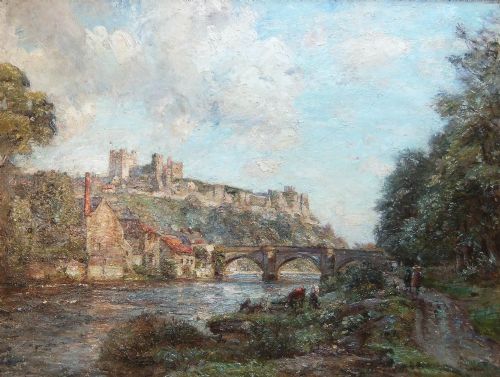
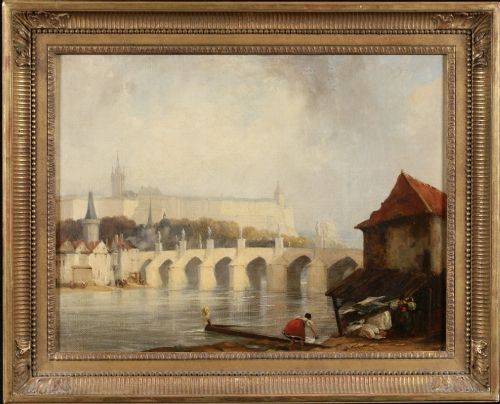
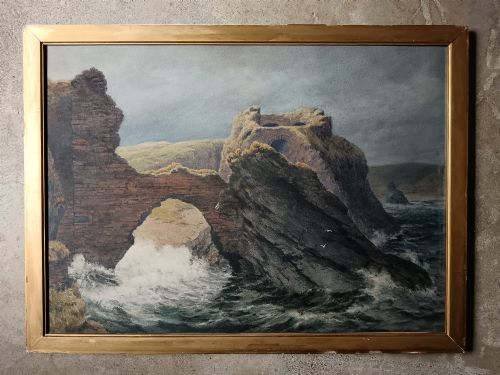
An original castle painting depicts historic fortifications, coastal ruins, and grand country strongholds set within British and European landscapes. These works span from nineteenth-century romantic watercolours to mid-twentieth-century rural scenes.
The most common examples on this page are nineteenth-century and early twentieth-century watercolours and oil paintings on canvas or board. Regional subjects like Bolton Castle, Windsor Castle, and Barnard Castle appear frequently across these periods.
Makers and artists range from named regional painters such as Fred Lawson and George Graham to accomplished nineteenth-century topographical artists. Their works capture both imposing masonry and quiet surrounding river valleys.
How They Were Made
Artists painted these scenes using watercolour pigments on heavy paper or oil paints applied to stretched canvas and wooden boards. Watercolour washes created transparent atmospheric skies, while heavier oil applications built texture in stone walls and foliage.
Support materials varied from traditional woven canvas to academy boards and artist papers stamped by nineteenth-century suppliers. Framing typically involved wooden mouldings, sometimes with gilt finishes to complement the painted surface.
Listings feature watercolours, oils on canvas, and pastels spanning the nineteenth and twentieth centuries.
What Varies in Quality
Quality rests upon the artist's handling of light, scale, and architectural perspective within the landscape. Superior works demonstrate confident brushwork that defines crumbling stonework and natural topography without relying on stiff outlines.
Condition and preservation of the paper or canvas surface also shape the piece. Strong pigment retention and minimal surface disruption preserve the atmospheric depth intended by the painter.
Alfred Young Nutt·Herbert Royle·John Moxon·Fred Lawson·James Orrock·William Mellor·Frank Wood·Thomas Whittle the Younger·Willie Stephenson·George Willis Pryce·Charles Walter Radclyffe·Victor Haddrell·William Burns·David Cox Senior·John Syer·Thomas Allom
The Original Castle Painting Glossary
- Grisaille
- A painting executed entirely in shades of grey or neutral monochrome. This technique often served preparatory or romantic atmospheric purposes.
- Gouache
- An opaque watercolour medium used by artists to add solid highlights and body to painted skies and stone surfaces. It provides greater opacity than standard watercolour pigments.
- Impressionism
- A style of painting emphasising spontaneous brushwork and the shifting effects of light rather than microscopic detail. Mid-century examples on this page apply this freedom to historic strongholds.
Original Castle Painting: Frequently Asked Questions
How do I date a castle painting?
Dates are typically gathered from artist signatures, exhibition records, framing styles, and the specific attire of any figures included in the landscape. Costume and architectural details often narrow the period down to a specific decade.
Comparison with known dated works by regional painters like Fred Lawson provides further chronological accuracy.
Were these painted on site?
Many works began as quick plein-air watercolour sketches or pencil drawings completed outside the historic site. Artists frequently developed these initial studies into finished studio paintings using oil or watercolour.
Direct observation accounts for the accurate rendering of local topography and changing light conditions.
How should I frame and display them?
Watercolours require conservation framing behind glass with acid-free mounts to prevent fading from light exposure. Oil paintings on canvas benefit from traditional wooden frames that support the original stretcher bars.
Keep both types away from direct sunlight and damp environments to protect the pigments and paper or canvas supports.
What subjects are most common?
Northern strongholds such as Bolton Castle, Barnard Castle, and Bamburgh Castle appear frequently alongside southern landmarks like Windsor Castle. Artists also favoured ruined coastal fortresses and Welsh estates.
These subjects reflect nineteenth- and twentieth-century artistic interest in British history and picturesque rural scenery.