
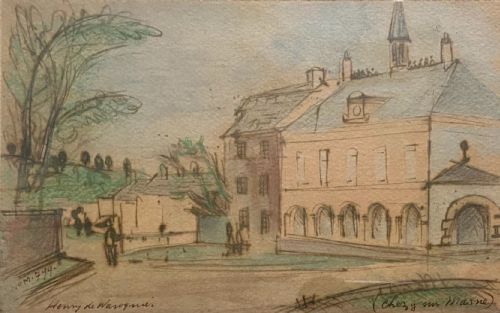


Original Architectural Sketch
An original architectural sketch brings the hand of the designer directly into a room, capturing buildings and streetscapes in pencil, ink, and watercolour.
Original Architectural Sketch
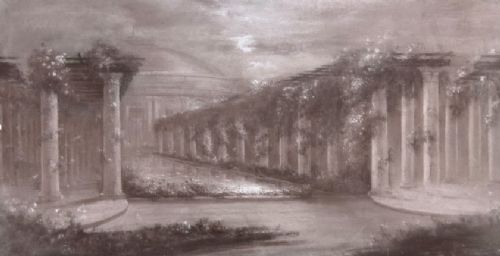
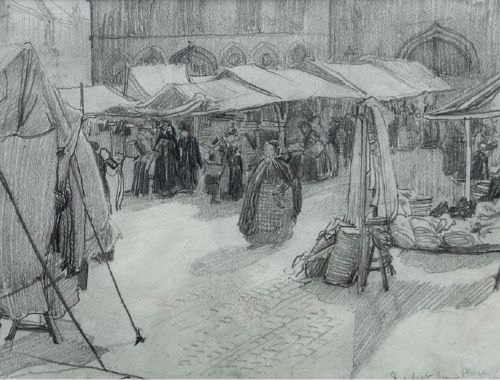
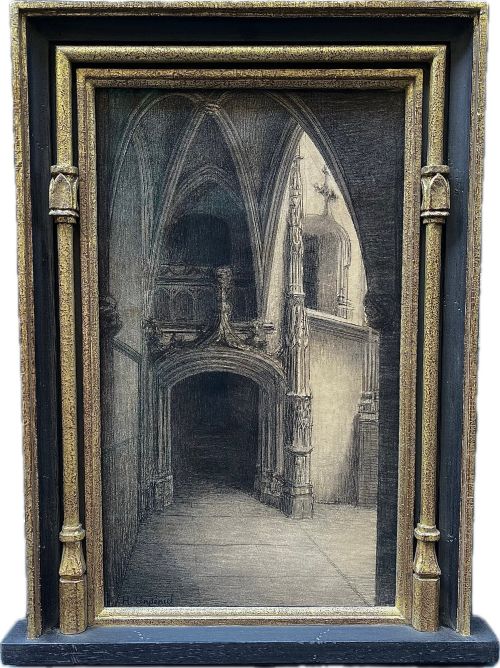
An original architectural sketch captures buildings, churches, and urban streetscapes drawn by hand during the eighteenth, nineteenth, and twentieth centuries. These works record structures such as Gothic churches, provincial market places, and grand bridges through direct observation.
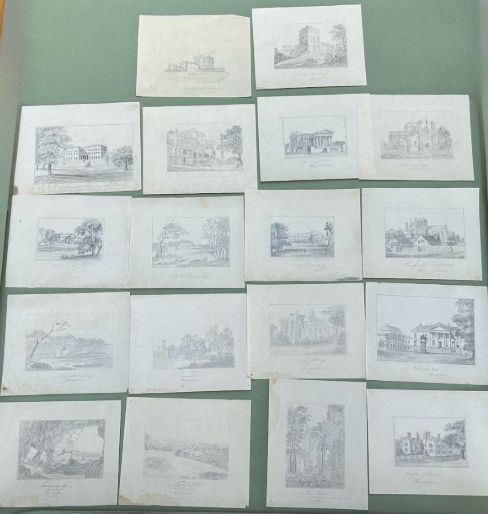
Buyers encounter framed artwork, works on paper, and bound studies originating from British and European hands. The selection includes detailed studies of specific buildings alongside broader townscapes executed in ink, pencil, and watercolour.
Many examples emerge from named artists and architectural draftsmen working within movements like Gothic Revival and early twentieth-century British art. These pieces function simultaneously as historical records of built environments and as direct artistic expressions.
What varies in quality
The precision of the draughtsmanship and the confidence of the line separate the most accomplished architectural studies from routine academic exercises. A master hand conveys the weight of stone and the perspective of a street with minimal, assured strokes.
Condition and preservation of the paper surface significantly influence the standing of a piece. Fading of ink or watercolour, foxing spots, and the integrity of the original framing or mounting dictate how well the drawing retains its visual clarity.
Subject matter ranges from Gothic churches and town halls to street scenes in Britain, France, and Belgium.
Henry Percy Huggill·Henri Charles Angéniol·Denis William Reed·Hercules Brabazon Brabazon·Fred Lawson·Henry Edridge·Joseph Hansom
The Original Architectural Sketch Glossary
- Graphite
- A form of carbon used in pencils to create lines ranging from hard silver-greys to deep blacks. It forms the foundation of most preparatory architectural drawings.
- Wash
- A diluted layer of ink or watercolour applied across paper to achieve smooth areas of tone and shadow. It provides depth to architectural elevations and stone surfaces.
- Gothic Revival
- An architectural and artistic movement originating in the mid-eighteenth century and extending through the Victorian era. It draws inspiration from medieval ecclesiastical forms.
- Works on paper
- A collective term encompassing drawings, watercolours, sketches, and prints executed on paper supports. They require protection behind glass to prevent atmospheric damage.
- Tonalism
- An artistic style focusing on mood and shadow rather than crisp linear definition. Works in this manner use subdued palettes of grey, brown, and muted watercolour.
Original Architectural Sketch: Frequently Asked Questions
How do I care for an original architectural sketch?
Keep works on paper away from direct sunlight to prevent the fading of pencil graphite and watercolour pigments. Maintaining stable indoor humidity prevents the paper from cockling or developing foxing spots within its frame.
Ensure the framing uses acid-free backing materials and UV-filtering glass where possible. Proper mounting prevents the paper from touching the glass directly, allowing the material to breathe safely over time.
Where were these architectural drawings created?
Artists produced these drawings both on location in front of buildings and within studios based on earlier field studies. Urban streetscapes and rural churches across Britain and continental Europe served as primary subjects.
Travel sketches often formed part of architectural training or personal sketching tours. Studio drawings combined these on-site observations with historical research into specific building styles.
How can I tell the period of a drawing?
Paper characteristics, framing styles, and the specific attire of figures depicted provide primary clues to age. Eighteenth and nineteenth-century works frequently utilise heavy laid paper and delicate sepia washes, while twentieth-century pieces often show broader modernist mark-making.
Signatures, inscriptions naming specific locations, and artist stamps often confirm the exact decade or historical movement. Comparing the handwriting on the mount with known examples helps date unsigned leaves.
What is the difference between a print and an original sketch?
An original sketch contains direct, unique marks made by the artist's hand using pencil, ink, or watercolour. Every stroke exists as a singular application of pigment or graphite directly onto the paper surface.
Prints are mechanically or manually reproduced multiples created via woodblock, engraving, or lithography. Examining the surface under magnification reveals the continuous lines of drawing rather than printing dot patterns or plate marks.