




Original Abstract Painting
An original abstract painting brings mid-century energy and bold composition to a room, offering immediate visual impact through mid-century modernism and expressionist forms.
Original Abstract Painting
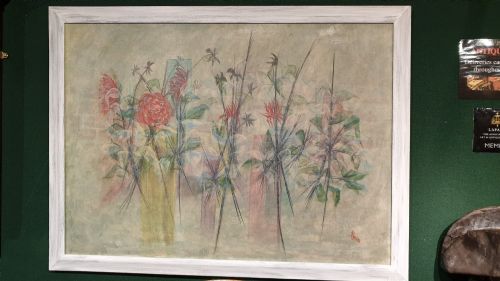
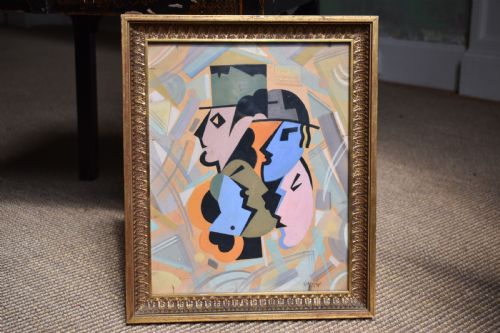
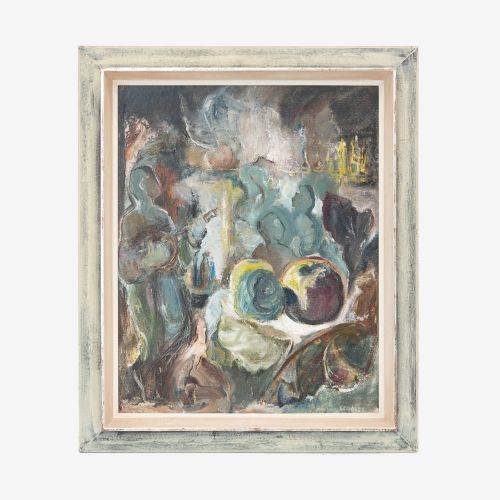
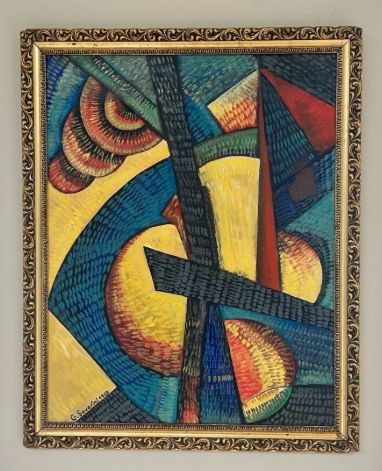
When searching for an original abstract painting, collectors encounter mid-century works spanning from the nineteen-thirties through the nineteen-sixties. These pieces range from expressive landscapes and still lifes to geometric op art and figurative studies.
The selection leans heavily towards mid-century modernism, abstract expressionism, and French modernism. Buyers frequently find oil paintings on canvas or board, alongside vibrant gouache and watercolour works on paper.
Works originate from various European and British movements, including St Ives and continental schools. Compositions vary from subdued tonal studies to large, colourful avant-garde canvases.
How they were made
Artists painted primarily with oil and gouache, applying pigments directly onto stretched canvas, wooden board, or thick paper. Impasto techniques appear frequently, building tangible texture onto the surface.
Support materials include glass framing for works on paper, while canvases remain stretched over wooden frames or applied to loose supports. Mixed media elements occasionally combine paint with other surface treatments.
Listings feature works spanning four decades, from the nineteen-thirties to the nineteen-sixties, executed in oil, gouache, and watercolour.
What varies in quality
Quality rests in the confidence of the brushwork and the strength of the compositional structure. Stronger pieces display deliberate control over colour and space, whether working within a cubist landscape or an expressive portrait.
The integration of materials also defines the upper tier, where impasto depth and pigment preservation remain intact. Provenance and documented artist attribution further elevate individual works within the broader mid-century corpus.
Denis Mitchell·Barbara Hepworth·William Littlejohn·William McCance·Adrian Heath
The Original Abstract Painting Glossary
- Impasto
- Paint applied thickly to a canvas or board, standing out in relief from the surface. This technique adds physical texture and depth to abstract compositions.
- Gouache
- An opaque water-based paint that dries to a matte finish. It allows for vibrant flat colour application on paper supports.
- Cubism
- An early twentieth-century avant-garde art movement that revolutionised European painting. It broke subjects up into multi-angled geometric shapes.
- Op art
- A style of visual art that uses optical illusions. These abstract geometric compositions create movement or swelling on a flat plane.
- St Ives School
- A group of artists based in Cornwall associated with modernist abstract art. Their output reflects the rugged coastal landscape through non-representational forms.
Original Abstract Painting: Frequently Asked Questions
How do I date an abstract painting?
Dating relies on stylistic markers, framing materials, and artist signatures or dates inscribed on the reverse. Mid-century works often exhibit specific palette choices and modernist structural traits typical of the nineteen-thirties to nineteen-sixties.
Examining the canvas weave, board type, and stretcher construction provides further clues to the period of creation. Archival records and signatures help narrow down the exact decade.
Are these paintings supplied framed?
Many listings include original or period frames that complement the aesthetic of the artwork. Descriptions specify whether a piece is framed or presented on loose canvas or board.
Buyers should check individual listing details regarding framing status before purchase. Unframed works on paper or loose canvas require separate framing considerations for display.
What is the difference between oil and gouache?
Oil paint uses slow-drying plant oils as a binder, allowing for rich blending and heavy impasto textures on canvas or board. Gouache utilises a water-soluble medium that dries quickly into a flat, opaque matte surface typically applied to paper.
Oils offer durability and luminous depth, whereas gouache delivers graphic punch and vibrant colour saturation. Both techniques dominate mid-century abstract expressionist output.
How should I care for an original painting?
Protect paintings from direct sunlight and dramatic humidity shifts to preserve pigment integrity and prevent canvas degradation. Regular dusting with a soft, dry cloth keeps the surface clear without harming delicate impasto.
Works on paper require UV-filtering glass framing to guard against fading. Avoiding extreme temperature changes ensures both paint and support remain stable over time.