

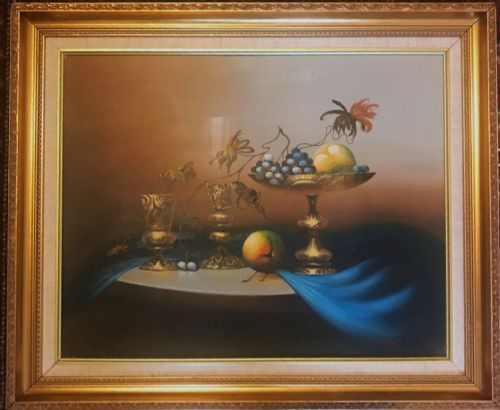

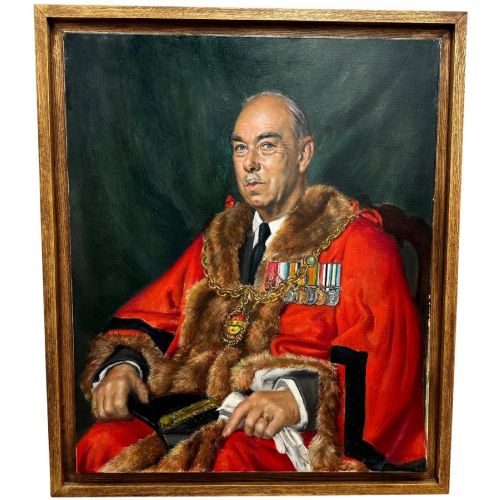
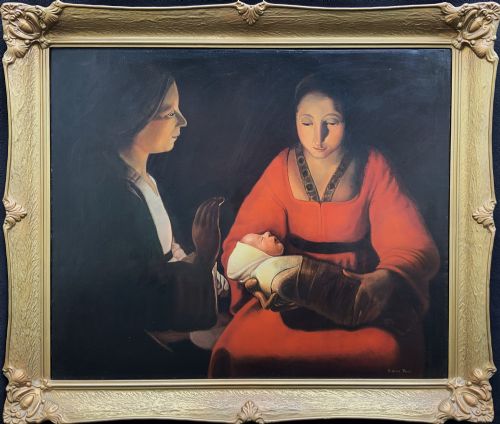


Framed Vintage Canvas
Framed vintage canvas brings historical oil painting into domestic rooms, offering original portraiture, landscape, and marine art set in period surrounds.
Framed Vintage Canvas
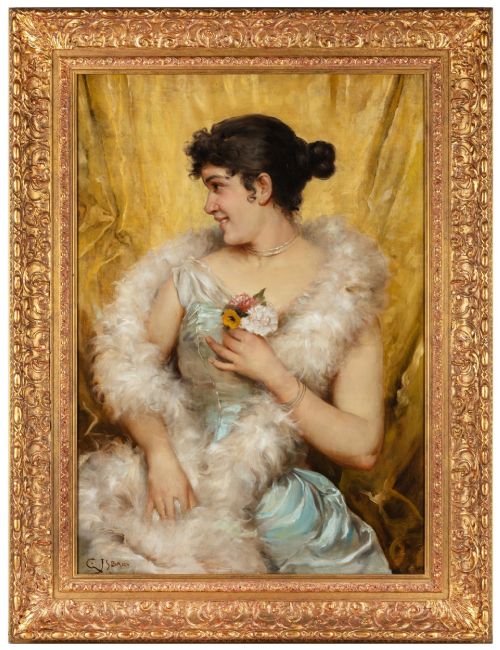
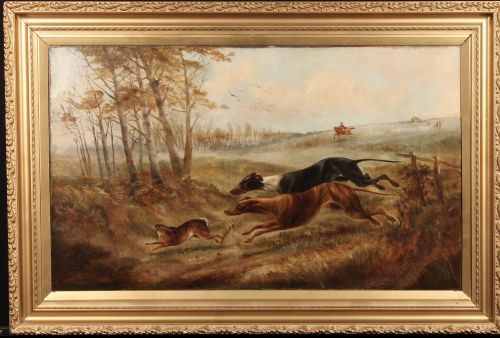
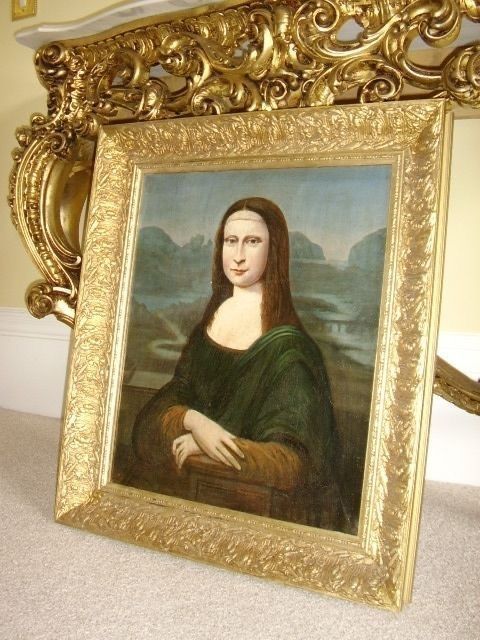
When you search for framed vintage canvas, you encounter original oil paintings spanning the seventeenth century through to the mid-twentieth century, housed in their original or period surrounds. These works encompass British and European landscapes, animal studies, marine scenes, and formal portraiture.
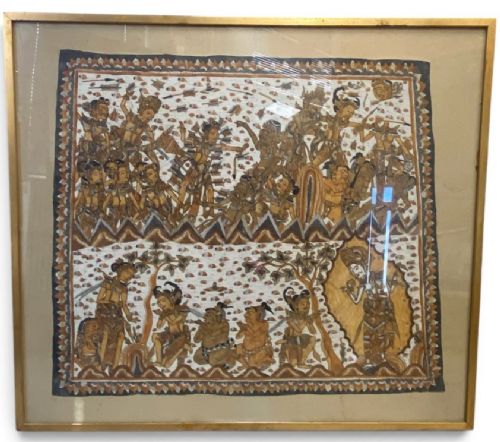
The most common pieces on this page originate from the Victorian era and the early twentieth century, showing realistic depictions of rural life, flora, and human subjects. Alongside these British works appear continental scenes and occasional studies executed on textile supports.
Subjects range from prized farm animals and sporting dogs to expansive river views and quiet domestic interiors. Each piece carries the physical texture of oil paint applied to canvas, showing the varied handling of brush and palette knife by historical artists.
Materials and Construction
The foundation of these works is woven canvas stretched across wooden frames, supporting layers of oil paint mixed from ground pigments and drying oils. Artists built up their compositions through successive stages, from initial underpainting to final glazed highlights.
Surrounding these canvases are wooden frames finished with gesso and gold leaf or gilt wood. The gesso provided a smooth plaster base for intricate moulded ornament before gilding was applied by hand.
Listings feature works from the seventeenth, eighteenth, nineteenth, and twentieth centuries, using oil paint on canvas and wood supports.
Craftsmanship and Preservation
Quality rests upon the skill of the draughtsmanship and the stability of the paint surface. Stronger works demonstrate confident brushwork, accurate anatomical proportion in figures or animals, and harmonious tonal balance.
The integrity of the canvas and frame combination determines the condition grade. Original frames matching the period of the painting retain more character than later replacements, while minimal intervention in the paint layer preserves the artist's original touch.
Henry Barraud·Georges de La Tour·George Houston·Clifford Hanney·Bernard Hailstone
The Framed Vintage Canvas Glossary
- Canvas
- A heavy woven fabric, typically linen or cotton, used as a support for oil painting. It is stretched tightly over a wooden strainer or stretcher frame before painting.
- Gesso
- A mixture of binder and chalk or plaster used to prepare wooden frames and panels for gilding or painting. It creates a smooth, absorbent surface for decorative elements.
- Gilt wood
- Wood coated with gold leaf or metallic powder to resemble solid gold. This finish characterises many traditional frames.
- Oil paint
- A slow-drying paint made by mixing pigments with drying oils such as linseed. It allows for rich blending of tones and deep luminosity.
- Provenance
- The documented history of ownership of an artwork. It helps establish authenticity and records the passage of the piece through time.
Framed Vintage Canvas: Frequently Asked Questions
How do I date a framed oil painting?
Dating relies on stylistic evidence within the artwork, costume details in portraits, and the construction methods of the wooden stretcher and frame. Nail types, canvas weave, and panel stamps also offer clues to the decade of creation.
Comparing the handling of paint and the framing style with documented examples from the same period helps narrow the timeframe further.
Should I clean an old canvas?
Surface dust can be removed gently with a soft, dry brush, but deeper cleaning requires professional conservation. Household cleaners or moisture can damage aged oil paint and vulnerable canvas supports.
Yellowed varnish and ingrained grime obscure the original colours and should be addressed only by a trained restorer.
How should I hang these paintings?
Hang oil paintings away from direct sunlight and damp environments to prevent the canvas from slackening and the paint from cracking. Secure fixings suited to the weight of the heavy wooden frame are essential.
Positioning the work at eye level enhances viewing, keeping it clear of direct heat sources such as radiators.
Are original frames important?
Original or period-appropriate frames complement the artwork and maintain its historical integrity. A matching frame from the same decade protects the edges of the canvas and balances the visual weight of the composition.
While paintings and frames are sometimes separated over time, reunited period matches add considerable character to a piece.