
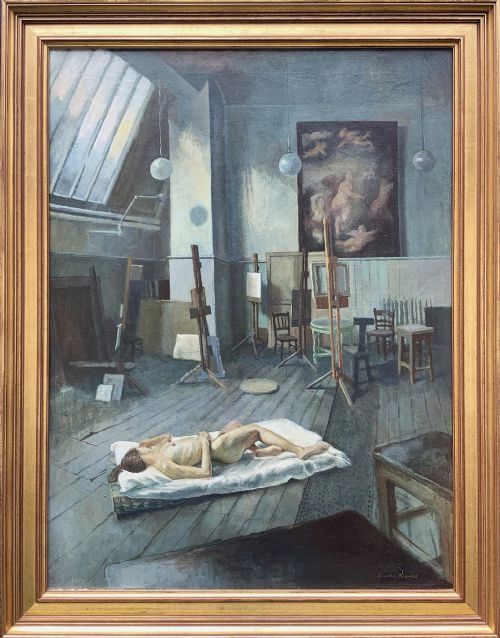
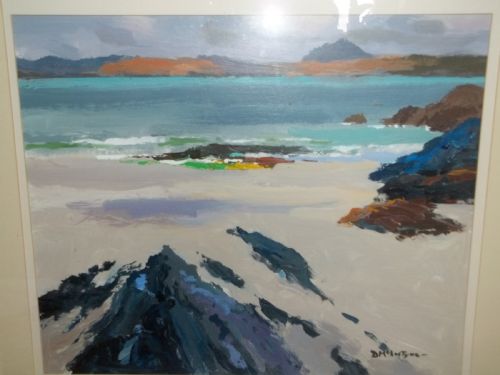


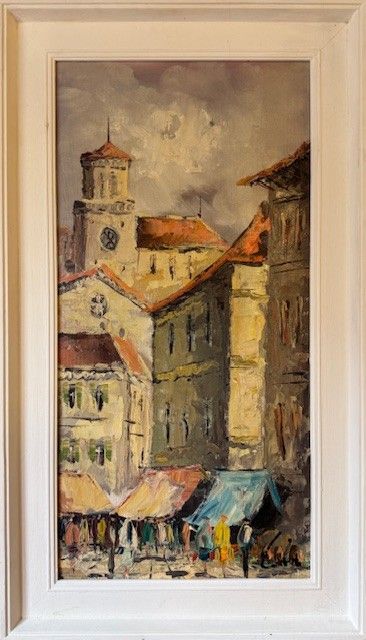


Original 1960s Painting
An original 1960s painting captures the distinct modernist shifts, vibrant abstractions and expressive brushwork of the mid-century period for modern interiors.
Original 1960s Painting
When you search for an original 1960s painting, you encounter a diverse range of works spanning British, French and Belgian artistic movements of the mid-century era. The selection predominantly includes oil on canvas and framed watercolour works featuring abstract compositions, impressionist landscapes and figurative scenes.
You are most likely to meet mid-century modernist and impressionist pieces created between 1960 and the end of that decade. These works often depict coastal views, Parisian street scenes, horse racing and botanical still lifes executed by recognised regional and international artists.
The category embraces both traditional British watercolours and bolder continental European expressions. Structural abstracts, geometric op art and textured impasto landscapes form the core of what is available to collectors on this page.
Distinguishing the finer works
The distinction between standard works and exceptional pieces lies in the boldness of composition and the surety of the artist's brushwork. Masterpieces demonstrate a confident handling of pigment and light, particularly in complex impasto landscapes and structured abstracts.
Provenance and documentation also separate notable works from anonymous studio pieces. Signed canvases with clear exhibition histories or attribution to established Royal Scottish Academicians and recognised European painters carry greater artistic weight.
Children goofing around in fancy dress and playful horses racing across the canvas bring mid-century humour straight to your walls.
Lionel Horsnell·Dame Elisabeth Frink·Helen Layfield Bradley·John Rattenbury Skeaping·Gabriel Dauchot·Amile Coppieters·Ron Folland·William Littlejohn·Noel Quintavalle·Christian Caillard·William Ernst Burwell·Donald McIntyre
The Original 1960s Painting Glossary
- Impasto
- A technique where paint is laid on an area of surface in very thick layers, usually thick enough that the brush or painting-knife strokes are visible. This method adds tactile three-dimensional depth to oil paintings.
- Op art
- A style of visual art that uses optical illusions, typically employing abstract patterns with stark contrasting colours. These geometric compositions became prominent during the 1960s.
- Gouache
- A water-based paint consisting of pigment and other inert material designed to be used in a opaque painting method. It differs from watercolour in that the particles are larger and the material is heavy.
- Mid-Century Modern
- An architectural, interior, product and graphic design development that described modernism in modern design from roughly 1933 to 1965. In painting, it reflects the departure from strict academic realism toward abstraction and expressionism.
- Gilt
- Covered thinly with gold leaf or gold paint. Frames finished in this manner frequently accompany mid-century canvases.
Original 1960s Painting: Frequently Asked Questions
What defines an original 1960s painting?
An original painting from this decade is a unique hand-painted work created between 1960 and 1969, rather than a modern print or reproduction. These pieces reflect the artistic movements of the time, including Mid-Century Modernism, Impressionism and Abstract expression.
Such works utilise traditional mediums like oil on canvas, watercolour and gouache on paper. Each piece bears the distinct physical brushwork and material ageing characteristic of mid-century studio production.
How should I hang a mid-century painting?
Mid-century paintings suit both contemporary minimalist interiors and eclectic period spaces. Pairing them with clean walls allows the textured impasto and bold palettes of the 1960s to become a focal point.
Ensure the artwork is placed away from direct sunlight to protect oil pigments and paper works from fading. Appropriate hanging hardware suited to the weight of the wooden frame and canvas is essential for secure display.
How can I tell a watercolour from an oil painting?
Oil paintings feature thick, opaque pigments applied to canvas or wood panels, often displaying visible brush or palette knife textures. They have a reflective quality and do not require glass protection.
Watercolours are executed on paper using translucent water-soluble pigments that reveal the texture of the paper beneath. These works are lightweight and must be framed behind glass to prevent moisture damage.
Where were these mid-century paintings created?
The works originate from various European art hubs, with strong representations from British, French and Belgian studios. Artists captured local landscapes, coastal scenes and urban environments from their respective regions.
Continental painters often brought expressionist techniques to Parisian street scenes, while British artists documented coastal regions, industrial towns and rural landscapes.