


Original 1920s Wall Art
Original 1920s wall art brings period charm to a room through authentic paintings, watercolours, and etchings from the early twentieth century.
Original 1920s Wall Art
Buyers seeking original 1920s wall art encounter a varied selection of framed artwork, fine art paintings, and prints spanning the early twentieth century. The period output on this page includes oil paintings, watercolours, and pastel drawings capturing landscapes, portraits, and city scenes.
Most pieces date directly from the nineteen-twenties, though adjacent decades appear alongside works from nineteen-ten through nineteen-fifty. French and British schools dominate the selection, bringing Post-Impressionism, Art Deco, and Early Twentieth Century Realism into domestic spaces.
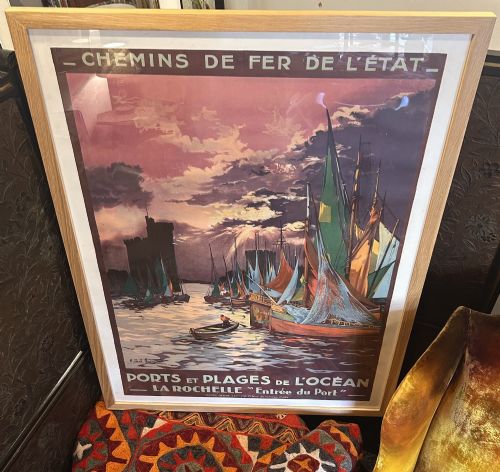
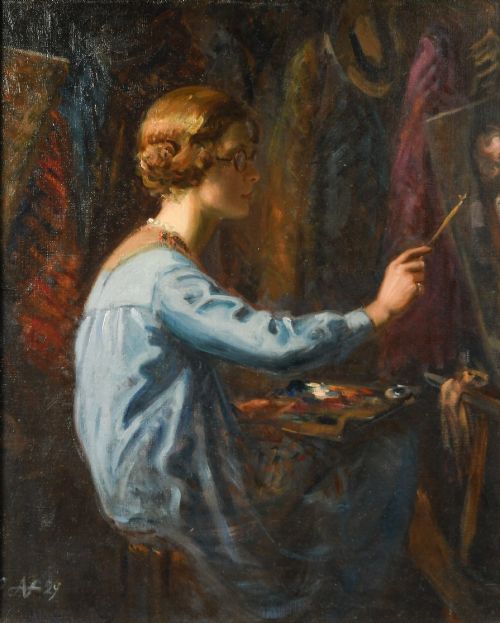
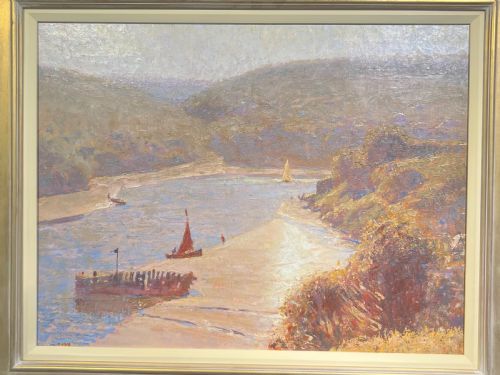
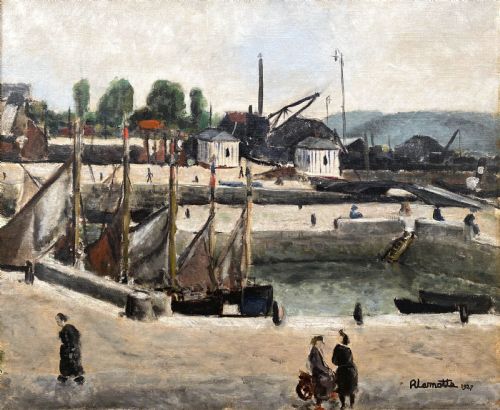
The assortment ranges from large oil on canvas cityscapes to delicate watercolour portraits on paper. Subjects stretch from French coastal scenes and floral still lifes to equestrian watercolours and domestic interiors.
Materials and technique
Makers utilised traditional supports such as canvas, wood panel, board, and paper for their compositions. Pigments were applied in oil, watercolour, pastel, ink, and gouache, often finished with protective glass and gilt framing.
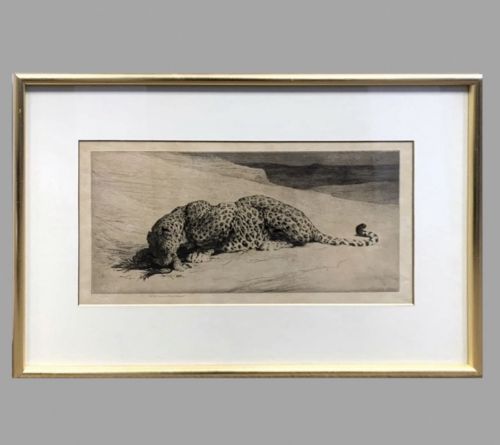
Printmakers employed techniques like drypoint and aquatint etching, producing limited edition impressions on paper. Painters worked in oil and watercolour, capturing light and form through Post-Impressionist, Fauvist, and realist methods.
A boxer, a photographer, and a lady in white share a single seaside canvas from nineteen-twenty.
Assessing quality and condition
Quality rests upon the sureness of the hand and the fidelity of the composition to its stated period style. Works by documented artists display confident brushwork and tonal depth that elevate them above anonymous student pieces.
Condition varies according to how well paper supports and canvases survived the decades. Intact framing, minimal foxing on watercolours, and stable paint layers on wood or canvas preserve the visual integrity of the artwork.
Cecil Allan Mould·Herbert Dicksee·Raymond Moritz·Louis Suire·Owen Bowen·Edith E Caswall·Pierre Peltier·Louis Icart·Cowan Dobson
The Original 1920s Wall Art Glossary
- Etching
- A printmaking method where acid bites lines into a metal plate to hold ink. Etchings provide sharp linear detail on paper.
- Drypoint
- A printmaking technique where an artist scratches a sharp needle directly into a metal plate. This creates a soft, velvety burr in the printed line.
- Aquatint
- An etching method used to create tonal areas of grey and colour. It mimics the appearance of a watercolour wash.
- Post-Impressionism
- An art movement following Impressionism that prioritised symbolic content and expressive use of colour. Artists rejected rigid naturalism in favour of bolder forms.
- Fauvism
- A style featuring painterly qualities and strong, non-naturalistic colours. Fauvist works emphasise flat planes and expressive brushwork.
Original 1920s Wall Art: Frequently Asked Questions
What subjects are common in 1920s wall art?
Paintings from this era frequently depict coastal views, city streets, floral still lifes, and domestic portraits. Artists also recorded rural landscapes, equestrian scenes, and modernist figures.
French and British locations appear often, reflecting the travel and everyday surroundings of the artists who painted them.
How do I care for antique watercolours?
Works on paper require protection from direct sunlight to prevent fading of the delicate pigments. Framing behind conservation glass helps block ultraviolet rays.
Keep these pieces away from damp environments to avoid mould growth and paper deterioration.
What is the difference between an etching and a painting?
An etching is a printed work produced from an inked metal plate, often created in limited editions. Each impression shares the same linear foundation.
A painting is a unique, one-off creation where the artist applies wet pigment directly to canvas, wood, or paper.
How do I identify Art Deco wall art?
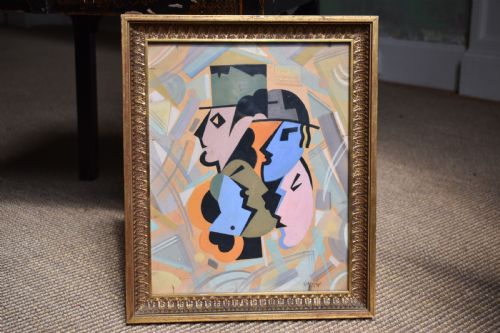
Art Deco pieces display stylised geometric forms, streamlined contours, and sophisticated compositions. The palette often balances bold tones with elegant restraint.
Subject matter frequently includes fashionable figures, dancers, and urban architecture typical of the interwar period.