



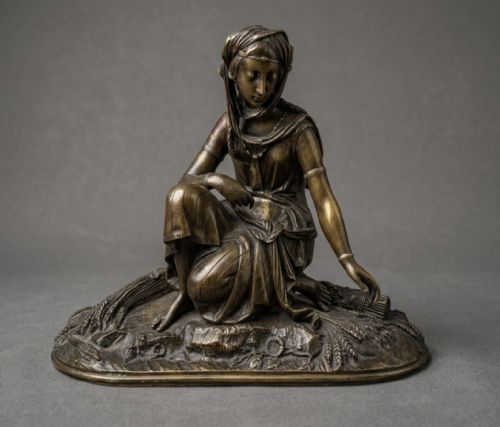


Orientalist Female Sculpture
These bronze, terracotta, and porcelain figures of orientalist female sculpture capture the romanticised aesthetic of the nineteenth and early twentieth centuries.
Orientalist Female Sculpture
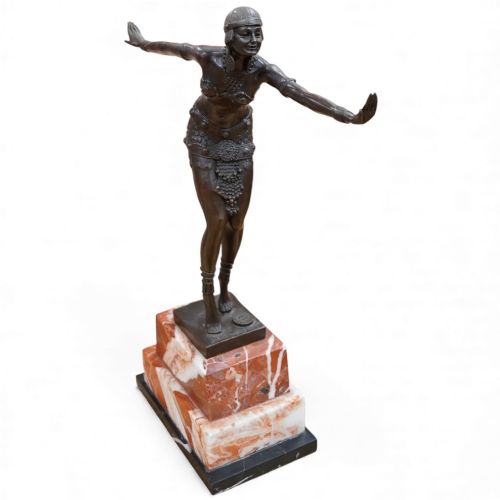
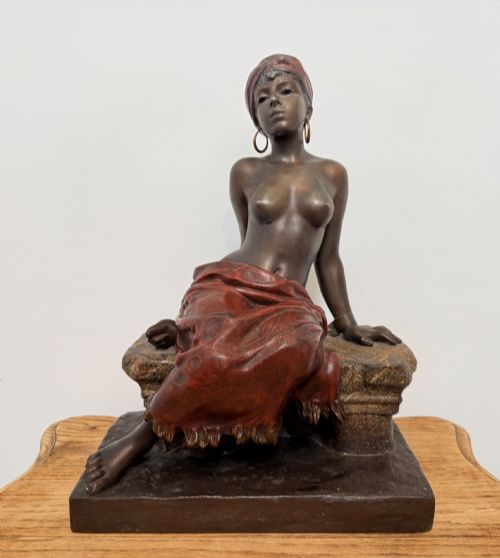
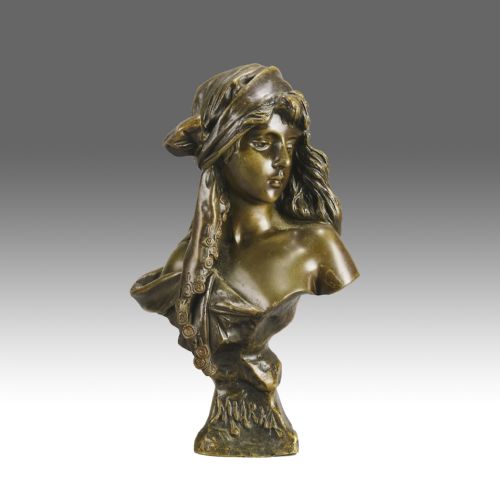
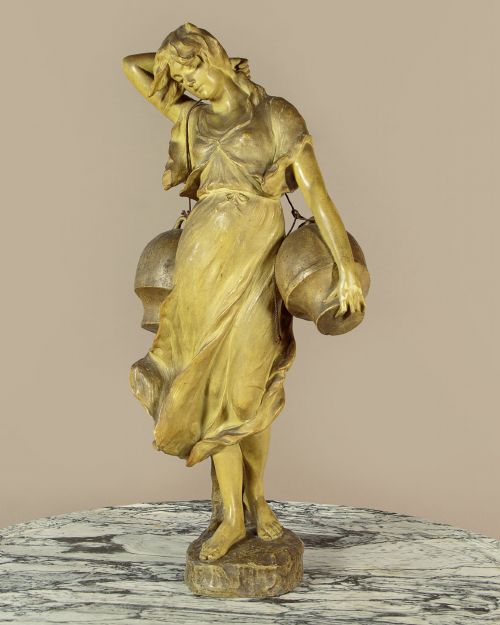
Buyers seeking orientalist female sculpture encounter figural representations created primarily during the nineteenth century and the early decades of the twentieth century. These works depict women in various forms, ranging from busts and dancers to water carriers and figures in regional attire, reflecting European fascination with distant cultures.
The objects span multiple stylistic movements, appearing most frequently in forms associated with Victorian taste, Art Nouveau, and Art Deco. Pieces emerge from diverse European traditions, including French foundries, Viennese cold-painted workshops, and Italian studios.
The selection includes medium-sized table sculptures, cabinet porcelain figurines, and larger standalone works executed in varied media. Subjects range from named historical and literary characters to anonymous attendants and dancers.
What varies in quality
In ceramic and terracotta examples, the precision of the moulding and the delicacy of the polychrome or enamel painting determine the standard of the piece. Superior works retain original surface treatments and hand-finished details without loss to painted pigments or patination.
One exceptional bronze hides an Egyptian female nude inside a removable sarcophagus.
Emmanuel Villanis·Edouard Drouot·Franz Bergman·Goldscheider·Arthur Waagen·Claire Colinet·Demetre Chiparus·Royal Dux
The Orientalist Female Sculpture Glossary
- Cold-painted bronze
- A method where bronze figures are painted with unfired oil or enamel paints after casting. This technique was widely utilised by Viennese workshops.
- Patination
- The chemical or natural treatment applied to the surface of a bronze sculpture to alter its colour. Different chemical baths produce varied brown, green, or dark tones.
- Terracotta
- A porous fired earthenware clay used for sculptural modelling. Artisans often left the material with a warm matte finish or applied polychrome pigments.
- Japonisme
- A late nineteenth-century European artistic movement influenced by Japanese art and culture. It frequently manifests in depictions of kimono-clad figures and Japanese motifs.
Orientalist Female Sculpture: Frequently Asked Questions
How do I identify the period of a piece?
Stylistic indicators help separate Victorian works from later Art Nouveau and Art Deco examples. Victorian and nineteenth-century pieces often display romantic realism, while Art Nouveau figures show flowing linear contours and Art Deco items exhibit stylised geometry.
Signatures, foundry stamps, and material types provide further chronological context for individual sculptures.
Where were these figures made?
Manufacturing centres were primarily located across Europe during the nineteenth and early twentieth centuries. French studios, Italian workshops, and Austrian foundries produced the majority of the bronze and alabaster examples.
Ceramic and porcelain figures originated from specialised European potteries and manufactories, including prominent operations in Bohemia and England.
How should I display these sculptures at home?
These figures suit stable, flat surfaces such as sideboards, mantelpieces, or dedicated display cabinets where their forms can be viewed from multiple angles. Placement should avoid direct sunlight and fluctuating humidity to protect delicate painted surfaces and patinas.
Larger terracotta and bronze statues require sturdy flooring or dedicated pedestals capable of supporting significant weight.