


White Alabaster Female Figure
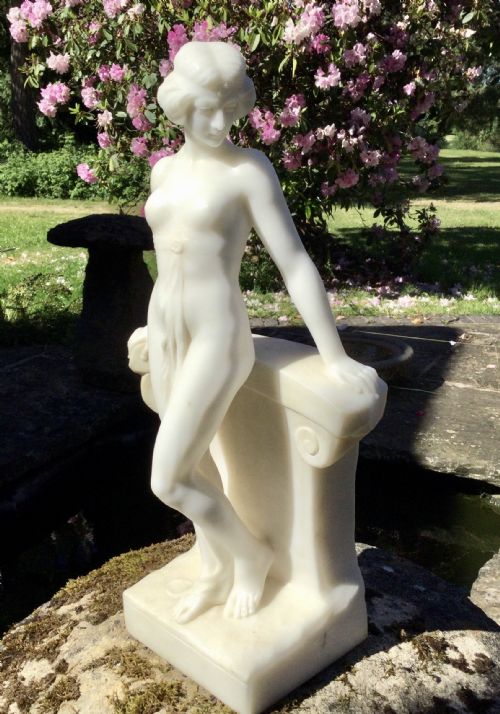
A white alabaster female figure brings classical grace and fine nineteenth-century carving directly into a room.
White Alabaster Female Figure
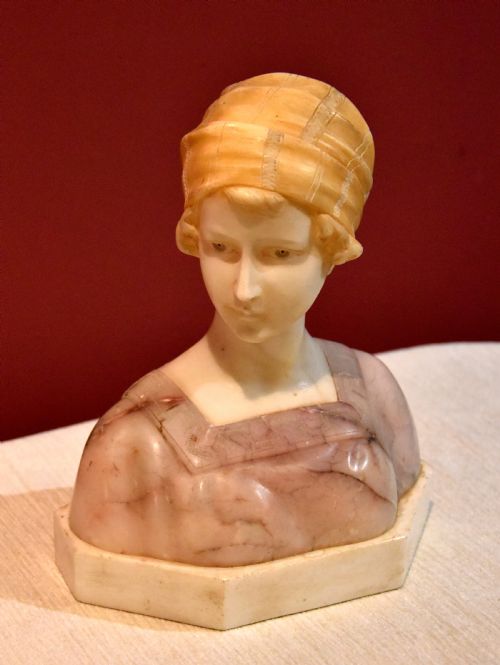
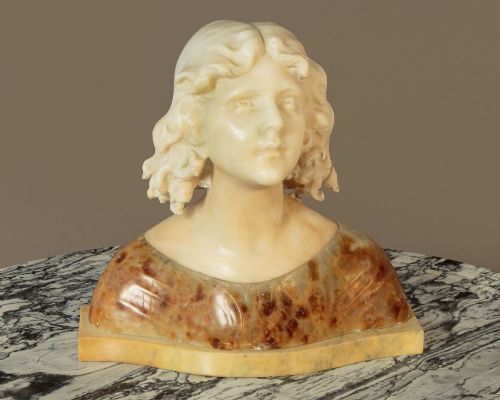
A white alabaster female figure represents carved sculptural depictions of women, ranging from classical goddesses and young ladies to allegorical figures and dancers. When you search for this phrase, you encounter works spanning the nineteenth century through the early twentieth century.
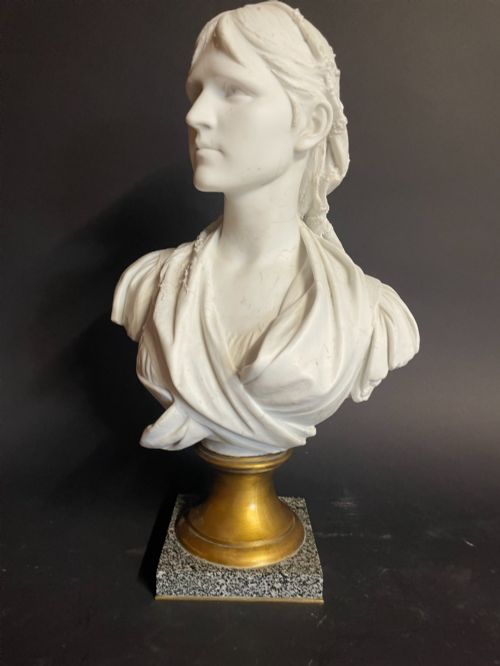
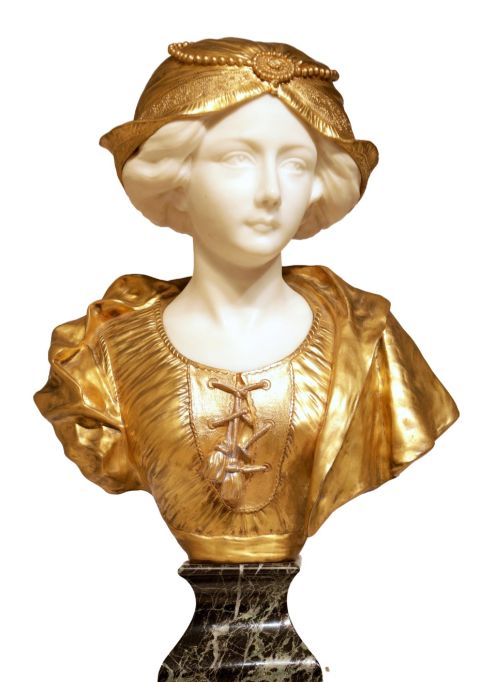
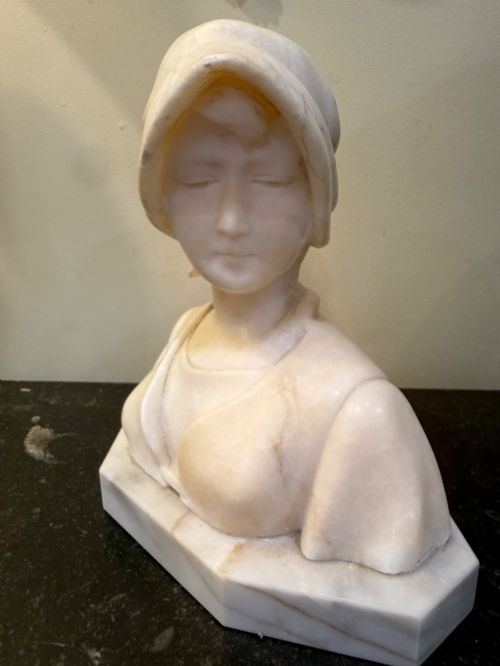
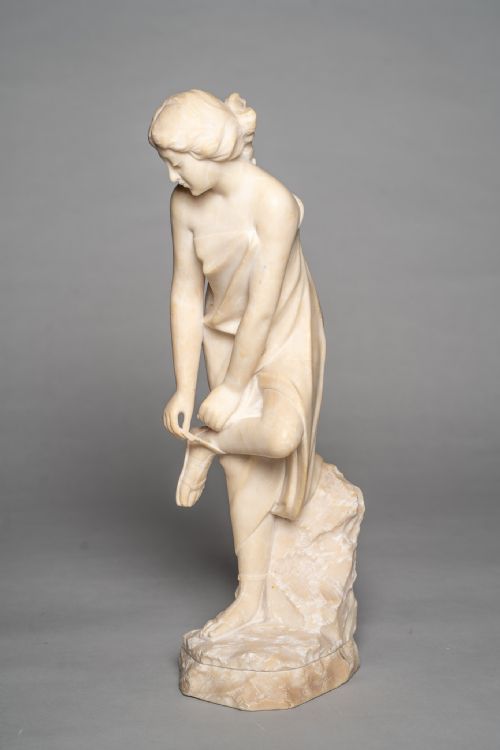
The pieces on this page appear primarily as busts, full-length reclining nudes, and standing figures. They originate predominantly from Italian and French workshops working within Victorian, Art Nouveau, Neoclassical, and Belle Epoque styles.
Sculptures often incorporate named subjects such as Hestia or Mignon, alongside anonymous studies of young women bathing, holding wheatsheaves, or playing lyres. These carvings capture domestic and mythological themes popular across the Victorian and Edwardian eras.
How they were made
Carvers shaped these figures primarily from white alabaster and marble, often mounting them on stone, granite, or metal bases. Workshops utilised manual chisel and polishing techniques to achieve the characteristic translucent finish of the soft stone.
Selected pieces integrate contrasting materials such as gilt bronze, ormolu, and brass to highlight garments, hair ornaments, or structural supports. Signatures and titles appear incised directly into the stone or inscribed on attached metal plaques.
Several figures hold wheatsheaves or play lyres, proving that nineteenth-century goddesses enjoyed acoustic breaks.
What varies in quality
The standard of carving distinguishes the finest pieces, particularly in the delicate rendering of facial expressions, drapery folds, and hair strands. Master sculptors achieved a convincing softness in the stone that lesser hands missed.
The integration of secondary materials such as ormolu mountings or mixed marble bases dictates the complexity of the piece. Signed works by documented sculptors carry distinct artistic weight compared to unsigned studio output.
Affortunato Gory·Auguste Henri Carli·Fritz Kochendorfer·Pugi·R. Lusili
The White Alabaster Female Figure Glossary
- Alabaster
- A fine-grained, translucent stone favoured for nineteenth-century sculpture because it permits soft, life-like modelling. It requires gentle dusting and dry conditions to preserve its surface.
- Bust
- A sculpted representation of a person from the chest up. This format was especially popular for portraiture and idealised female studies in Victorian parlours.
- Ormolu
- Gilded bronze applied as mounts or decorative details on sculptures. It provides a metallic contrast to white stone.
- Neoclassical
- A style drawing inspiration from classical antiquity, visible in the draped garments and serene expressions of the figures. It dominated much nineteenth-century academic sculpture.
White Alabaster Female Figure: Frequently Asked Questions
Where should I display a heavy stone sculpture?
Place your sculpture on a sturdy console table, heavy sideboard, or dedicated pedestal that supports considerable weight safely. Ensure the placement avoids direct sunlight and moisture to protect the surface.
Position the piece away from busy household pathways where accidental knocks might occur. Adequate lighting from the side enhances the translucent quality of the carved stone.
Are these sculptures signed by the artist?
Many pieces feature artist signatures, studio stamps, or inscribed titles directly on the stone base or lower edge. Signatures confirm the origin from specific European workshops.
Unsigned pieces remain common and were produced by skilled anonymous artisans in Italian and French studios. Documentation often relies on style, period characteristics, and material composition.
What periods do these carved figures date from?
The pieces span the nineteenth century through the early twentieth century, encompassing the Victorian, Edwardian, and Art Nouveau eras. Stylistic shifts reflect changing artistic tastes across these decades.
Dates are typically determined by costume, signature styles, and the accompanying architectural or decorative movements like Belle Epoque and Neoclassicism.