



Orientalist Ceramic Sculpture
Orientalist ceramic sculpture captures late nineteenth and early twentieth century romance, bringing vivid figures and dramatic table lamps into the home.
Orientalist Ceramic Sculpture
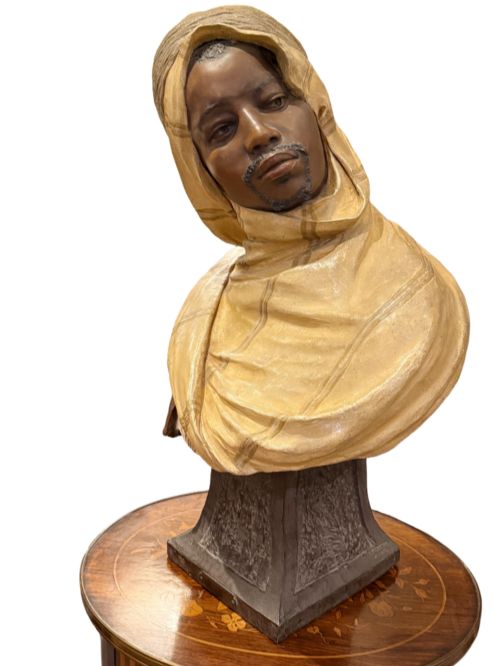
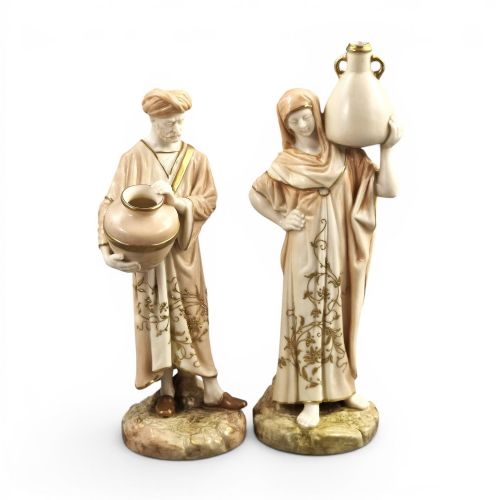
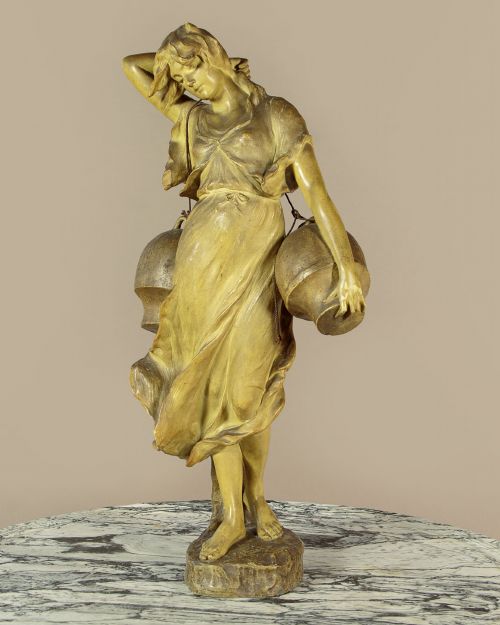
Orientalist ceramic sculpture covers figural works, decorative busts, and sculptural table lamps made during the nineteenth and early twentieth centuries. These pieces typically depict figures such as water carriers, musicians, and elephant tamers set within exotic themes. Victorian Orientalism and Art Nouveau styles dominate the selection available here.
You will frequently encounter works produced by major European factories alongside studio pieces from the same era. Common subjects range from Indian craftsmen and Egyptian musicians to female water carriers by the spring. These sculptures function primarily as decorative centrepieces rather than utilitarian objects.
Materials and methods
Potters utilised glazed ceramic, earthenware, and terracotta as the primary bodies for these sculptural works. Factories applied detailed enamel painting, gold leaf, and gilding to enhance costume details and enrich surface textures. Patent metallic finishes also appear on specific factory productions from the late Victorian period.
Moulders cast these figures in sections before hand-finishing the facial expressions, drapery, and accessories. Complex pieces combined tinted glazes with metallic highlights to create the characteristic depth associated with nineteenth-century European ceramic art.
Orientalist Ceramic Sculpture Retail Price Guide 2026
Typical asking prices for orientalist ceramic sculpture among the pieces listed under this phrase on Sellingantiques today, from the lower quarter to the upper quarter. They describe what is for sale here now, not the wider market.
Forms on offer include table lamps, perfume lamps, decorative busts, and large figural water carriers.
Assessing quality and execution
The sophistication of the palette and the application of gilding distinguish ambitious studio productions from standard commercial output. Original finishes that retain their unrubbed metallic highlights and delicate enamel work command greater appreciation.
Royal Worcester·Goldscheider·Royal Dux·Carl Thieme Dresden
The Orientalist Ceramic Sculpture Glossary
- Gilding
- The application of gold leaf or gold powder onto the ceramic surface. This technique highlights decorative elements on garments and accessories.
- Veilleuse
- A type of ceramic night light or perfume lamp popular in the early twentieth century. These pieces often incorporate pierced sections to let light pass through.
- Glaze
- A glassy coating fused to the ceramic body by firing to seal the clay. Coloured glazes define the vibrant costumes seen across these sculptures.
Orientalist Ceramic Sculpture: Frequently Asked Questions
What is an orientalist ceramic sculpture?
These pieces are decorative figures and lamps produced mainly in the nineteenth and early twentieth centuries depicting exotic themes.
They reflect European artistic interest in Near Eastern and Asian subjects during the Victorian and Art Nouveau periods.
How were these figures used originally?
Most of these sculptures served as decorative ornaments displayed on mantelpieces, pedestals, or large tables in Victorian drawing rooms.
Some specialised forms, such as perfume lamps and night lights, also served practical functions in boudoirs.
How do I identify the period of a piece?
Period identification relies on examining the characteristic styling, such as the flowing organic lines typical of Art Nouveau around nineteen hundred.
Factory marks, registration numbers, and artist signatures stamped or painted on the base provide exact chronological markers.
How should I care for glazed ceramic sculptures?
Dust these pieces gently with a soft dry brush to prevent accumulation in the intricate recesses of the modelling.
Avoid using water or liquid cleaners on items with delicate cold-painted enamel or gold leaf highlights.