



Oriental Writing Table
An oriental writing table brings rich carved timber and lacquer into a room, offering a functional workspace with distinct historical character.
Oriental Writing Table
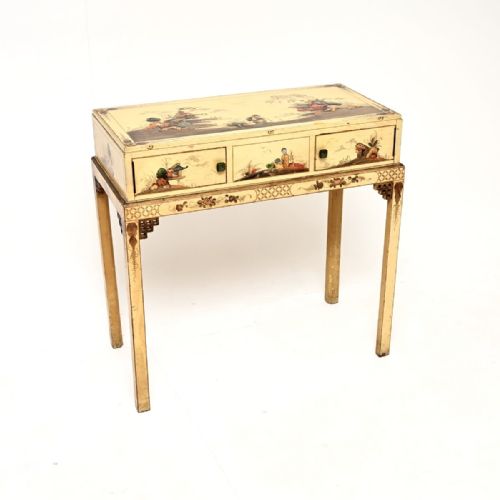
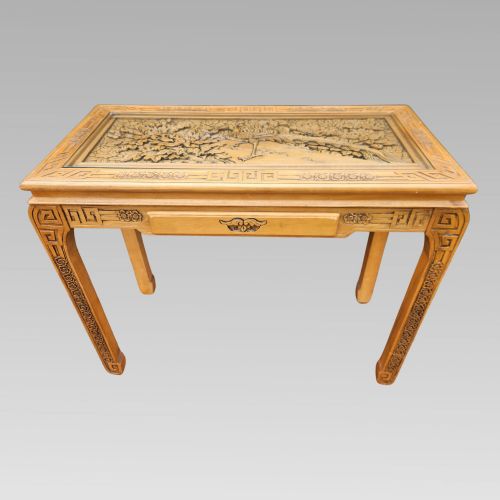
An oriental writing table combines traditional craftsmanship with practical workspace design, spanning styles from Chinese export to Edwardian chinoiserie. These pieces serve as functional desks and distinctive console or side tables within a study or living space.
Materials and Construction
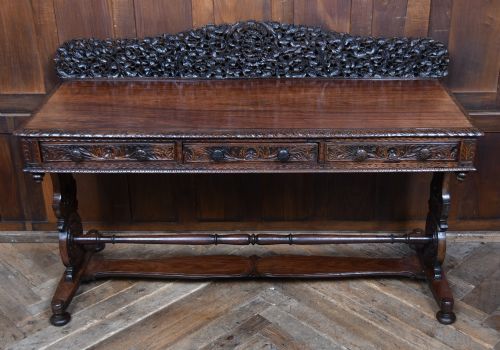
Makers utilised dense timbers such as padouk wood, camphorwood, and elm to build these durable desks. These hardwoods often feature intricate carved detailing executed by hand across panels, aprons, and legs.
Lacquered finishes and japanning techniques provide glossy, decorated surfaces depicting traditional motifs. Brass hardware frequently appears on drawers and mounts, complementing the dark or red-toned wooden structures.
Oriental Writing Table Retail Price Guide 2026
Typical asking prices for oriental writing table among the pieces listed under this phrase on Sellingantiques today, from the lower quarter to the upper quarter. They describe what is for sale here now, not the wider market.
Franz Bergman's cold-painted bronze captures a tiny figure diligently writing by a table.
Assessing Quality and Execution
Superior examples display crisp, deep carving in the hardwood and smooth application of lacquer or japanning without surface degradation. The choice of dense timbers like padouk rather than general softwoods distinguishes finer pieces.
The refinement of the joinery and the integration of decorative brass elements indicate the standard of workshop production. Pieces bearing attribution to known makers or distinctive regional styles demonstrate higher design ambition.
Franz Bergman·Viardot
The Oriental Writing Table Glossary
- Chinoiserie
- European artistic style reflecting Chinese motifs and decorative techniques, popular in furniture and interior design. This style often employs red lacquer and gilt detailing.
- Padouk wood
- Dense and durable tropical hardwood valued for its rich colour and stability in furniture construction. It takes fine carving exceptionally well.
- Japanning
- European imitation of Japanese and Chinese lacquerwork utilising heat-treated varnishes. The technique produces a hard, glossy, dark or red surface finish.
- Partners desk
- Large double-sided writing desk designed for two people to work facing one another. These tables incorporate drawers and cupboards accessible from both sides.
- Kidney dressing table
- Freestanding dressing or writing table featuring a curved, kidney-shaped top. This form became particularly favoured during the Edwardian period.
Oriental Writing Table: Frequently Asked Questions
How do I use an oriental writing table today?
These tables function well as writing desks in a home study or as striking console tables in a hallway or living room.
Their compact or partner formats accommodate modern laptops and paperwork while adding historic character to an interior.
What materials were commonly used?
Builders relied primarily on dense hardwoods including padouk, elm, and camphorwood for structural durability and rich grain appearance.
Surface decoration frequently involved red lacquer, japanning, and hand-carved motifs complemented by brass hardware.
How can I tell the period of a desk?
Dating relies on stylistic cues such as Edwardian chinoiserie details or nineteenth-century export carving characteristics.
Construction methods and timber selection also point toward specific manufacturing decades between the late nineteenth and early twentieth centuries.
Are these tables suitable for daily office work?
Many surviving examples provide ample surface area and drawer space for daily writing or computer tasks.
Selecting a pedestal or partners layout ensures adequate legroom and functional storage for regular workspace requirements.