



Oriental Wood Trunk
An oriental wood trunk brings scented camphorwood, brass mounts and centuries of maritime travel straight into a modern living room.
Oriental Wood Trunk
An oriental wood trunk serves as a storage box, blanket chest or occasional table, drawing on traditions from China, Korea, India and Japan. These pieces range from the eighteenth century through to the early decades of the twentieth century, encompassing utilitarian campaign items and ornate wedding chests alike.
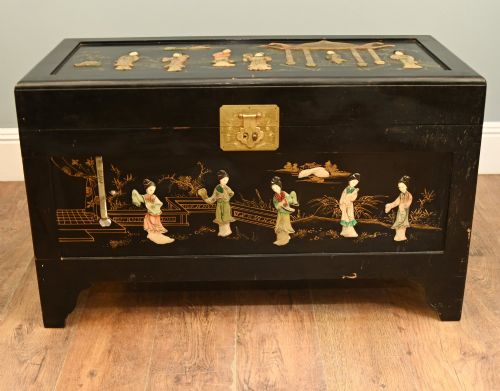
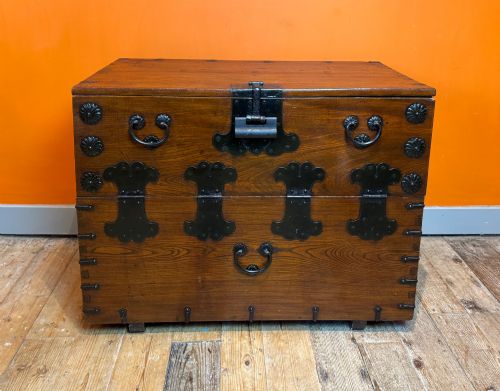
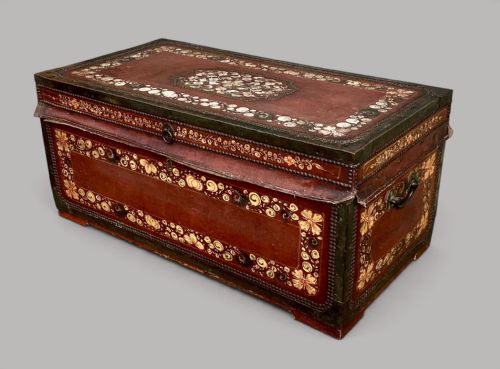
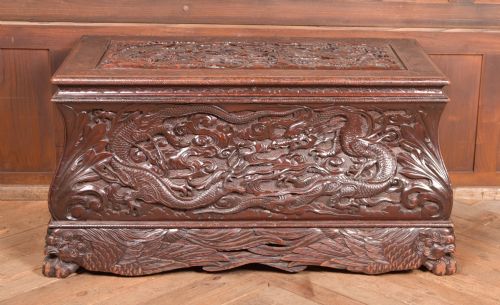
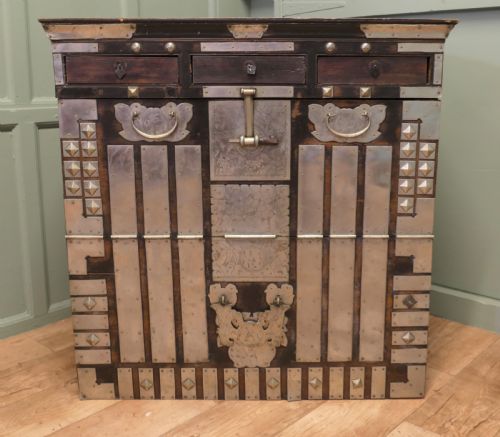
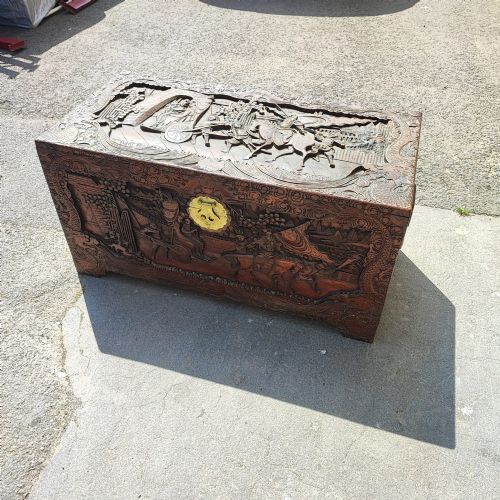
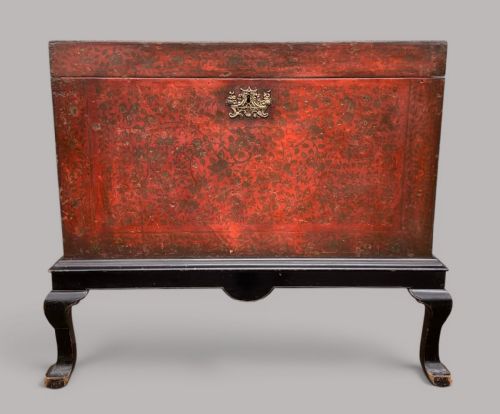
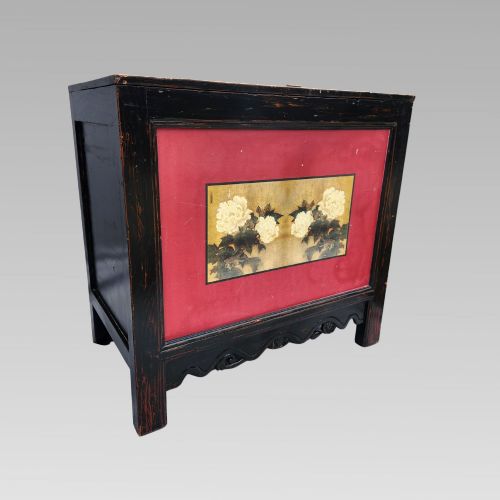
The version most commonly met on this page is the camphorwood trunk or blanket box, frequently carved with floral or figural motifs and dating from the nineteenth century. Alongside these, buyers find leather-bound trade trunks, lacquered coffers and iron-mounted bandaji chests from various Asian origins.
How they were made
Makers utilised resilient timbers such as camphorwood, hardwood and oak, often paired with contrasting structural elements. Camphorwood provided a natural insect repellent property, making it the preferred material for blanket boxes and travel luggage.
Metal reinforcement played a central role in construction, with brass and iron mounts securing corners and lids against the strains of long journeys. Surface finishes ranged from plain polished wood to intricate lacquer work, painted decoration and deep relief carving.
Oriental Wood Trunk Retail Price Guide 2026
Typical asking prices for oriental wood trunk among the pieces listed under this phrase on Sellingantiques today, from the lower quarter to the upper quarter. They describe what is for sale here now, not the wider market.
Regional origins span China, Korea, Japan and India through traditional styles like Chinese Export and Anglo-Indian Colonial.
What varies in quality
The standard of an oriental wood trunk depends heavily on the depth and crispness of the hand carving, as well as the integrity of the timber used. Superior examples display tightly fitted joinery and substantial original hardware rather than replaced hinges or handles.
The preservation of original surface finishes, whether painted lacquer, red leather or polished grain, separates ordinary utility boxes from finer export pieces and marriage chests.
The Oriental Wood Trunk Glossary
- Bandaji
- A traditional Korean storage chest featuring prominent metal strapwork and hinges. These pieces were traditionally used for storing bedding and garments in domestic settings.
- Camphorwood
- An aromatic timber native to Asia, prized for its distinct scent and natural resistance to moths. It forms the primary material for the majority of blanket boxes and campaign trunks found here.
- Coffre fort
- A heavy iron-bound strongbox or coffer utilised for securing valuables during transport. These items often feature complex internal locking mechanisms.
- Tansu
- A traditional Japanese mobile storage cabinet or chest built in sections. These pieces utilise systematic drawer arrangements for domestic organisation.
- China Trade
- Goods manufactured in East Asia specifically for export to Western markets during the eighteenth and nineteenth centuries. These items frequently combine traditional Asian forms with decorative elements appealing to European buyers.
Oriental Wood Trunk: Frequently Asked Questions
What is a camphor wood trunk?
A camphor wood trunk is a storage chest constructed from aromatic Asian timber designed to protect textiles from insects. The natural oils in the wood provide a distinct fragrance that lingers for generations.
These chests were frequently utilised by travellers and merchants during the nineteenth century as campaign luggage. Today, they function effectively as coffee tables, blanket boxes and living room storage.
How old is an antique oriental chest?
Antique oriental chests on this page span from the eighteenth century to the early twentieth century. Many date from the nineteenth century, reflecting periods such as the Qing Dynasty and the Japanese Meiji era.
Dating relies upon construction methods, types of hardware, timber selection and decorative styles. Documentation or stylistic markers often narrow the origin down to specific decades.
How do I care for a lacquered trunk?
Lacquered trunks require protection from direct sunlight and extreme humidity fluctuations to prevent cracking or fading. Dusting should be performed gently with a dry, soft microfiber cloth.
Avoid chemical polishes and abrasive cleaners, as these can strip the delicate surface finish. Maintaining a stable indoor climate preserves the integrity of both the lacquer and the underlying wood.
What is an Anglo-Indian trunk?
An Anglo-Indian trunk is a piece of furniture created in India during the colonial period, combining traditional Indian craftsmanship with British furniture forms. These items often feature dense carvings, brass strapwork and exotic hardwoods.
They reflect the cross-cultural exchange of the British Raj, where local artisans adapted indigenous techniques for European officials and merchants. Their distinctive decorative language sets them apart from standard domestic pieces.