

Oriental Wood Furniture
Oriental wood furniture brings together dense hardwoods, intricate carving and regional styles from across Asia and colonial workshops.
Oriental Wood Furniture
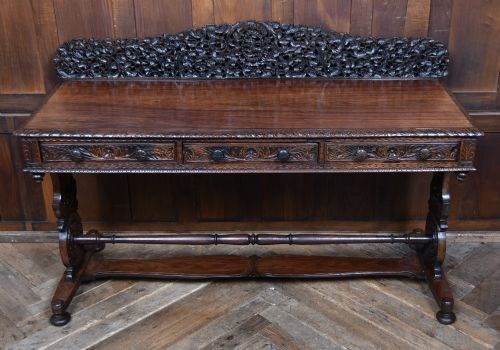
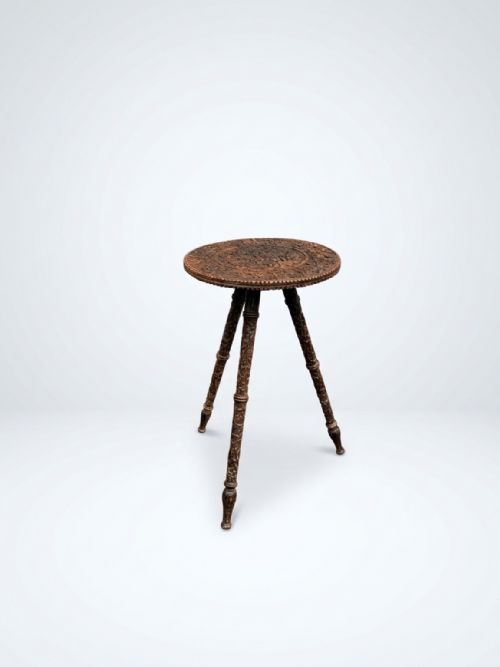
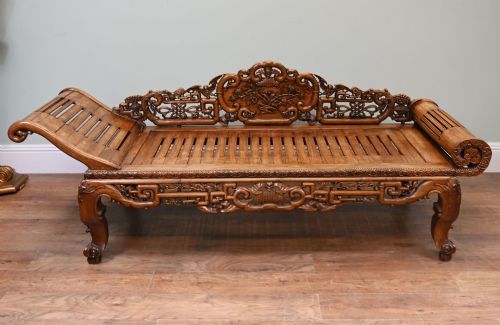
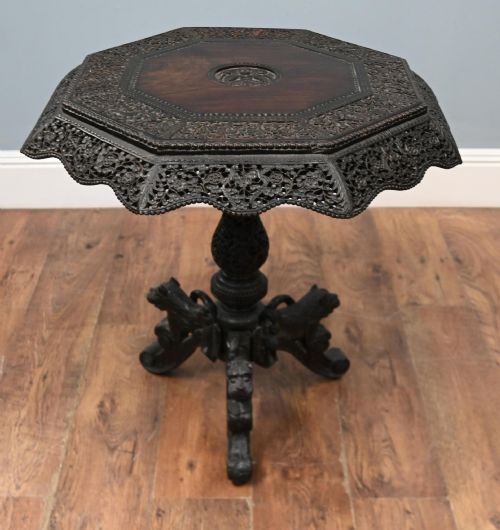
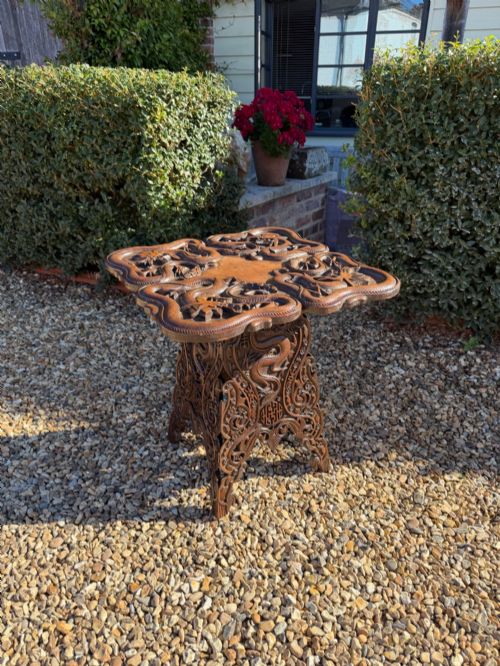
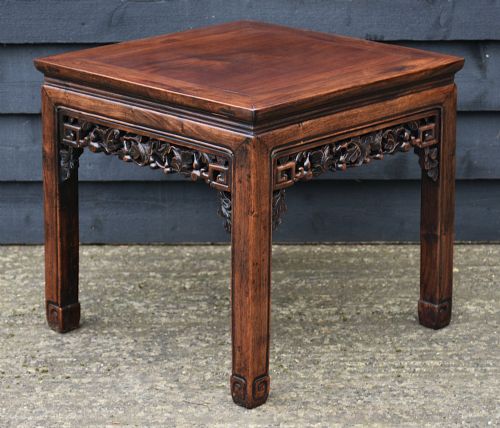
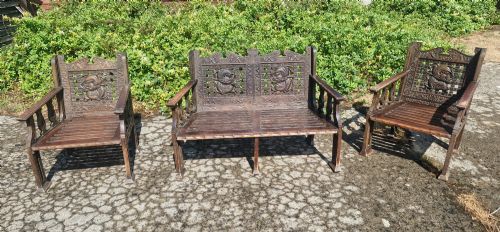
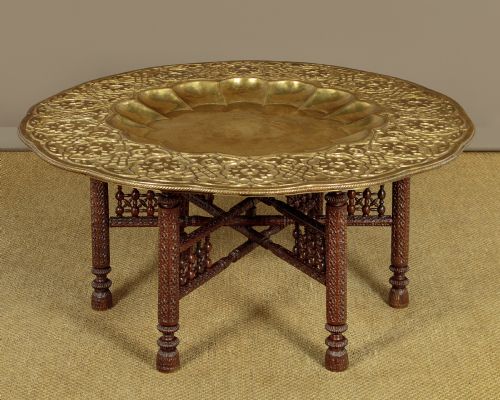
Oriental wood furniture covers seating, tables, cabinets and stands originating from China, Japan, India and Burma during the nineteenth and early twentieth centuries. Side tables, low tables, armchairs and display cabinets form the main groups found on this page.
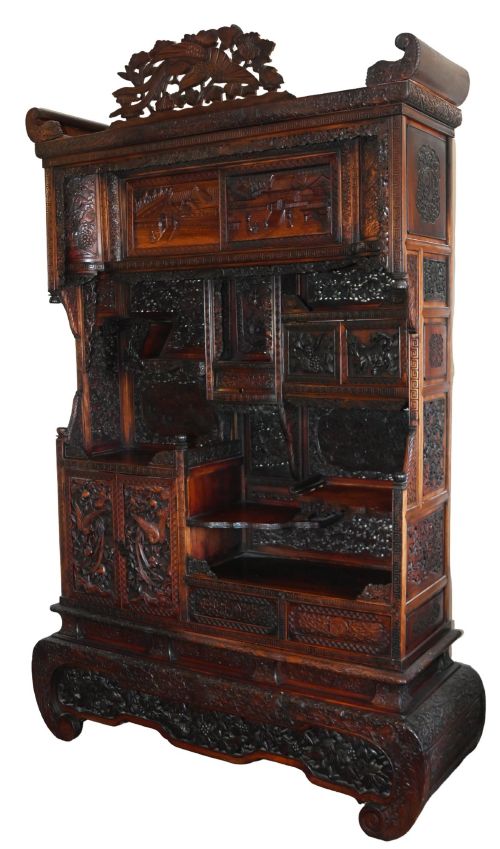
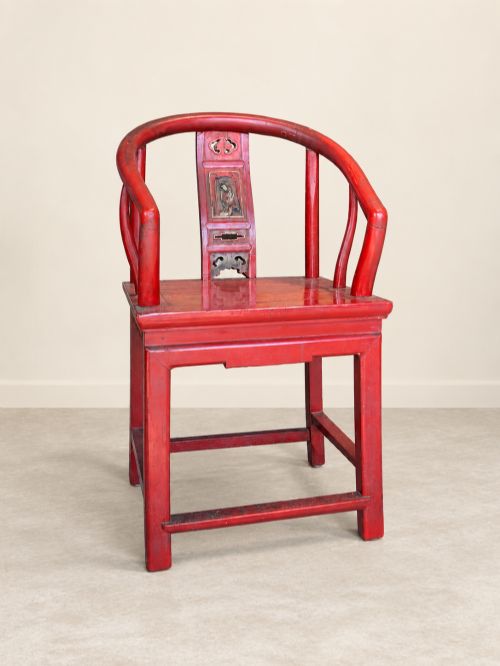
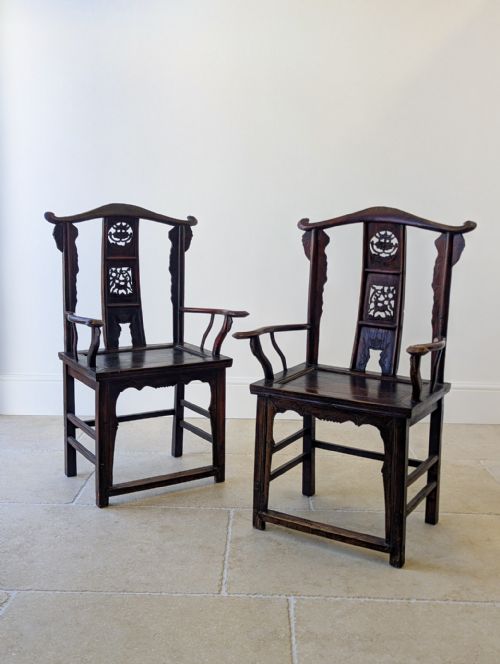
The selection ranges from Qing Dynasty scholar pieces in rosewood and padouk to Japanese Meiji period cabinets and Anglo-Indian inlaid occasional tables. Traditional Chinese forms like horseshoe-back armchairs and altar tables sit alongside British colonial output and European interpretations like Japonisme.
Moorish revival and Kashmiri walnut pieces also appear, reflecting the wide nineteenth-century taste for imported craftsmanship. Buyers encounter everything from compact plant stands to large multi-tiered display cabinets and apothecary drawers.
Materials and construction methods
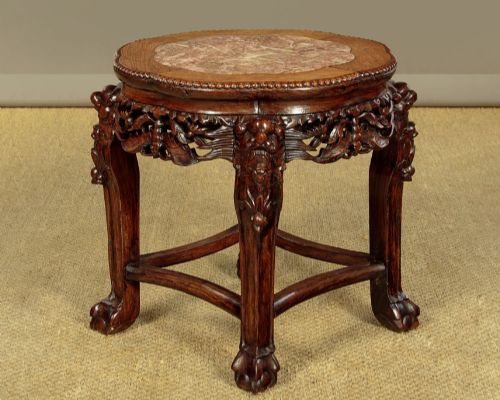
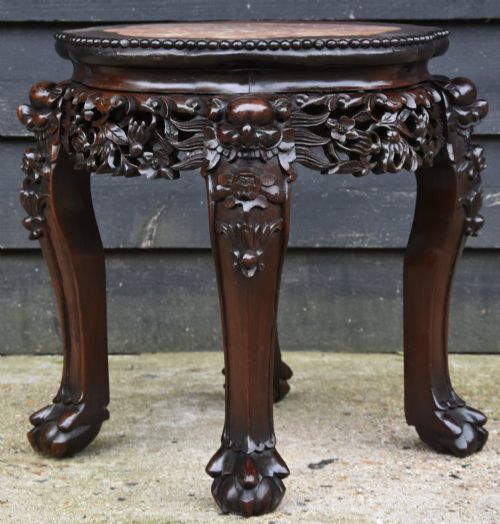
Construction relies heavily on dense hardwoods such as rosewood, padouk, elm and hongmu, often joined with traditional woodworking techniques rather than metal fasteners. Marble inserts feature frequently in the tops of low tables and stands to provide a cool, stable surface.
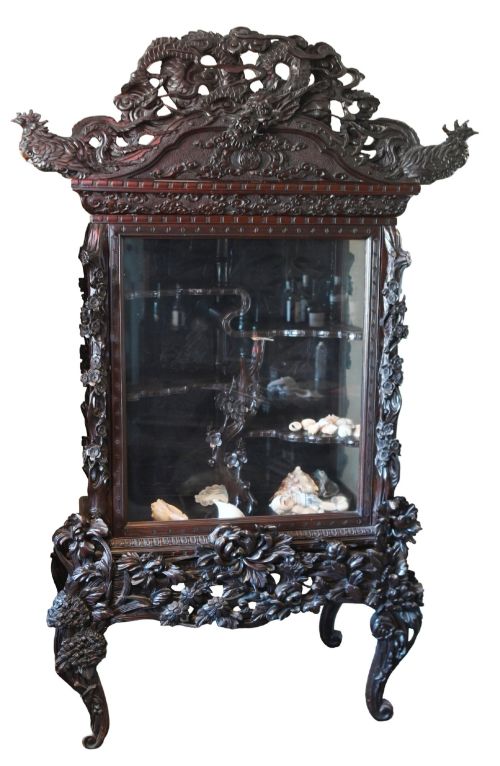
Carving, lacquer and brass inlay define the surface treatment across these pieces. Artisans employed deep relief carving for floral and dragon motifs, applied layers of lacquer for tilt-top tables and cabinets, or set brass wire into wood for contrasting geometric patterns.
Listings feature items from the 19th century through the 1930s, using materials including rosewood, marble, brass and lacquer.
Distinctions in quality
Quality depends on the density and selection of the timber, such as heavy rosewood or hongmu compared to softer domestic woods. Pieces that retain crisp, deep hand-carving without loss of detail demonstrate superior workshop execution.
Structural integrity and the precision of traditional joinery separate standard items from exceptional examples. Original finishes, intact lacquer and matching sets command greater interest among collectors seeking authentic period condition.
Gabriel Viardot·Liberty's
The Oriental Wood Furniture Glossary
- Rosewood
- A heavy, dense tropical hardwood valued for its deep colour and durability in fine Chinese furniture. It often takes a high natural polish.
- Lacquer
- A durable finish applied in multiple layers to wood surfaces, sometimes carved in relief when dry. It protects the material while offering a glossy decorative surface.
- Altar table
- A traditional Chinese form characterised by a long rectangular top with upturned ends or carved aprons. Originally used for ritual purposes, these pieces now serve as console tables.
- Hongmu
- A translation meaning red wood, used to describe dense tropical hardwoods in Chinese furniture-making. It includes varieties of rosewood and padouk.
- Meiji Period
- The era of Japanese history lasting from 1868 to 1912, known for intricate cabinetry, lacquerwork and metal inlay produced for both domestic use and export.
Oriental Wood Furniture: Frequently Asked Questions
What is oriental wood furniture?
Oriental wood furniture encompasses seating, storage and display pieces made from hardwoods like rosewood, elm and padouk across Asian and colonial workshops. These items range from traditional Chinese chairs and altar tables to Japanese Meiji cabinets and Indian inlaid tables.
Craftsmanship often involves intricate hand-carving, lacquer finishes and complex joinery designed without metal nails. The pieces reflect the distinct aesthetic traditions of their regions of origin during the nineteenth and early twentieth centuries.
How do I identify Chinese hardwood furniture?
Chinese hardwood furniture is typically recognised by traditional forms such as horseshoe-back armchairs, yoke-back seats and altar tables with upturned ends. The timber used is often dense and heavy, such as rosewood, padouk or hongmu.
Construction relies on interlocking wooden joints rather than modern fixings. Carved motifs often incorporate dragons, foliage and auspicious symbols executed in deep relief.
Where were Japanese Meiji cabinets used?
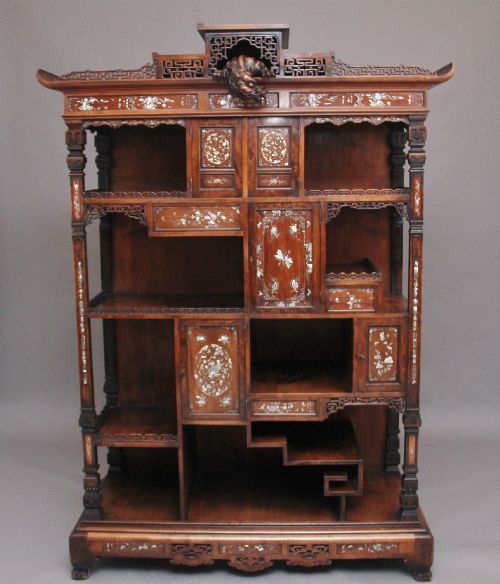
Japanese Meiji cabinets and shodonas were created during the late nineteenth and early twentieth centuries as multi-purpose display and storage furniture. They served in both Japanese interiors and Western drawing rooms following the opening of trade.
These cabinets feature asymmetrical shelving, sliding doors and intricate woodwork designed to showcase decorative objects. Their presence reflects the Victorian taste for Japanese design and craftsmanship.
How do I care for antique hardwood furniture?
Antique hardwood furniture benefits from stable indoor environments away from direct sunlight and rapid temperature fluctuations. Maintaining consistent humidity helps prevent the timber and traditional joinery from splitting.
Cleaning requires only a soft, dry cloth to remove dust. Harsh chemical polishes should be avoided to preserve the natural patina and original surface finish of the wood.