



Oriental Tribal Area Rug
An oriental tribal area rug brings centuries of village and nomadic weaving traditions directly to the floor.
Oriental Tribal Area Rug
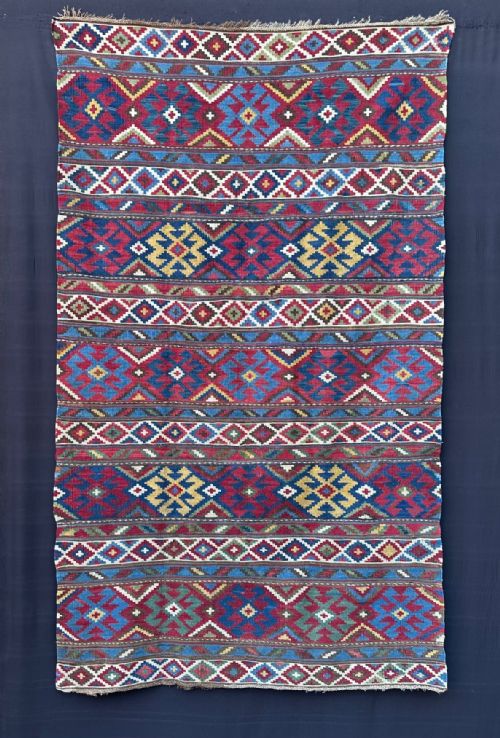
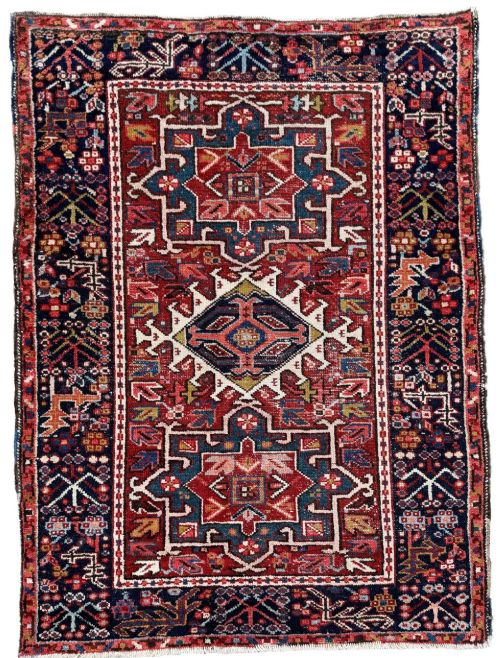
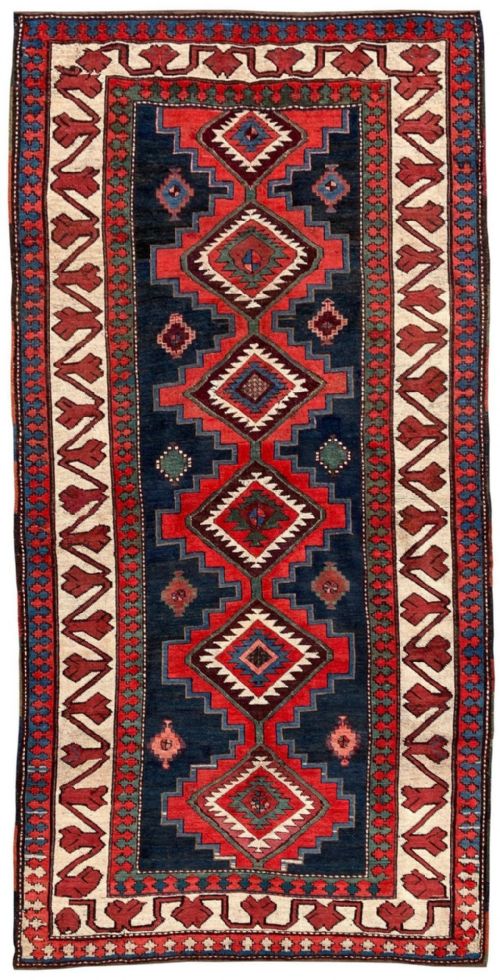
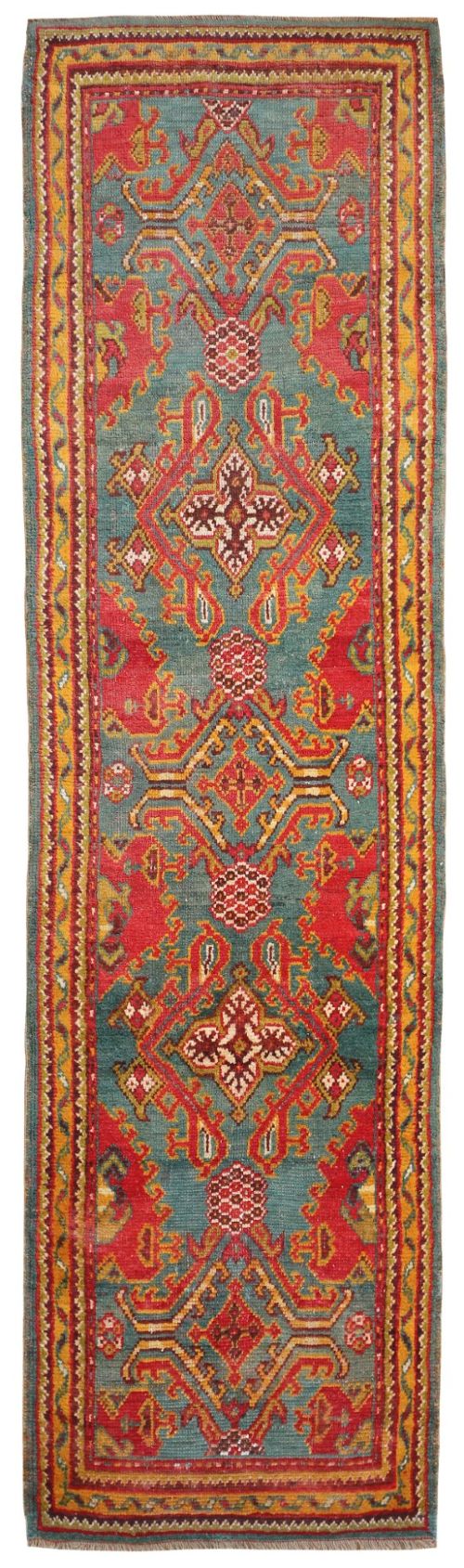
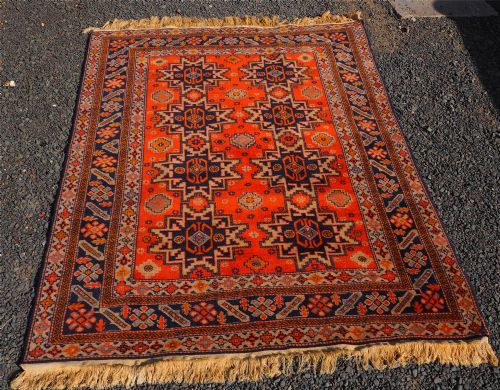
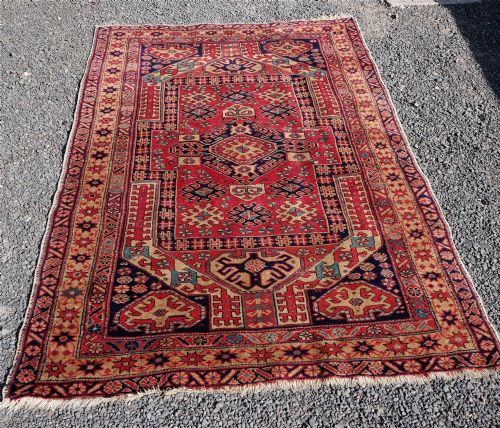
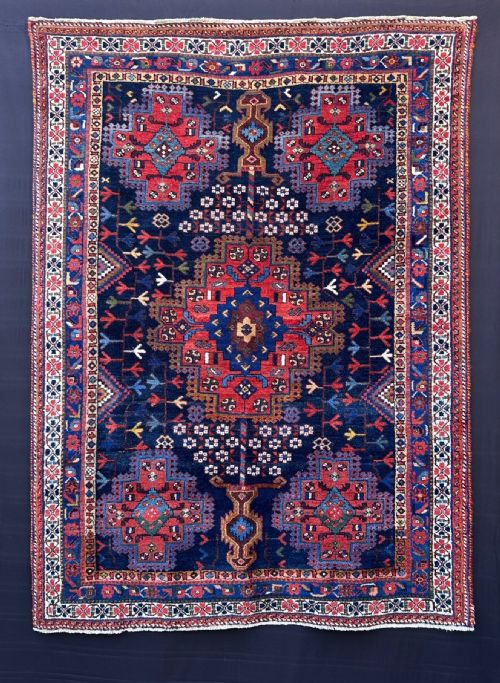
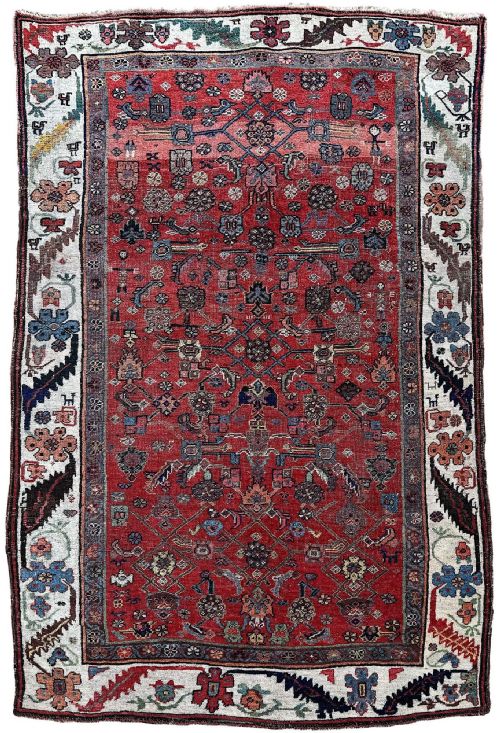
An oriental tribal area rug is a hand-woven textile created by nomadic or village weavers across Persia, the Caucasus, Turkey, and Central Asia. These floor coverings range from compact hearth-sized mats to large village carpets, featuring distinct geometric or floral motifs rooted in regional traditions.
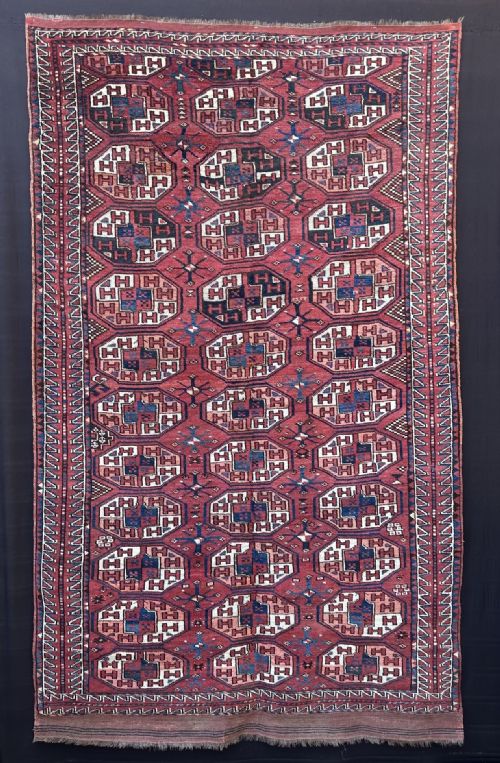
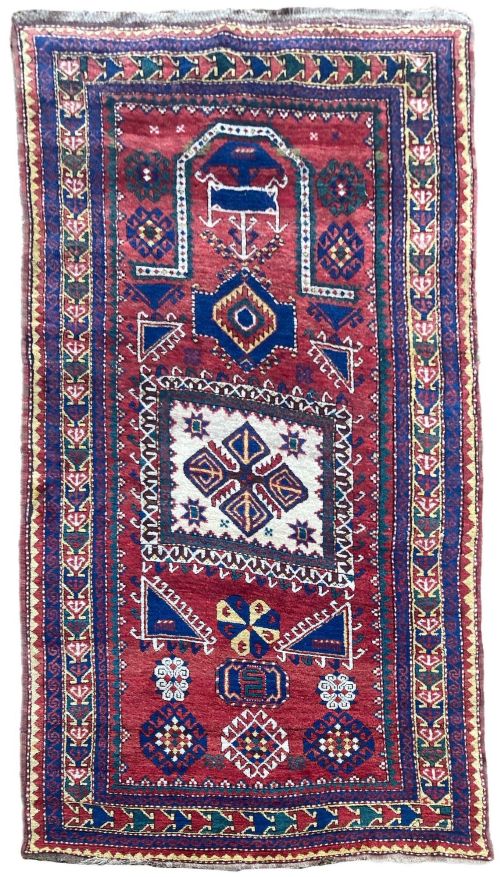
The versions met most frequently on this page span the late nineteenth century through to the early decades of the twentieth century. They include regional types such as Kazak, Afshar, Baluch, Bidjar, and Yomut Turkmen pieces, each displaying the characteristic palette and structural density of their point of origin.
How they were made
These textiles rely predominantly on wool, hand-spun wool, cotton, and camel hair or wool for the pile, foundation warp, and weft threads. Natural dyes provide the underlying palette, yielding deep reds, mellow tones, and saturated hues that age with considerable depth.
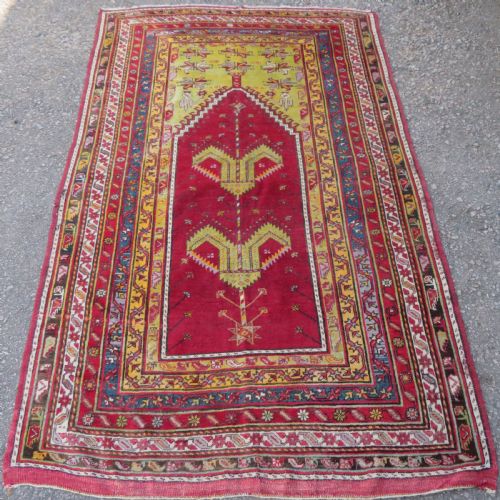
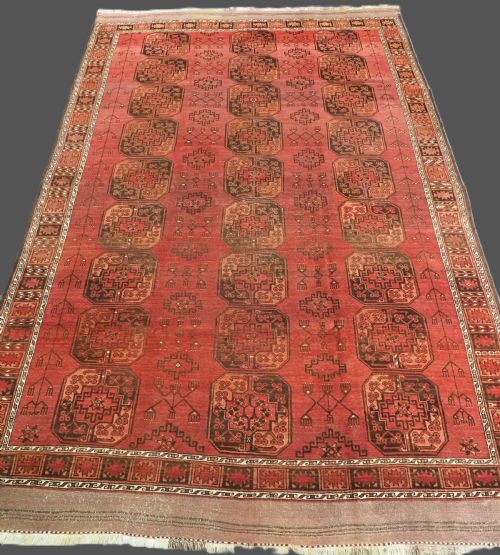
Weavers knotted the pile by hand onto sturdy foundations, incorporating geometric medallions, prayer mihrabs, and repeating motifs such as guls. The density of the knotting and the quality of the wool determine the weight and flexibility of each finished rug.
Listings span the nineteenth century and the early decades of the twentieth century, featuring wool, cotton, and camel hair.
What varies in quality
Quality rests primarily on the integrity of the materials and the precision of the hand-weaving. Tightly packed hand-spun wool and stable natural dye lots create a more resilient pile that holds its definition over decades of use.
Design execution and regional authenticity separate standard village output from superior examples. The crispness of geometric medallions, the balance of the border systems, and the preservation of original edge finishes dictate the standing of an individual piece.
The Oriental Tribal Area Rug Glossary
- Mihrab
- A niche design symbolising a prayer doorway, commonly found pointing towards Mecca on prayer rugs.
- Gul
- An octagonal or medallion-like repeating motif frequently utilised in Turkmen and Baluch tribal carpets.
- Kilim
- A flat-woven rug or carpet produced without a pile, relying on interlocking warp and weft threads to form the pattern.
- Warp
- The vertical foundation threads stretched tightly on the loom before the knotting or weaving begins.
- Weft
- The horizontal threads passed through the warp threads after each row of knots to bind the structure together.
Oriental Tribal Area Rug: Frequently Asked Questions
How do I clean an antique tribal rug?
Gentle surface brushing and professional specialist washing help preserve the natural wool fibres and dyes.
Avoid harsh chemical cleaners or immersion in water unless handled by an experienced textile conservator.
Where were these rugs originally woven?
Weavers produced these textiles across nomadic camps and rural villages in Persia, the Caucasus, Turkey, and Turkmenistan.
Each region developed distinct weaving structures, colour palettes, and repeating geometric motifs.
Can I use these rugs in high-traffic hallways?
Runner formats and densely knotted village carpets tolerate moderate foot traffic quite well when laid over a secure underlay.
Rotating the rug periodically ensures even wear across the wool pile over the years.
How do I identify a prayer rug?
Prayer rugs feature a prominent pointed arch or mihrab design at one end, occasionally doubled at both ends.
Historically, worshippers placed these specific portable rugs facing toward Mecca during daily prayers.