


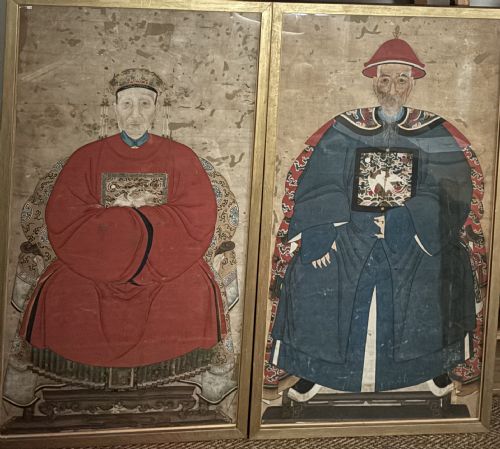


Oriental Silk Paintings
Oriental silk paintings bring delicate brushwork and rich pigment onto woven fabrics, offering a glimpse into centuries of Asian artistic tradition.
Oriental Silk Paintings
When you search for oriental silk paintings, you encounter delicate works executed on woven fabric rather than standard paper or canvas. These pieces span from the nineteenth century into the mid-twentieth century, originating from diverse cultural traditions across Asia.
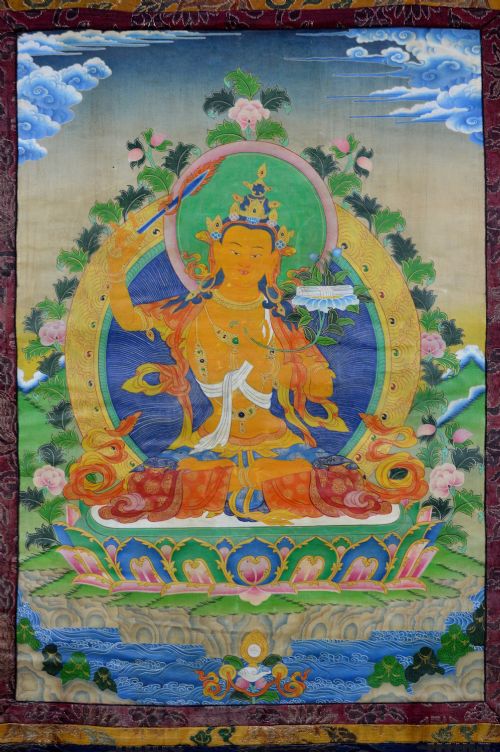
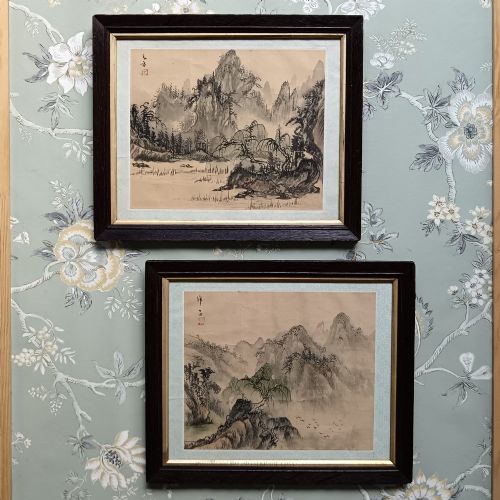
The selections on this page most commonly include framed wall art, hanging scrolls, and ancestor portraits. Subjects range from traditional Chinese landscape scenes and Daoist immortals to Japanese depictions of animals and battle scenes.
Regional styles vary noticeably across the inventory, encompassing Qing Dynasty aesthetics, Meiji period Japanese works, Tibetan Buddhist art, and Indian court scenes. Buyers frequently find pairs of framed paintings or large wall hangings ready for display.
Materials and construction
Artists painted directly onto fine silk using inks and mineral pigments, often mounting the completed works onto paper, cotton, or additional silk brocade for support. Many pieces incorporate wooden frames and glass protection to preserve the delicate textiles.
Surviving works frequently display hand-applied brushwork supplemented by artist stamps, signatures, and occasionally gouache or watercolour detailing. The integration of textile weaves with fluid pigments requires steady technique to prevent bleeding across the fabric threads.
Materials recorded across the inventory include silk brocade, mineral pigment, cotton, wood, and glass.
Assessing quality and condition
The condition of the mounting and framing also influences the overall presentation of the textile. Pieces retained in original frames with stable silk grounds demonstrate better preservation over time.
The Oriental Silk Paintings Glossary
- Gouache
- An opaque water-based pigment used to create solid areas of colour on silk or paper. It provides a heavier coverage than traditional watercolour.
- Scroll painting
- A flexible artwork designed to be rolled for storage or unrolled for viewing. Many examples feature protective silk borders and wooden end rollers.
- Ancestor portrait
- A formal painting commissioned to commemorate family lineage or revered figures. These works often display subjects in rigid, frontal poses with symbolic robes.
- Shan Shui
- A traditional style of Chinese painting featuring scenery or natural landscapes. These compositions typically focus on mountains, rivers, and waterfalls.
- Brocade
- A rich decorative fabric woven with raised patterns. It frequently serves as a mounting border for hanging scrolls.
Oriental Silk Paintings: Frequently Asked Questions
How do I hang a silk scroll?
Hanging scrolls require careful handling to protect the delicate silk fabric and paper backing from excessive tension or environmental damage. Utilise appropriate wall fixings and avoid displaying them in direct sunlight.
Keep the hanging area free from excessive humidity, which can warp the wooden rollers and degrade the silk fibres over time.
What subjects appear in these paintings?
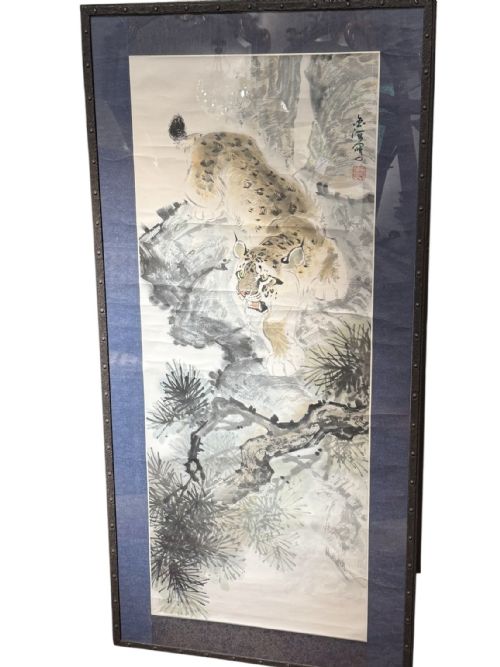
The subjects span traditional landscapes, divine figures, wildlife such as geese and snow leopards, and formal ancestor portraits. Specific cultural motifs reflect the artistic traditions of China, Japan, Tibet, and India.
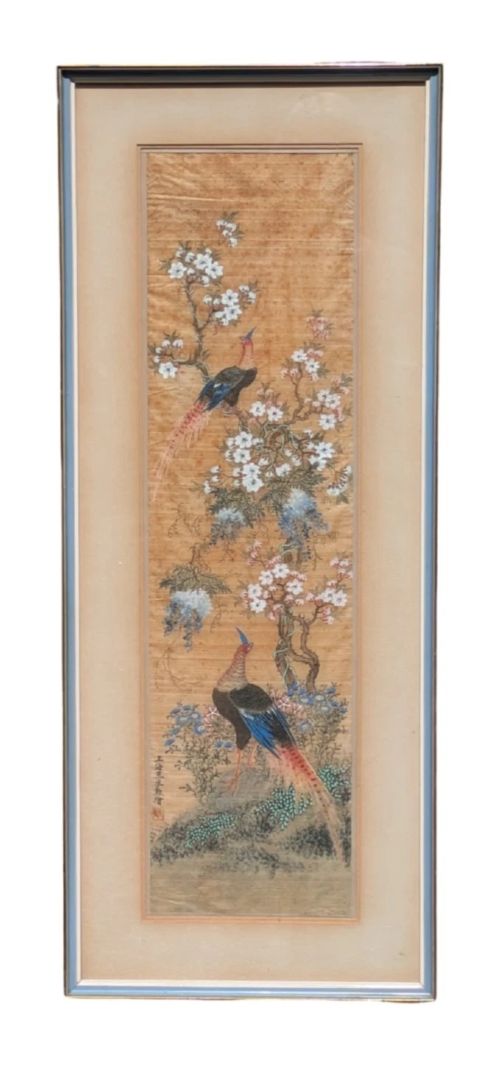
Many pieces also depict narrative battle scenes, botanical studies of plum blossom, and royal processions involving elephants.
How do I date a silk painting?
Dating relies on stylistic markers, mounting techniques, materials, and accompanying signatures or artist stamps. Qing Dynasty and Meiji period works carry distinct compositional traits.
Physical evidence such as the type of wooden framing, paper backings, and pigment composition helps narrow the production era.
Are these works framed or unframed?
The selection includes both traditional hanging scrolls and works presented in original wooden frames with glass. Framed examples are ready for immediate wall display.
Scrolls offer a more traditional format designed for vertical presentation.